Image
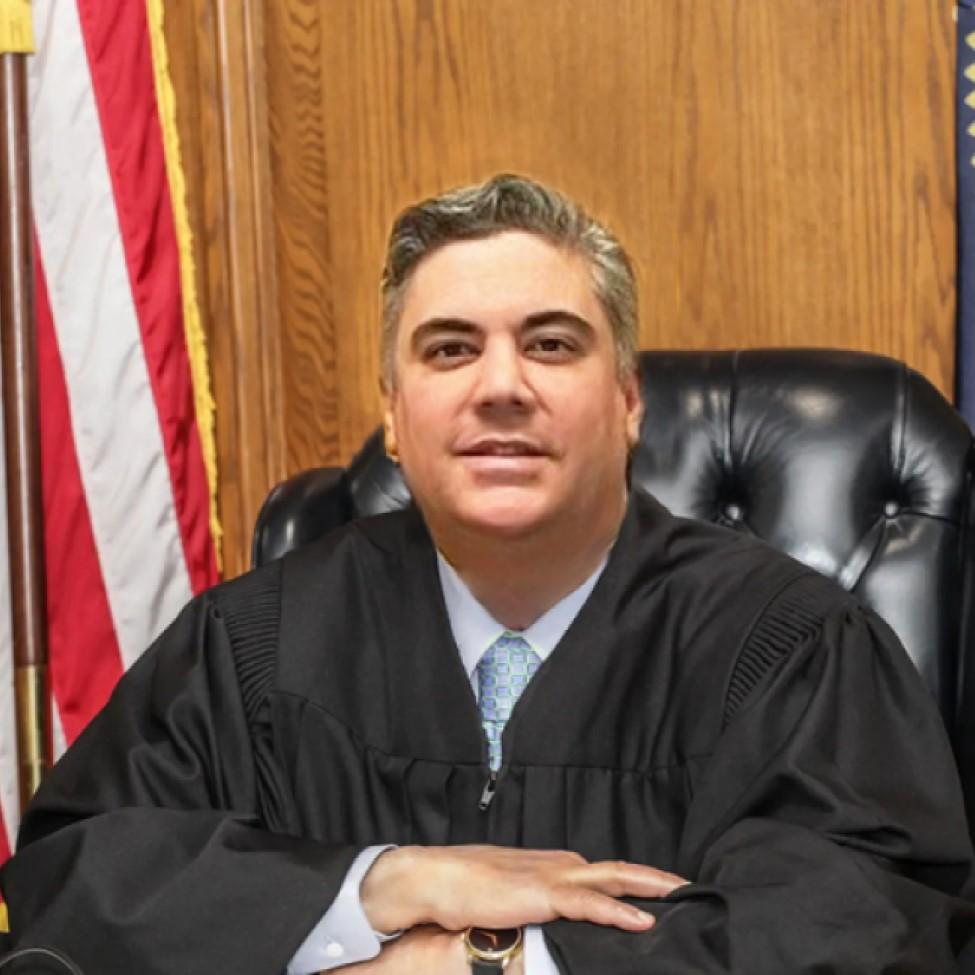
The Elisabeth Haub School of Law at Pace University is pleased to announce that Hon. James L. Hyer has joined its Board of Visitors. Judge Hyer is an elected New York State Supreme Court Justice in the Ninth Judicial District and a distinguished Haub Law alumnus from the class of 2005.
“I am proud to welcome Judge Hyer to our Board of Visitors,” said Dean Horace E. Anderson Jr. “Judge Hyer is a champion of public service, human rights, diversity in the law, and access to justice. Importantly, he is also committed to advancing the best interests of his alma mater, Haub Law. I look forward to working with him to ensure the continued success of the Law School.”
Judge Hyer is the Chairman of the 9th Judicial District Access to Justice Committee and is a Commissioner of The Richard C. Failla LGBTQ Commission of the New York State Court System. Judge Hyer previously served as an Administrative Law Judge for the Westchester County Human Rights Commission. He has served as the President of the Westchester County Bar Association, and served as Chair of the Law Day Committee, Public Service Committee, Awards Committee, as well as a Hearings Officer for the Grievance Committee. Judge Hyer is a member of the New York State Bar Association where he served on the House of Delegates, Nominating Committee, Task Force on Incarceration Release Planning and Programs and serves as a New York Bar Foundation Fellow. Judge Hyer was awarded a New York State Senate Commendation for Human Rights Advocacy, Haub Law School Leading Attorney Under 40, Westchester Bar Association Leadership Award, LGBT Bar Association of New York Community Excellence Award and Westchester Residential Opportunities Human Rights Champion Award. Judge Hyer holds a BA in Political Science from Ramapo College of New Jersey, and a JD and Environmental Law Certificate from the Elisabeth Haub School of Law at Pace University. Judge Hyer has served as an adjunct professor and published a number of scholarly articles in various areas of the law.
The Board of Visitors furthers the interests of the Law School by involving alumni and friends in significant issues of concern to the School, and by building a sense of community that fosters pride and participation. The Board is also dedicated to fostering a strong interest in the mission of the Law School by helping to recruit outstanding students, hiring graduates and encouraging financial support from public and private sources. The Board is currently co-chaired by Alfred E. Donnellan '81, Managing Partner, DelBello Donnellan Weingarten Wise & Wiederkehr, LLP and Kathleen Donelli ’85, Partner, Goldschmidt & Genovese, LLP.

The Elisabeth Haub School of Law is proud to announce that the 2026 Elisabeth Haub Award for Environmental Law and Diplomacy will be jointly awarded to environmental lawyers Alfred Lahai Gbabai Brownell Sr. and Durwood Zaelke for their groundbreaking contributions to the progressive development of environmental law and their decades of leadership advancing environmental justice, climate action, and environmental governance around the world.

Elisabeth Haub School of Law and BCU deepen their partnership through an immersive New York summer school exploring law and social justice.

Long before she arrived at the Elisabeth Haub School of Law, Bianca Hayles ’27 knew she wanted to use the law to create meaningful change in her community.