Image
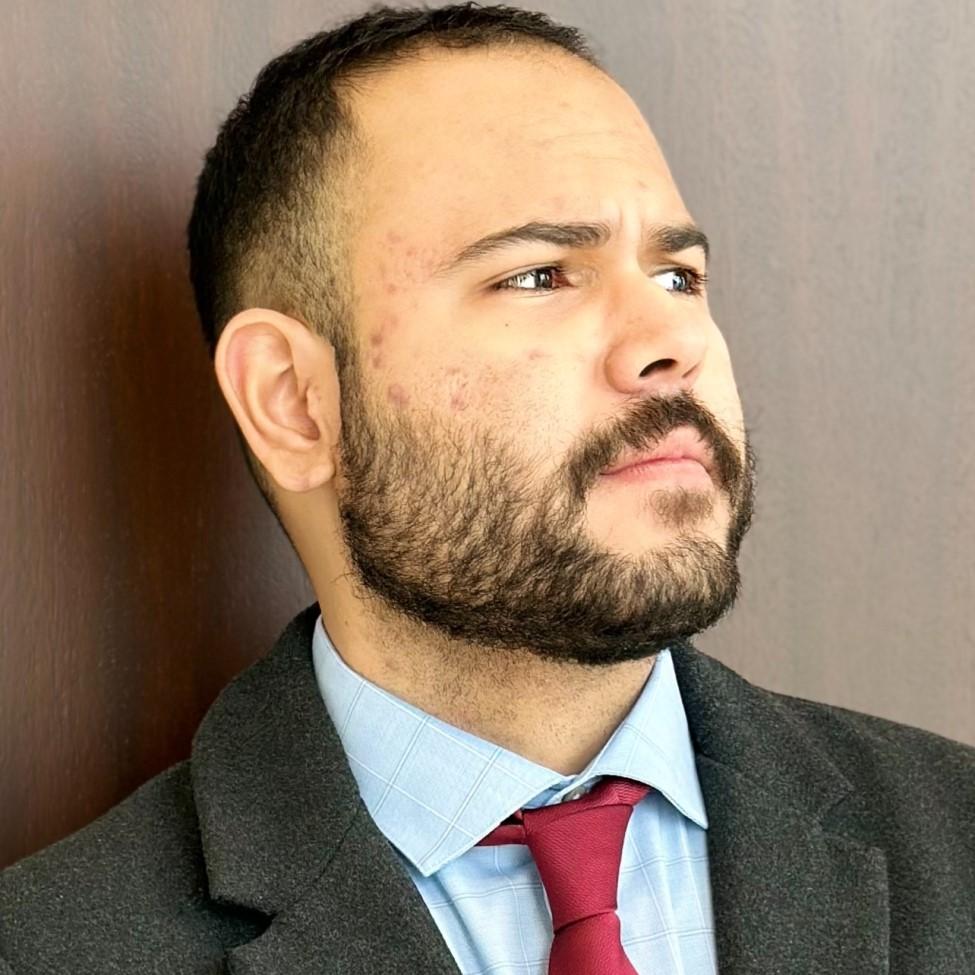
Despite beginning law school elsewhere, transfer student Joseph Martinez always felt that Haub Law was where he belonged. “Haub Law, for me, was always the goal,” said Joseph. “While I was born in Boston, Massachusetts, my mom and I had to flee to New York a few months after I was born due to domestic violence, which unfortunately is all too common in immigrant households, due to victims feeling they have no right to help for fear of deportation. Whether fate or coincidence, we ended up seeking help in White Plains and eventually moved to Yonkers.”
After obtaining his Criminal Justice degree at Mercy College, Joseph began his law school journey in the Midwest, but quickly realized it was not the right fit. “I felt that a JD from a law school in Westchester County, the county that took my family in, was the natural next step.”
Joseph transferred to Haub Law as a 2L, and he describes his experience since transferring as a welcoming one since day one. “The Associate Director of JD Admissions, Miguel Sanchez Robles, put me in contact with other students immediately. Miguel, along with these students, made my transition as a transfer student extremely smooth. Haub Law immediately felt like home, from being able to speak Spanish to staff within the school, to receiving mentorship from staff and faculty.”
The first in his family to graduate college and attend law school, Joseph immediately sought out involvement in the various opportunities at Haub Law to both learn and help the immigrant community. “My mom immigrated to the United States from El Salvador, and I have always had a passion for immigration law. I was eager to become involved with the Pace Immigration Law Society (PILS). If we can help students know how to ethically go about being an immigration attorney specifically, while they are still in law school, I think that can be extremely valuable to society. For this upcoming semester, PILS hopes to not only show people that immigration legal issues will always come up no matter the area of law you practice but show students that there is a lot of opportunity to be more involved with clients sooner, an opportunity that may not always be available so soon in other areas of law.”
While Joseph has large aspirations for his career path post law school, what he is sure of is that his transfer to Haub Law was the right one and his goal remains to help the immigrant community. “Ultimately, I want to ensure that people within my home city of Yonkers are not taken advantage of and obtaining a law degree at Haub Law will guarantee that I can do that.”
In addition to attending law school, Joseph has spent the last five plus years working as a pharmacy tech. He is also the Director of Community Service for the National Latina/o Law Student Association (NLLSA) for 2024/2025. In what spare time he has, you can find Joseph rewatching Grey's Anatomy or Supernatural, walking the trails in Yonkers, and listening to music.

Professor Emily Gold Waldman has been awarded the 2026 Goettel Prize for Faculty Scholarship.

Haub Law launches the Environmental Law Fifty Fund to support innovative research, scholarship, and collaboration among junior environmental law scholars.

The Elisabeth Haub School of Law is proud to announce that the 2026 Elisabeth Haub Award for Environmental Law and Diplomacy will be jointly awarded to environmental lawyers Alfred Lahai Gbabai Brownell Sr. and Durwood Zaelke for their groundbreaking contributions to the progressive development of environmental law and their decades of leadership advancing environmental justice, climate action, and environmental governance around the world.