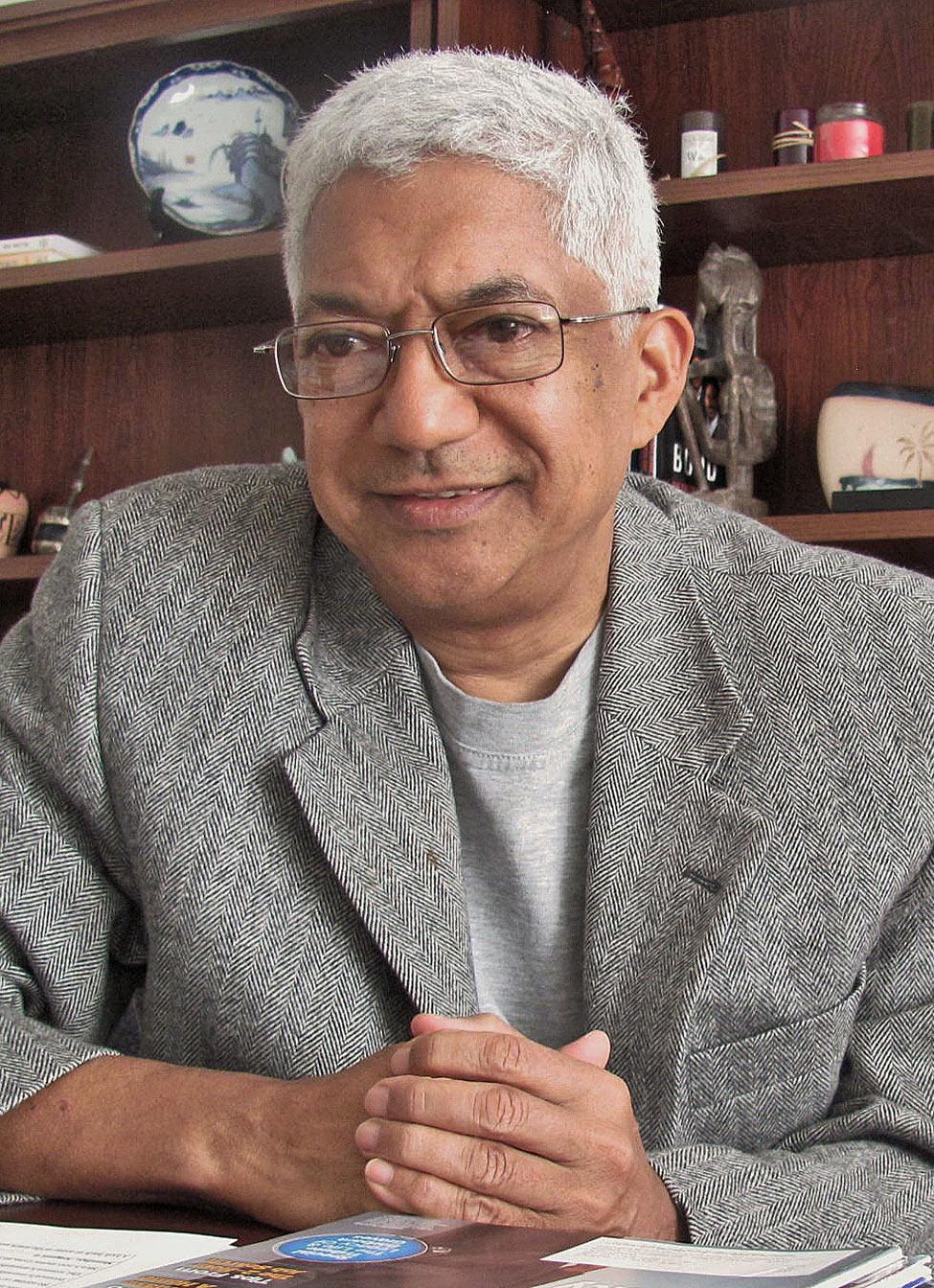
Faculty Focus: University Distinguished Professor Bridget Crawford

Elisabeth Haub School of Law

Professor Bridget Crawford has been a professor at Haub Law since 2003 and was named a University Distinguished Professor in 2021, which is the highest honor the University can bestow upon a faculty member. Prior to joining the Haub Law faculty, she was a practicing attorney at Milbank LLP, where she specialized in taxation and estate planning. At Haub Law, Professor Crawford teaches Federal Income Taxation; Estate and Gift Taxation; Wills, Trusts and Estates; Tax Policy; Corporations & Partnerships; and Feminist Legal Theory. Professor Crawford is a leading authority on taxation, as well as feminist legal theory, and menstrual equity. A favorite in the classroom, she has also been honored multiple times by graduating students at Haub Law as Outstanding Professor of the Year, as well as recognized by her colleagues with Haub Law’s Faculty Award for Excellence in Teaching.

Elisabeth Haub School of Law Distinguished Professor Bridget J. Crawford
Image
Elisabeth Haub School of Law Professor Bridget Crawford

Professor Bridget Crawford has been a professor at Haub Law since 2003 and was named a University Distinguished Professor in 2021, which is the highest honor the University can bestow upon a faculty member. Prior to joining the Haub Law faculty, she was a practicing attorney at Milbank LLP, where she specialized in taxation and estate planning. At Haub Law, Professor Crawford teaches Federal Income Taxation; Estate and Gift Taxation; Wills, Trusts and Estates; Tax Policy; Corporations & Partnerships; and Feminist Legal Theory. Professor Crawford is a leading authority on taxation, as well as feminist legal theory, and menstrual equity. A favorite in the classroom, she has also been honored multiple times by graduating students at Haub Law as Outstanding Professor of the Year, as well as recognized by her colleagues with Haub Law’s Faculty Award for Excellence in Teaching. Learn more about Professor Crawford in this Q&A.

How did you become interested in tax?

My grandmother was the first tax professional I ever met. Although she never went to college or law school, Gram taught herself the tax law and went to work for H&R Block. She lived in a rural community in southeastern Ohio, in the foothills of the Appalachian Mountains. Gram took great pride in helping her neighbors comply with their obligations under the complicated self-reporting system that we have in the U.S.

What is your favorite tax concept or case?

If I ever got a tattoo, it definitely would be a quote from Welch v. Helvering, 290 U.S. 111 (1933). That is the case that established the test for when a business expense is “ordinary and necessary.” Justice Cardozo said that when no ready test or statute is available, “[l]ife in all its fullness must supply an answer to the riddle” that is the tax law.

What do you find most enjoyable about being a professor?

I love helping students understand the complexities of the law, develop critical thinking skills, and become more confident in their abilities. In Federal Income Tax class, students may start out intimidated by the statute and regulations, but by the end of the semester, they know exactly how to work with the most complex rules. The tax code yields its secrets with careful study and time spent! As a law professor, I have the opportunity every day to help guide students from diverse backgrounds and perspectives as they develop into the professionals they want to become. I have great confidence in the future of the legal profession and our students are going to be leading the way.

Every year, you host a “Tax Alumni Come Back to the Classroom” event – where you invite former students to come speak to your current tax class. What benefit do you feel experiences like this have for both the students and alumni?

The purpose of this program is to connect current law students with alumni and inspire students to think about their future careers. In law school, we hear all the time about the value of “networking,” but sometimes it is hard to know how to go about it. This program aims to make it easier by providing a day dedicated to networking. Students also do readings to encourage self-reflection on how they are using their time in law school and what various career paths are available. The alumni are willing to offer guidance and support to students as they navigate law school and the legal profession. They are also happy to share their contacts and help in any way they can.

You recently published a book with Professor Emily Waldman called Menstruation Matters: Challenging the Law’s Silence on Periods. What inspires a tax professor to write a book about menstruation?

It all started as a tax story. I had been living in New York for more than twenty years before I realized that the sales of menstrual products like tampons were subject to tax. That made absolutely no sense to me. I started doing some research and I wrote an article explaining why I thought the “tampon tax” was a human rights issue. When I was presenting my work in one of our regular faculty colloquia, I mentioned that there was a class action brought in New York challenging the tampon tax, and Professor Waldman asked me about that. One conversation led to another and we decided to write an article explaining the argument that the sales tax on menstrual products violates the Equal Protection Clause. New York repealed its sales tax in 2016, but our article is now the basis for a state-by-state challenge to the sales tax on menstrual products. The more we spoke about the tampon tax, the more we realized that menstruation touches on everything – schools, employment, prisons, environmental law, poverty law, corporate law. We teamed up to write the book to show that menstruation is a baseline justice and equity issue.

What are some of the tax rules that disproportionately impact women and families?

The tax code does not recognize the value of unpaid caregiving work that is often performed by women, such as caring for children or elderly relatives. This can leave women with fewer retirement savings and lower Social Security benefits. What would the law look like if society truly valued caregiving?

Your writing is frequently published in prestigious journals – what advice do you have for law students who may want to start trying to publish papers?

Write about what you want to understand, what makes you mad, what makes you happy, what you want to fix. Just write. There is no better way to teach yourself an area of law then to try to explain it in writing to someone else. Your professors are here as resources, too. There are lots of publication outlets that need and want to hear from students and lawyers of all levels of seniority.

Do you have any techniques to propel your own writing?

At least once a semester, Professor Leslie Tenzer and I have a writing challenge. There are only two rules: set your own goals and bring positive vibes only. We then report our progress on a shared spreadsheet. The mutual accountability and encouragement is really helpful. There have been so many times where I haven’t wanted to write, I feel like I’m not getting anywhere, and I have wanted to quit the writing challenge. What I’ve learned from these experiences, though, is that the key is to be consistent and show up. We write even when we don’t feel like it and we encourage each other through the inevitable rough patches. My goals are usually relatively small—20 minutes of writing each day— but I end up with an outline, a first draft, or progress that I otherwise would not have made. The best thing about writing is having written. Anyone who wants to join our writing challenge is totally welcome. It works!

What is something that your students may not know about you?

Dean Horace Anderson and I were first-year study partners in law school. He has always been brilliant, and without him, I would have never made it through Constitutional Law!

If you were not a law professor, or an attorney, what other profession could you see yourself pursuing?

As long as I am being useful, then I can be happy doing anything. I’m interested these days in all things technological. What if there was a program that accurately calculated our taxes for us? What if it was as easy to make a will online as it is to order a pizza? What if depositions were conducted via artificial intelligence? Could decentralized digital currency be the key to a universal basic income? How can we harness machine learning to eliminate bias in hiring and lending? I am so interested in all of these questions.

Contains Video
No

More from Pace

Related Profiles

Second Annual Pace Access to Justice Workshop Spotlights the Important Issues Surrounding Voting Access, Elections, and Democracy

Elisabeth Haub School of Law

Second Annual Pace Access to Justice Workshop Spotlights the Important Issues Surrounding Voting Access, Elections, and Democracy.

image from Second Annual Pace Access to Justice Workshop Spotlighting the Important Issues Surrounding Voting Access, Elections, and Democracy
Image
image from Second Annual Pace Access to Justice Workshop Spotlighting the Important Issues Surrounding Voting Access, Elections, and Democracy

On Wednesday, March 29, Haub Law presented the Second Annual Pace Access to Justice (A2J) Workshop themed: Voting, Democracy, and the Law. The Workshop brought together national voting rights and election law experts and advocates with Haub Law faculty, staff, students, and community guests to learn and engage in a dialogue centering on the important issues of voting access, election law, and our democratic process. The Workshop was hosted and moderated by Adjunct Professor Elyse Diamond, Director of the Public Interest Law Center, and featured a panel discussion with Sophia Lin Lakin, Interim Co-Director of the ACLU’s Voting Rights Project, Perry Grossman, Director of the New York Civil Liberties Union’s Voting Rights Project, Jarret Berg, Founder of VoteEarlyNY, and Brianna Cea, Executive Director and Founder of the national youth advocacy organization Generation Vote. The panel was followed by a special video message from March For Our Lives Founder and Activist David Hogg and an interactive community discussion to generate and explore action steps for how we as a law school community might actively contribute to efforts to promote voting access, engagement and our democracy.

Last year, the inaugural Pace Access to Justice Workshop focused on the critical importance of housing access, the current housing crisis, the status of "right to counsel" in eviction cases, and public service careers in housing law and related fields. The annual workshop is part of the larger initiative launched by Haub Law, the Pace Access to Justice Project. Pace A2J, housed and coordinated within Haub Law’s existing Public Interest Law Center, is serving as a hub for community collaborations, programs, scholarship, policy initiatives, and hands-on innovative academic and non-credit bearing experiential law student opportunities. Together, Pace A2J is designed to more actively engage students in learning about and contributing to real-world efforts to address the access to justice gap.

"I am incredibly excited to have hosted our Second Annual Pace A2J workshop and deeply grateful to our panelists for sharing their immense expertise and insights on voting access, elections, and democracy and the larger implications of all,” said Professor Elyse Diamond. “Voting access and participation in our democratic process is fundamental and our hope is that programs like this one bring awareness to the issues and empower our community to discuss innovative ways to contribute."

Watch the Video of the Second Annual Pace A2J Workshop

Contains Video
No

More from Pace

Coming Fall 2023: Pace’s Newest Building

New York City
Upcoming Opportunities

In Fall 2023, Pace will open its newest building, 15 Beekman, a 26-story mixed use vertical learning hub on the corner of Beekman and Nassau streets on our New York City Campus.

rendering of the 15 beekman building in new york city
rendering of 15 Beekman in new york city
Alyssa Cressotti

In Fall 2023, Pace will open its newest building, 15 Beekman, a 26-story mixed use vertical learning hub on the corner of Beekman and Nassau streets. This state-of-the-art addition to Pace’s NYC Campus will be home to classrooms, student life spaces, the main dining hall, first-year student housing, administrative and faculty offices, the Beekman Library, and the Seidenberg School of Computer Science and Information Systems.

Major Upgrades for the Campus Community

New library? Check.

New dining hall? Check.

New classrooms and student spaces? Check and check.

Plus, we’re creating some really amazing student spaces, a brand-new Bianco Room (more space for events!), brand new space for the Seidenberg School, new classrooms with cutting-edge tech, a new home for the Learning Commons, and a coffee bar and lounge in the new lobby.

Our favorite feature? An outdoor terrace space on the 6th floor. Dining al fresco? Yes, please.

New Residential Space for First-Year Students

Within 15 Beekman, a 12-story tower will be dedicated to first-year student housing (replacing the existing Maria’s Tower in One Pace Plaza) with a total of 484 beds. Other features for the new living spaces include a common fitness center, meeting and dining commons, and an independent residential entrance. Here are some other housing highlights:

  • Suite style room layouts with groupings of 3-4 rooms with semiprivate bathrooms per suite
  • Semiprivate common spaces with kitchenettes per suite
  • Three discreet residential elevators
  • Central laundry room
  • Independent ADA rooms on every floor
  • Independent welcome/security desk with independent turnstiles
  • Bicycle room with space for up to 65+ bikes (the bike room will actually be open to everyone on campus!)
Contains Video
No

More from Pace

Students

Commencement 2023 just got 5x more exciting! This May, the Class of 2023 will celebrate with a creative genius and fashion entrepreneur, an intrepid US Senator, a renowned legal scholar, a former CEO of the largest telcom company in the US, and a nonprofit leader dedicated to justice and equality.

Alumni

Driven from a young age to be a lawyer, Chioma Deere had her son while she was applying to law school. Ultimately, Pace provided the flexibility to allow Chioma to accomplish her dream while balancing her family life. Now, Chioma Deere is the founding and managing partner of her own firm, Deere Law Firm, in West Palm Beach, Florida with a focus on wills, trusts, and estate planning.

Faculty and Staff

Pace’s best kept secret is also New York’s smallest library. Pace’s Zine Library is under 100 square feet but what it lacks in size it makes up for in unique literary sources, student-created research, and pedagogical resources for faculty looking to change things up in the classroom.

Class with Justice Sotomayor

Pace Path/Student Success

U.S. Supreme Court Justice Sonia Sotomayor discusses her memoir, her storied career, and offers advice to international students in a memorable classroom visit.

Pace English Language Institute students posing for a group photo

It’s not every day that a Supreme Court Justice comes to class. But thanks to Pace International Special Programs going the extra mile, that’s exactly what happened on a recent Friday afternoon.

International Special Programs (ISP) is a unique wing of Pace University. Among other initiatives, ISP partners with universities from all over the world to create custom study abroad opportunities and programs for international students, who are then afforded the opportunity to study in New York. Tokyo’s Japan Women’s University (JWU), the oldest and largest private women’s University in Japan, is one such school Pace has partnered with over the years.

Currently, 29 students from JWU are engaging in an immersive, four-week experience at Pace. To prepare for their arrival in New York City the students read My Beloved World—Justice Sonia Sotomayor’s memoir about her childhood growing up in the Bronx, overcoming all odds to ascend to the greatest heights of the American judicial system. The students read the book first in Japanese and have been discussing themes of the book in English while at Pace.

Knowing that Justice Sotomayor’s book was going to be studied, English Language Institute Associate Academic Director Jeff McIlvenna wanted to ensure JWU students’ time at Pace was truly memorable. He thought: what if we added a talk with the Justice herself to the curriculum? And after going the extra mile and writing a well-received, snail-mail letter to Justice Sotomayor’s Office, that’s exactly what has happened.

In an hour-long Zoom, Justice Sotomayor engaged in a wide-ranging Q+A session, discussing aspects of her book, her storied career, and offered advice to the 29 young women who were no doubt inspired by Justice Sotomayor’s authenticity and steadfast commitment to her principles. Students asked questions ranging from: What motivates you to continue serving as a Supreme Court Justice? to How do you keep yourself confident and looking toward the future?—among a multitude of others. The students were uniformly engaged, and took Justice Sotomayor’s answers to heart.

I was impressed by what she said about everything with small steps,” said student Honoka Takahashi. “I read her biography, I realize that she is where she is today because of the small steps she had taken. I heard that her answer, I must take small steps to come true my dream, even that step doesn’t looks like to directly connect my dream.”

Director of International Special Programs at Pace Lisa Kraft and McIlvenna were thrilled that ISP and Justice Sotomayor were able to create such a memorable opportunity for students–and believe that the special classroom session epitomizes the quality of experience that ISP provides its students.

“Everything about the experience exceeded any expectations I could have ever had,” noted McIlvenna. “In International Special Programs, we have a unique opportunity to create memorable, meaningful, and innovative student experiences, not just traditional courses. This has set the bar higher than any of us could have imagined, but we are all up for the challenge moving forward.”

Interested in learning more about International Special Programs at Pace? Send an email to Lisa Kraft.

Contains Video
No

More from Pace

Students

“I’ve become the person that I am today because I came to New York City and Pace University.” International student Chinmay Bonde reflects on how his pro bono work with nonprofits in India, his professors at Pace, and his time in New York City have given him well-rounded, real-world education in his field.

Students

Highly motivated economics student Hanyu Li, alongside Dyson Professor Mary Kaltenberg, are investigating a little-studied topic: how does a person’s general appetite for risk impact fertility decisions?

Pace Magazine

Through interdisciplinary collaboration, the School of Education and Dyson's Film and Screen Studies departments are helping a major school district in Florida tackle the challenges of today’s teacher shortage head-on.

USTA's National Tennis Center About More Than Hosting Tennis

Last year, Pace University enjoyed having two roof-covered stadiums, using both Ashe and Armstrong alternately throughout the day for different graduation ceremonies from the university's colleges.

Contains Video
No
In The Media

Tsai Embraces Diplomatic Activism

AI
Dyson College of Arts and Science

Dyson Professor Joseph Tse-Hei Lee writes an editorial in Taipei Times about president of the Republic of China, Tsai Ing-wen embracing diplomatic activism.

Contains Video
No
In The Media
Related Profiles

The Gwyneth Paltrow Ski Trial has our Attention. It's Strange, juicy and Exactly What the Internet Wanted.

Dyson College of Arts and Science

To counter that, "She must avoid and denounce the class and cultural privileges (her fame) this visibility evokes in her legal defense," says Melvin Williams, associate professor of communication and media studies at Pace University.

Contains Video
No
In The Media
Related Profiles

Prosecutor receives excellence award at Elisabeth Haub School of Law at Pace University

Elisabeth Haub School of Law

An international anti-corruption prosecutor was honored this week by some of the top legal minds in the Hudson Valley.

The Elisabeth Haub School of Law at Pace University selected Veronica Dragalin to receive one of their highest distinctions - the Robert S. Tucker Prize for Prosecutorial Excellence.

Contains Video
No
In The Media

Pace University Career Fair

Career Services/Internships

Pace University Career Services is hosting its first in-person job fair since the start of the pandemic. The event is sponsored by PricewaterhouseCoopers (PwC). Over 150 companies are expected to be in attendance. Pace University Career Services is a leader in the region for providing a range of career counseling and programming.

Contains Video
No
In The Media

Remila Jasharllari '25: NYC Bar Diversity Fellowship Recipient

Elisabeth Haub School of Law

Haub Law student Remila Jasharllari was recently awarded the prestigious NYC Bar Diversity Fellowship. The Diversity Fellowship Program offers students from underrepresented backgrounds to gain experience at major companies and firms in New York and the opportunity to learn more about corporate law. This summer, she will be interning with New York Life, within their Office of the General Counsel.

Image
Elisabeth Haub School of Law student, Remila Jasharllari

Haub Law student Remila Jasharllari was recently awarded the prestigious NYC Bar Diversity Fellowship. The Diversity Fellowship Program offers students from underrepresented backgrounds to gain experience at major companies and firms in New York and the opportunity to learn more about corporate law. This summer, she will be interning with New York Life, within their Office of the General Counsel.

“As a first-generation student, born and raised overseas, I have learned early on the values of diversity and how important it is to be accepted for who you are,” said Remila. “My research in my undergraduate years focused on analyzing how an individual’s socio-economic background affects their academic performance, and their chances of social mobility in life. There are wonderful individuals out there that do not fit our predetermined notion of what success is supposed to look like, but that have the potential to succeed.” At Haub Law, Remila is motivated not only to succeed, but to help others along the way – she serves as both a peer mentor and a Dean Scholar, as a way of giving back.

Remila credits Haub Law’s Center for Career and Professional Development (CCPD) with her being awarded this competitive Fellowship, which has stringent selection criteria. “CCPD assisted in polishing my resume and reviewing my personal statement. I participated in several mock interviews in order to better understand and master the interview process. Dean Kapila Juthani and Assistant Director Hailey Harvis were always willing to help guide me along the way and push me to bring out the best of myself during this whole process. Their advice is always practical and genuine, and I continue to be extremely grateful for their support, along with all of the guidance I have received from others at Haub Law.”

Currently, Remila was selected to participate in a State Judicial Externship, where she was placed with the Hon. Gretchen Walsh in the New York Supreme Court, Commercial Division. This summer, Remila looks forward to gaining experience in corporate law, an interest she has held since her undergraduate studies. “I took various classes on business law and securities during college. In law school, I continue to be interested in detailed work and strategic thinking. Now, I will have the opportunity to sharpen these skills while understanding the day-to-day operations of a big corporation.”

Contains Video
No

More from Pace

Subscribe to