Image

Cassie Hasaj ’26, a Writing for Diversity and Equity in Theater and Media major, is heading to 30 Rock. This fall, she’ll join The Tonight Show Starring Jimmy Fallon as a production intern—another step toward her dream of a career in television.

Class of 2026
BA in Writing for Diversity and Equity in Theater and Media
My Honors advisor introduced me to the Writing for Diversity and Equity in Theater and Media major and encouraged me to register for the course, DEI in American Entertainment. When I enrolled, I was skeptical, as I was joining a smaller, more intimate cohort that had already gotten to know each other. After a few classes, however, I found myself laughing at the possibility of being afraid to sit in a room with some of the most creative, emotionally intelligent individuals I have ever met. I never felt safer to voice my thoughts and contribute to such meaningful discussions. A spark went off and I knew which route to choose—where I truly belonged.
A first-generation college student originally from Michigan, I was seeking a new experience but also one suited to my passion for film. I heard about Pace’s Film and Screen Studies program and its alumni who are talented artists, so I was initially drawn by that. When I was accepted to Pace, I received a scholarship from the Honors College, and it came down to where I felt I could best adjust, grow, and build my future—and needless to say, there’s no place like New York.
I think what truly defines this program is the level of professionalism and empathy within it. Professor S. Brian Jones, MFA, has put so much effort into carefully building this program and preparing students for the best pathway to success.
As I witness the narratives my peers create come to life, I realize how important every meeting, workshop, and show has been to us as developing professionals.
I often return to one moment that speaks volumes on the kind of artist Professor Jones has inspired students to become. For my final project in his course, DEI in American Entertainment, I presented a case study on Moonlight (2016), directed by Barry Jenkins, examining the film’s representation on and off screen. As I left class one day, Professor Jones pulled me aside to share that he’d spoken about me at a national conference, describing how the beauty and sincerity with which I spoke about the love story in Moonlight had moved not only him but an entire room. Hearing that affirmed for me the power of authentic storytelling and the importance of using my voice to honor those narratives.
I began the process of applying for this role while I was working as a summer intern at BBC StoryWorks, assisting senior content strategists in the development and presentation of new content ideas and program architecture. After three rounds of interviews over the course of three months, I was hired as a general production intern at The Tonight Show. My role will involve assisting producers with everyday operations of the show, including acting as a runner, working on research projects for various departments, and standing in during show rehearsal. Receiving this opportunity has been a great achievement and a testament to my passion, merit, and support systems.
Several opportunities were available to me as a student, including artistic workshops, live theater on and off Broadway, and connecting with the Pace community at large. One of the more recent workshops I participated in was led by playwright Rebekah Greer Melocik and Director Ariel Reich of How to Dance in Ohio. This and other workshops, led by talented professionals, are meaningful as they offer both knowledge and guidance to young artists defining their voices. Also, when we see live theater, we’re not merely watching but critically thinking through the lenses we’ve acquired. Another key activity has been witnessing the narratives my peers create come to life. This has made me realize how important every meeting, workshop, and show has been to us as developing professionals.
Upon graduation, I will be applying to the NBC Page Program in hopes of taking my professional development in film and television to the West Coast. As an aspiring writer/producer, I also hope to have my own writer’s room one day, developing stories for television.
Take life day by day. Set those goals and celebrate small wins, but remember that life is those moments in between, so enjoy it. Also—be your truest self.
A Tony nominee. A Citigroup executive. A water law strategist from the White House. This summer, Pace welcomed an extraordinary group of new leaders—each bringing a remarkable career, a bold perspective, and a shared commitment to student success. From the performing arts to business, environmental law to healthcare, these trailblazers are more than accomplished professionals—they’re mentors, visionaries, and changemakers.


Over the summer, Pace University embraced a season of transformation, welcoming a dynamic new wave of leadership and faculty. Each brings fresh perspective, bold ideas, and a shared commitment to empowering students. As Pace moves confidently into its next chapter, these new voices—from the worlds of business, health, law, and the performing arts—aren’t just aligned with the University’s mission; they embody it, driving innovation and championing student success every step of the way.

At the CHP, Brian Goldstein, PhD, has been named dean. Formerly president and chief academic officer at the University of St. Augustine for Health Sciences, Goldstein is a nationally respected academic leader known for his deep expertise in the health sciences and his student-first approach.
“The College of Health Professions is a national leader in preparing highly skilled, compassionate health professionals,” said Goldstein. “I look forward to working alongside the exceptional faculty, staff, and students to continue advancing academic excellence and meaningful health outcomes in our communities.”
His appointment reflects the University’s investment in programs with real-world impact. Throughout his career, Goldstein has led bold innovations in curriculum design, expanded clinical partnerships, and driven measurable gains in student satisfaction and faculty engagement. His leadership arrives at a time when forward-thinking, student-centered strategies are central to Pace’s transformation efforts.
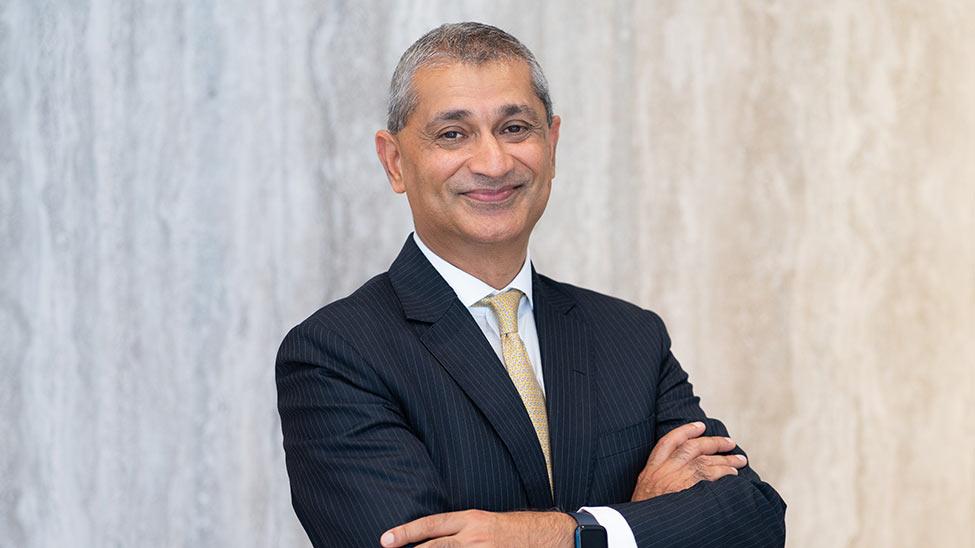
Joining the Lubin School of Business as dean is Ajay Khorana, PhD, a seasoned academic and former business treasurer at Citigroup. Khorana brings a rare combination of global industry experience and scholarly accomplishment that will strengthen Lubin’s national and international reputation.
“Lubin has a strong foundation of academic excellence and career preparation,” Khorana said. “I look forward to collaborating with faculty, students, alumni, and industry partners to build on that legacy and drive continued innovation and impact.”
Before coming to Pace, Khorana served as global treasurer for Citigroup’s U.S. Personal Banking and Global Wealth businesses, where he oversaw strategic financial planning, risk management, and capital allocation for a $400 billion balance sheet. His nearly two-decade tenure at Citi also included leading the Financial Strategy Group, where he advised Fortune 500 companies on mergers and acquisitions, capital structure, shareholder strategy, and corporate governance.
Earlier in his career, Khorana held faculty positions at Georgia Tech and the University of Virginia, earning recognition for both his research and his teaching.
With Lubin’s nationally ranked programs and elite accreditations, the school is well-positioned to grow under Khorana’s leadership—and to play a central role in shaping the workforce of the future.
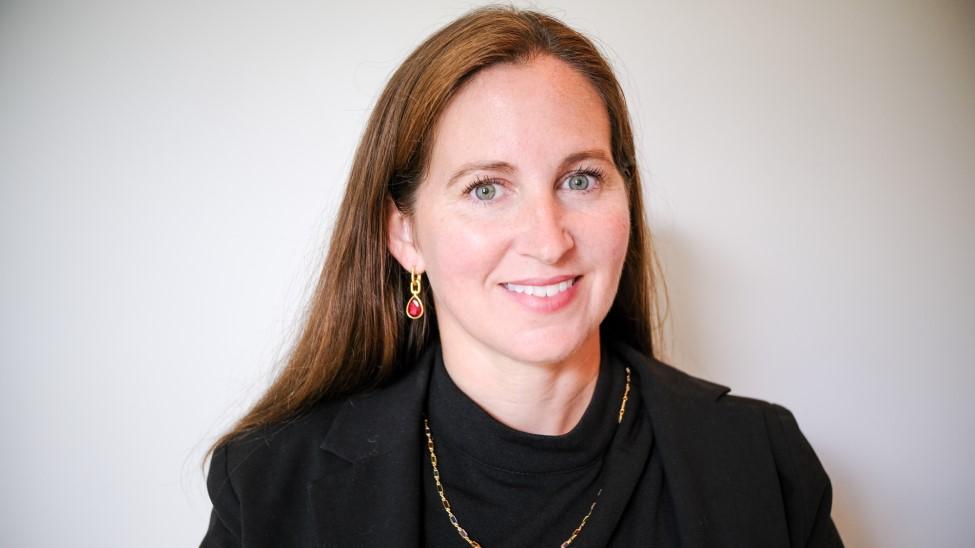
At the Elisabeth Haub School of Law at Pace University, environmental law takes center stage with the addition of two dynamic visiting faculty members.
Sara Gonzalez-Rothi, former senior director for water at the White House Council on Environmental Quality, joins as visiting assistant professor of environmental law. Her work on water policy, climate action, and Tribal justice has had national impact.
“Brave and skilled lawyers of tomorrow hold the keys to unlock a more just future,” she said. “We are fortunate to participate in their development.”

Also joining Haub Law is Sam Bookman, a scholar in climate litigation and constitutional law. He will serve as visiting assistant professor and Haub Visiting Scholar. His research, cited by courts around the world, reflects a blend of academic rigor and practical expertise. Bookman has taught at Harvard, NYU, and other leading institutions.
“I am passionate about continuously learning, researching, and teaching,” said Bookman. “I look forward to learning from this community and sharing my research.”
These additions further strengthen Haub Law’s exceptional Environmental Law Program and affirm Pace’s national leadership in environmental justice and advocacy.
Meanwhile, the Sands College of Performing Arts continues its remarkable ascent, welcoming three extraordinary artists and educators to its faculty: Tony Award nominee L Morgan Lee, Broadway performer Shonica Gooden, and veteran stage manager Matthew Stern.

Their appointments signal not only a commitment to excellence, but also to inclusivity, transformation, and creative leadership.
“We are shaping young artists who may one day become some of the brightest lights on Broadway and beyond,” said Lee. “Pouring into their artistry is not simply a job; it’s a privilege that I carry with the deepest of respect and gratitude.”
Stern, who now leads the stage management program at Pace, echoed that sentiment:
“As the head of the stage management program, I welcome the opportunity to educate and support stage managers in their journey to find their voice, develop their aptitude for leadership, and advocate for themselves and the artists they support.”
These appointments reflect the growing momentum at Sands College, which is preparing to open a state-of-the-art performing arts center as part of Pace’s transformation of One Pace Plaza East.
From business to law, health to the arts, the new leaders joining the Pace Community this summer bring more than impressive résumés. They bring a shared belief in the power of education to transform lives—and a deep readiness to help Pace move forward.
They remind us that the work ahead is not only about structures or strategies. It is about people. It is about students. And it is about building the future—together.

From hands-on client work to behind-the-scenes content shoots, Skye Tchegnon ’28 is turning her first internship into a launchpad for a career in social media marketing and analytics.

Want to host an event during Pace’s sixth annual Social Justice Week? Apply by Friday, September 26. Read the article to learn more about the origins of Social Justice Week and how to get involved.

Mary Tedeschi, professor at Pace University’s Seidenberg School, spent much of 2025 doing what she does best: teaching her students and guiding them through research to such a level that they presented their papers at two prestigious international virtual education conferences.
Out of 60,000+ applicants worldwide, only 4% were selected for the Millennium Fellowship Class of 2025. Among them: 16 Dyson College students—the largest representation yet—leading projects on clean water, housing insecurity, and more.

Thirty-four Pace University students, the highest number to date, have been selected for the competitive United Nations Academic Impact-Millenium Fellowship Class of 2025, including 16 students from Dyson College of Arts and Sciences. The total pool of candidates included a record-breaking 60,000+ applicants from 7,500+ campuses across the world, and from 290+ US campuses, with only 4% selected for 2025. This year also represents the first time Dyson College, Lubin School of Business, School of Education, Seidenberg School of Computer Science and Information Systems, and the College of Health Professions at Pace were all represented; further, this year’s Millennium Fellows class features a first of its kind, 19-member international team.
Students accepted into the UN Millennium Fellowship program launch individual or group semester-long projects on their campuses or in their communities relating to one or more of the UN’s Sustainable Development Goals, 17 objectives focused on bettering our world through social impact projects relating to peace, justice, wellbeing, and sustainability. Fellows will also connect with students around the world and attend enrichment sessions led by their peers and global leaders.
Pace has developed a tradition of participation in the Millennium Fellowship, and that tradition continues with this year’s 2025 class of Fellows working on projects that include: the right to know what is in one’s drinking water, Pace’s embrace of the LGBTQIA+ community, aid and outreach for individuals struggling with housing insecurity, technical literacy, and English language outreach.
The Dyson Fellows include: Diana Aldabergenova ‘28, Psychology; Natasha Baker ‘27, English Language and Literature; Angela Basha ‘27, Psychology; Briana Duarte ‘26, Criminal Justice; Mamoun Edfouf ‘28, Undecided; Yesenia Erazo-Tequianes ‘27, Peace and Justice Studies, Political Science; Skyler Flynn ‘26, Communications; Symphonie Ivory ‘28, Art; Seth Jarmol ‘26, Political Science; Varshita Korrapati ‘22, Political Science; Mimi Langley ‘26, Modern Languages and Cultures; Nkechi On (Colene) Munroe ’28, Psychology, Adolescent Education (SOE); Kayla Nestfield ‘26, Global Studies; Spechal Nickey ‘28, Biology; Rachel Parker ‘25, Communications; and Samantha Sergi ‘28, Psychology.
Steven Schiavone ’26 isn’t just studying cybersecurity, he’s practicing it at the highest levels. As a CyberCorps® scholarship recipient, Digital Forensics Lab manager, and competitive team captain, he’s preparing to secure the digital future for us all.


When Steven Schiavone ’26 cracked his dad’s laptop password in seventh grade, he wasn’t trying to launch a cybersecurity career—he just wanted to play a video game. “Anytime I wanted to download a new game, I needed his permission because I didn’t have administrator access,” he says. With help from his best friend, he cracked the password and got in.
“I proudly showed my dad—who happened to be a Senior Vice President of Global Technology at Bank of America.”
This pride was the start of Steven’s fervent passion for cybersecurity. He’s three years into his BS in Information Technology, a CyberCorps® Scholarship for Service scholarship recipient, the incoming president of the Cybersecurity Club, and a student manager in the Digital Forensics Lab at Pace’s New York City Campus.
Companies and individuals don’t have a choice about cybersecurity anymore.
Steven takes cybersecurity seriously because, according to him, it affects us all. “It's 2025. Companies and individuals don’t have a choice about cybersecurity anymore,” he says. In a world where our most sensitive information—banking details, medical histories, even genetic data—is stored online, cybersecurity affects everyone. “Whether or not you have ever touched a keyboard, the security of your data affects your livelihood.”
Steven’s dedication to cybersecurity is rooted in service—especially to his fellow cybersecurity peers. As the team captain for the Cybersecurity Club’s competitive Collegiate Cyber Defense Team, he created a 120-page contingency guide to help his teammates prepare for the competition against professional hackers for the U.S. government. But that dedication goes beyond school, as he prepares to bring that mindset to government service. Recipients of the CyberCorps® scholarship are expected to work for a federal, state, or local government for a time equal to their amount of aid. “This opportunity recognizes a dream of mine,” says Steven. “I want to keep these critical systems secure. I want to keep soldiers secure. I want to protect our nation’s infrastructure from hackers that are taking down hospitals and gas pipelines.”
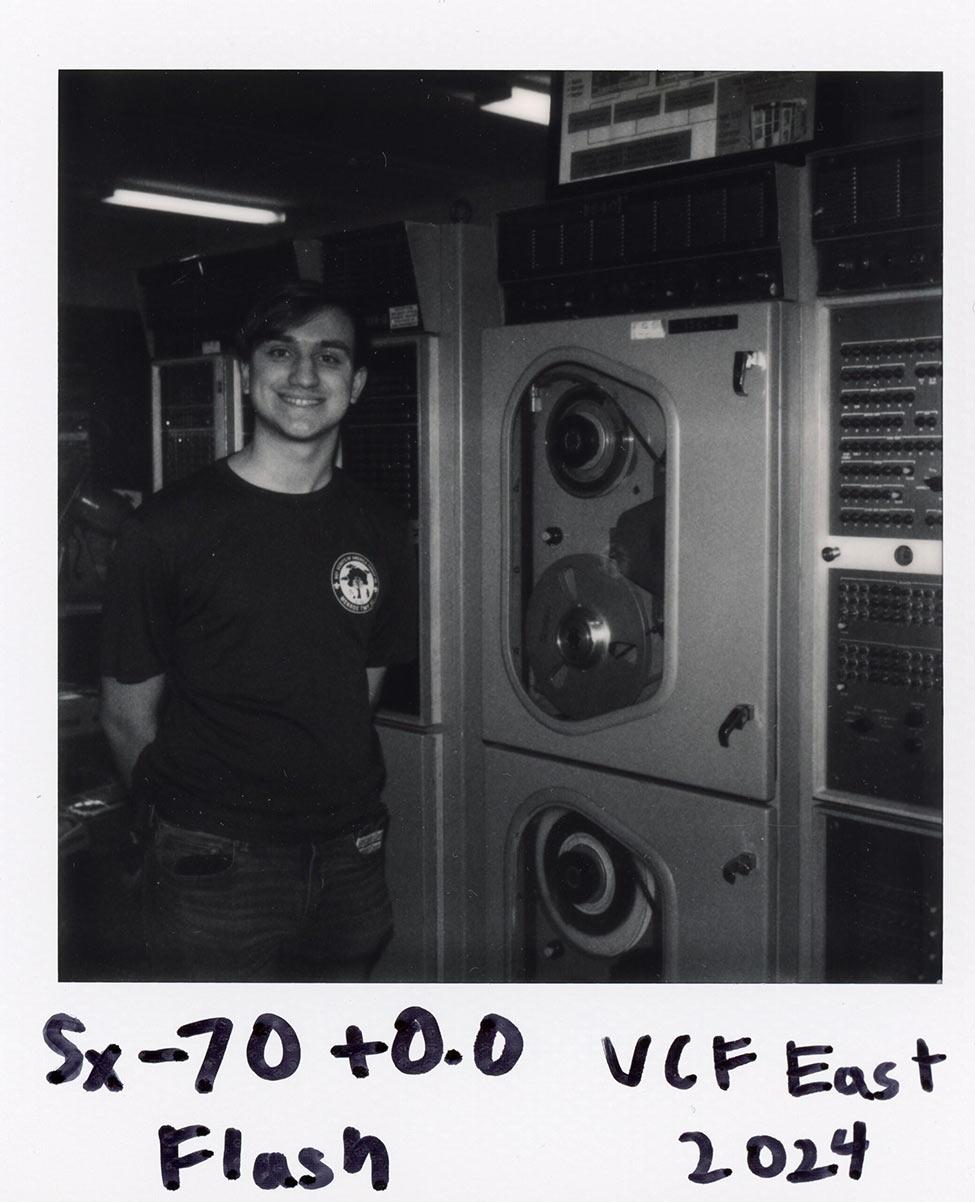
While his cybersecurity work is focused on defending the systems of tomorrow, Steven also works to preserve the past. Steven volunteers close to home at InfoAge Science and History Museums in Wall, New Jersey, where he maintains and demos one of the first ever digital computers fielded by the Navy. “I run a 1969 naval firing computer called the UNIVAC 1219,” he explains. “These half-ton gray behemoths of computing were installed on United States naval ships for managing their Terrier, Talos, and Tartar missile systems.”
Even his decision to come to Pace is at least partially rooted in an appreciation of the past. Not only is his mother a Pace alumna of the Class of ’96, but both of his parents worked in New York’s Financial District, and his father worked in the World Financial Center during the ’90s and early 2000s. “Three of my four grandparents came through Ellis Island, and all put down roots here,” he says. “We're in the capital of the world. Culturally, diplomatically, financially, you name it. Everything happens here.”
But beyond an amazing location, Pace also offered the expertise he was seeking. “I talked to people in the Cybersecurity Club and they all seemed very knowledgeable and qualified.” The faculty also serve as a great inspiration to him. “I have these professors who do incredibly meaningful work…Professor Joe Acampora is probably one of the smartest minds in cybersecurity, and Pace is so lucky to have him,” he says. “And Dr. Darren Hayes, my direct supervisor in the Digital Forensics Lab and Director of Cybersecurity, is incredibly intelligent and well networked.”
I have these professors who do incredibly meaningful work.
From cracking his dad’s password at age twelve and running a Cold War naval computer, to leading his teams to victory in cybersecurity competitions, Steven Schiavone’s passion is grounded in history and powered by his sense of duty. Our digital future is in safe hands.
Read more about cybersecurity at Pace or join the Cybersecurity Club on Discord.

When Vidhi Kothari ’25 began her journey at Pace University, she didn’t expect to become the founder of a startup. But what she did know, was that she wanted to create meaningful value in the world. That desire—to build, to contribute, and to empower through employment—became the foundation for her path as an entrepreneur.

When Natasha Depaoli ’26 gave up her residence hall room to commute, her family worried she’d miss out on campus life. Instead, she found her people—and built a community for others along the way.
A Tony nominee. A Citigroup executive. A water law strategist from the White House. This summer, Pace welcomed an extraordinary group of new leaders—each bringing a remarkable career, a bold perspective, and a shared commitment to student success. From the performing arts to business, environmental law to healthcare, these trailblazers are more than accomplished professionals—they’re mentors, visionaries, and changemakers.
When Natasha Depaoli ’26 gave up her residence hall room to commute, her family worried she’d miss out on campus life. Instead, she found her people—and built a community for others along the way.

When Natasha Depaoli ’26 transferred to Pace University, she made a last-minute decision that shaped her college experience: she gave up her residence hall assignment and chose to commute. Her family worried she wouldn’t get involved in the college experience. But Natasha threw herself into campus life—and today, she’s helping others find the same sense of belonging.
“For me, being a commuter actually forced me to get involved and go to events,” she said, explaining how living off-campus required her to take the reins and actively cultivate the community she was seeking. “I wanted to have a college experience and get involved and make friends, and being a commuter got me out of my shell.”
For me, being a commuter actually forced me to get involved and go to events.
Natasha, a criminal justice major on the Pleasantville Campus with a double minor in psychology and homeland security, has certainly challenged herself to get involved—and she’s risen to the challenge. Beyond her studies, she’s also president of the Criminal Justice Society, chief of communications for the Commuter Advisory Board, and a peer leader for first-year University 101 students.
What began as a personal effort to find community soon evolved into a drive to build it—for others as well as herself.
That sense of purpose carries into her academic and career goals. Over the summer, she interned with Homeland Security Investigations in New York City and returned to her internship this spring. “I’ve assisted with e-discovery on investigations, which is really cool to directly work with cases they’re working on,” she said.
Don’t graduate with regrets. If there’s something you want to do on campus, do it.
Her long-term goal is to become a special agent—something she’s dreamed about since childhood. “I never knew specifically what agency I wanted to work for… but ever since I like got this internship I really fell in love with this agency because it feels like a community.” For Natasha, this emphasis on community brings things full circle—it's something she’s prioritized across her college experience.
To other students, especially first-year students and commuters, Natasha’s advice is simple. “Don’t be afraid to ask for help and ask questions.” And for those like her who are entering their final chapter of college this fall, she offers simple advice: “Don’t graduate with regrets,” she says. “If there’s something you want to do on campus, do it.”

President Krislov welcomes the Pace community to Fall 2025 with reflections on resilience, connection, and the importance of caring for ourselves and each other. Read his message to kick off the semester with purpose and momentum.
When Vidhi Kothari ’25 began her journey at Pace University, she didn’t expect to become the founder of a startup. But what she did know, was that she wanted to create meaningful value in the world. That desire—to build, to contribute, and to empower through employment—became the foundation for her path as an entrepreneur.

Meet the actors, dancers, and designers redefining what it means to be a working artist in New York. From Broadway bows to lighting up Spike Lee films, at Pace’s Sands College, the line between student and professional blurs, and the city itself becomes the classroom, stage, and screen.
With a new name, a broader mission, and a commitment to integrating inclusive excellence across every aspect of university life, the Division of Opportunity and Institutional Excellence is ready to expand its support across Pace. Associate Vice President and Chief Diversity Officer Stephanie Akunvabey, EdD, shares what’s next.


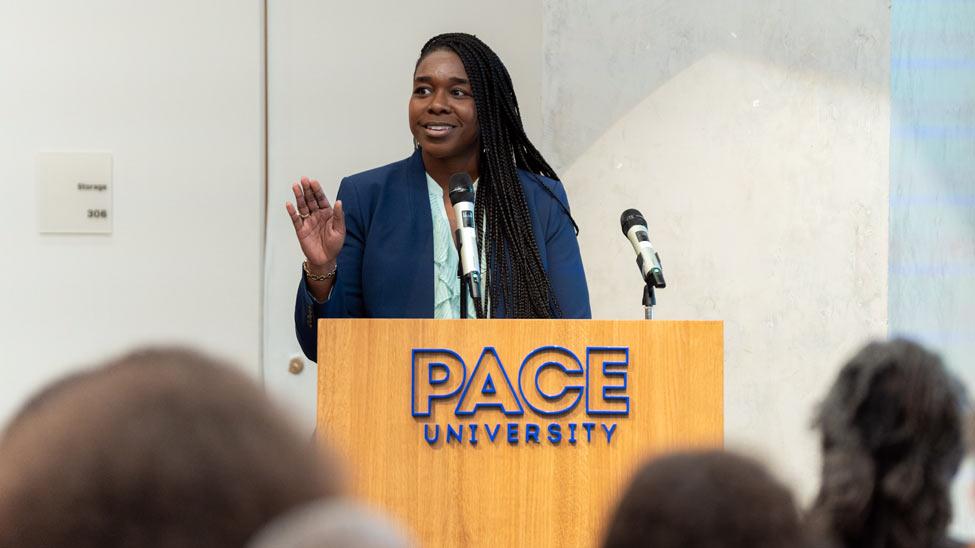
When Stephanie Akunvabey, EdD, joined Pace University in 2023 as associate vice president for diversity and inclusion and chief diversity officer, she arrived not just to lead but to listen. What she heard from students, faculty, and staff sparked a bold, strategic transformation—one that redefined a division and expanded a mission. This fall, the Division of Diversity, Equity, and Inclusion officially relaunched as the Division of Opportunity and Institutional Excellence (DOIE), a shift that reflects not only a change in name, but an evolution in purpose: to create a more inclusive, supportive, and impactful Pace for every member of its community.
Your division has evolved into the Division of Opportunity and Institutional Excellence (DOIE). What does this name change represent for Pace and our community?
Expansion. As a team, DOIE is laser focused on expanding our impact, improving the student experience, and making sure that Pace is a place where everyone feels welcomed and supported. With that in mind, we’ve intentionally partnered with Human Resources, Student Affairs, Academic Affairs, and other University divisions to ensure that inclusive excellence is a value that guides how we work, learn, and grow together.
How does DOIE define “opportunity” and “institutional excellence,” and why was it important to bring these ideas together under one division?
Pace has a long history of providing students with one-of-a-kind opportunities both inside and outside of the classroom. As a division, we strive to ensure that every Pace student can access those opportunities. We are committed to supporting socially, culturally, and economically diverse populations by mitigating barriers that have traditionally made it difficult for some students to truly thrive. We believe that an institution can only be excellent if it is fully committed to creating inclusive policies and practices.
Can you share a little about the DEI Realignment Plan and what motivated these shifts?
When I arrived at the University in August 2023, I went on a listening tour. During that time I heard from the Pace students, faculty, and staff who had championed diversity efforts at the University long before my arrival. It was clear that while there had been lots of progress, there was still a lot of frustration. The institution had followed a common model of creating small enclaves of support for students of color and members of the LGBTQIA+ community, but it hadn’t proved to be enough.
The realignment plan allowed us to create an organizational structure that would expand our service focus to include other historically marginalized student groups, while also supporting faculty and staff. We made an intentional effort to focus on preventive measures and educational tools, rather than just compliance and reporting for Title IX issues.
How will DOIE ensure that its work reaches all members of our community, across all campuses?
In the past two years, we’ve begun partnering with the Haub School of Law and reimagined our approach on the NYC and Pleasantville campuses. The Gosin Center for Equity and Inclusion has proven to be a hub for important dialogues and new leadership opportunities for faculty, staff, and students. Office of Multicultural Affairs (ōMA) in NYC is a Pace hallmark, and ōMA in Pleasantville has revamped its programming and expanded its partnership with the Athletics division. The Office of Sexual and Interpersonal Wellness does really important work with all of our first-year students and provides critical support for the community through the peer educator program on both the NYC and Pleasantville campuses. Our entire division actively engages with alumni and community partners in NYC and Westchester. Our footprint is bigger than ever, and we’re looking for creative ways to do more.
In your letter to the community, you mentioned a focus on “integrating inclusive excellence into every aspect of University life.” What does that look like in action—especially for students and faculty day-to-day?
Inclusive excellence is a strategic approach to embed our work into the core of the institution’s primary functions. We’re leveraging a few key drivers to ensure that we move from aspiration to action. When it comes to teaching, hiring, University programming, or community engagement, we want everyone to use a lens of cultural awareness that celebrates diverse perspectives. We’re doubling down on our partnerships and working to create a culture where a commitment to shared equity leadership and accountability are the norm.
DOIE works closely with Student Affairs, Academic Affairs, and Human Resources. How are these cross-campus partnerships helping to make the work more impactful?
Historically, equity and inclusion work has been left in the hands of a few passionate and committed individuals. That approach has not moved the needle in the way that we hoped. Shared equity leadership simply acknowledges that everyone has a role to play in improving our campus environment. Student Affairs, Academic Affairs, and Human Resources have been amazing partners, but we’re looking to work closely with other areas in the near future. As an example, it requires a coordinated effort between multiple divisions to ensure that essential accommodations are granted for members of our community with various accessibility needs. There’s lots of work to be done in this area, and collaboration is the only way to make the progress that we hope to achieve.
This fall, DOIE is hosting a series of launch events across campuses. What can attendees expect, and why should they make these events a priority?
We know people still have questions about what this change means. The launch events will give faculty and staff an opportunity to hear directly from me and the team. We’ve planned for great discussions, interactive components—and we’ll even have a cookie or two. Folks should show up for the good vibes and the refreshments.
Will there be any opportunities to share ideas, join committees, or participate in programming as part of the launch?
Absolutely. The launch events are a kick-off to a full year of engagement and movement toward a new vision. We have a few significant opportunities for folks to get involved and help shape what comes next.
What is one simple thing every member of the Pace Community can do right now to support DOIE’s mission?
Keep an open mind. I know there’s a great deal of change and uncertainty, but the DOIE team remains committed to deep and meaningful service. We invite the Pace Community to join us in our radical commitment to social impact, justice, and equitable student success.
Looking ahead, what’s your biggest hope for the impact DOIE will have on Pace by the end of the 2025–2026 academic year?
We want to be a beacon of hope and inspiration for the community. We’ve found a way to be nimble and creative, and we’re darn proud of the progress we’ve made. This year, we want to create spaces where people can connect, commune, and collaborate. If folks leave our events with a bit of joy or a fresh perspective—we’ve done our job.
Questions, feedback, or ideas? Reach out to Stephanie and the DOIE team at doie@pace.edu.
When Natasha Depaoli ’26 gave up her residence hall room to commute, her family worried she’d miss out on campus life. Instead, she found her people—and built a community for others along the way.
A Tony nominee. A Citigroup executive. A water law strategist from the White House. This summer, Pace welcomed an extraordinary group of new leaders—each bringing a remarkable career, a bold perspective, and a shared commitment to student success. From the performing arts to business, environmental law to healthcare, these trailblazers are more than accomplished professionals—they’re mentors, visionaries, and changemakers.
Meet the actors, dancers, and designers redefining what it means to be a working artist in New York. From Broadway bows to lighting up Spike Lee films, at Pace’s Sands College, the line between student and professional blurs, and the city itself becomes the classroom, stage, and screen.
President Krislov welcomes the Pace community to Fall 2025 with reflections on resilience, connection, and the importance of caring for ourselves and each other. Read his message to kick off the semester with purpose and momentum.

Welcome to the Fall 2025 Semester!
I hope you had a restful and rewarding summer and are returning to Pace with fresh energy for the year ahead. Whether you are just joining us or returning after some time away, I’m glad you’re here.
To our returning students—welcome back. I hope you’re reconnecting with your peers, settling into your routines, and setting new goals for the semester ahead. To our faculty and staff: thank you for all that you do to support our students and strengthen this University. Your commitment and care make a real difference, and I’m grateful for the energy you bring to this new academic year.
A special welcome to the Class of 2029. It’s always a joy to celebrate the start of the year at Convocation. Whether I’ve already had the chance to greet you or will see you soon, I look forward to welcoming you into the Setter family.
As we come together across our campuses, I want to remind everyone of something essential: take care of yourself. Get enough sleep. Eat well. Try new experiences. Meet new people. Set boundaries when you need them—and give yourself the space to grow. When you prioritize your well-being, you set yourself up for success in every area of life.
College is a unique time—one that is meant to be both challenging and joyful. Even in a world that can sometimes feel unpredictable, your time at Pace can be filled with connection, curiosity, and purpose. Be open. Be present. And don’t be afraid to ask questions or change direction along the way.
You’re not doing this alone. Our faculty and staff are here to support you, and your peers are part of the journey, too. If you need help, ask for it. If you’re not sure where to begin, start with a conversation. This is a community that believes in lifting one another up.
Later this month, we’ll host our Welcome Back receptions on both campuses (insert date). I hope you’ll stop by to connect with others and celebrate the start of a new chapter.
Let’s make this semester one of purpose, growth, and momentum.
Welcome back,
Marvin Krislov
President
A Tony nominee. A Citigroup executive. A water law strategist from the White House. This summer, Pace welcomed an extraordinary group of new leaders—each bringing a remarkable career, a bold perspective, and a shared commitment to student success. From the performing arts to business, environmental law to healthcare, these trailblazers are more than accomplished professionals—they’re mentors, visionaries, and changemakers.
Want to host an event during Pace’s sixth annual Social Justice Week? Apply by Friday, September 26. Read the article to learn more about the origins of Social Justice Week and how to get involved.
Meet the actors, dancers, and designers redefining what it means to be a working artist in New York. From Broadway bows to lighting up Spike Lee films, at Pace’s Sands College, the line between student and professional blurs, and the city itself becomes the classroom, stage, and screen.
The Elisabeth Haub School of Law at Pace University is pleased to announce that Professor Alexander K.A. Greenawalt has been appointed as James D. Hopkins Professor of Law for the 2025–2027 term.

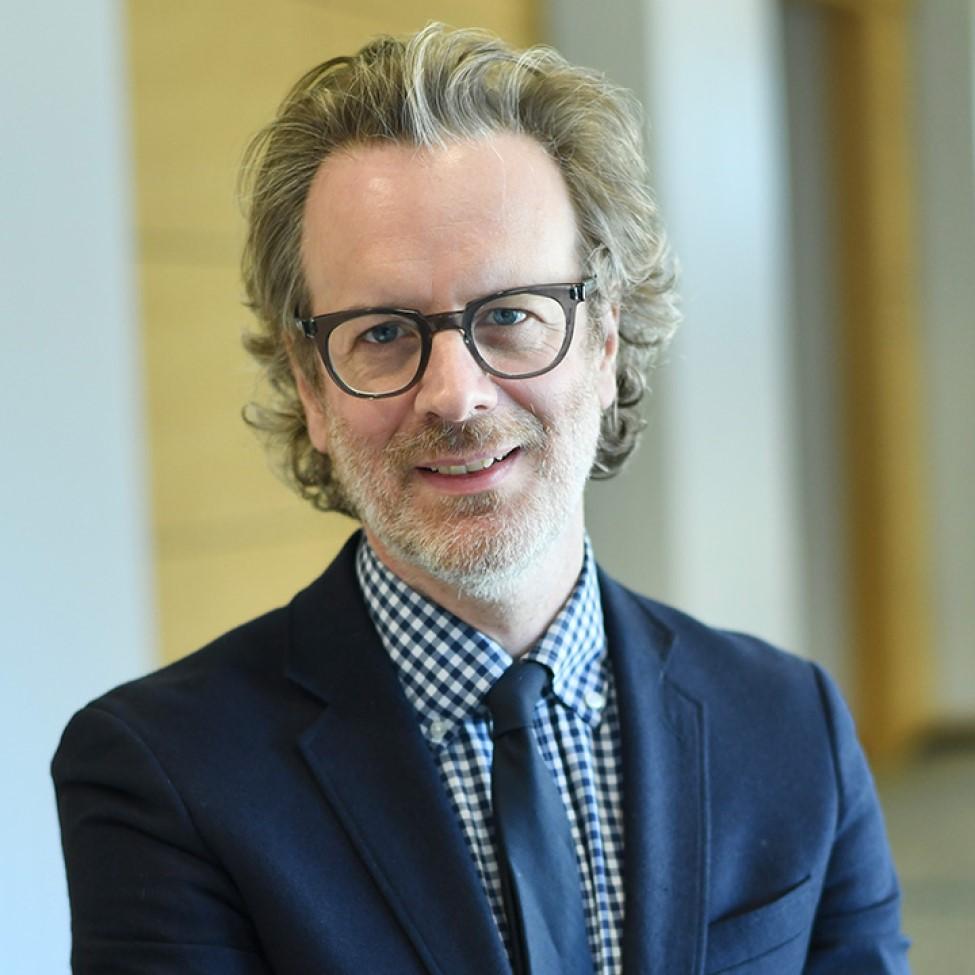
The Elisabeth Haub School of Law at Pace University is pleased to announce that Professor Alexander K.A. Greenawalt has been appointed as James D. Hopkins Professor of Law for the 2025–2027 term.
The title of James D. Hopkins Professor of Law is awarded to a member of the faculty for a two-year term in recognition of outstanding scholarship and teaching. The designation is considered to be among the Law School’s most significant faculty honors. During the holder’s term, the James D. Hopkins Professor delivers a lecture that is open to the entire law school community and members of the public.
“Professor Greenawalt joined the Pace Haub Law faculty in 2006 and has contributed tremendously to the Law School in the last nearly twenty years. His scholarship in criminal law, international law, and the laws of war has been published in prestigious law journals and recognized by his peers (including with Pace Haub Law’s distinguished Goettel Prize for Faculty Scholarship in 2024, 2018, and 2016). He was also previously honored with the Richard Ottinger Faculty Achievement Award in recognition of his outstanding service to the law school and the legal profession. We are honored to have Professor Greenawalt serve as our next Hopkins Professor,” remarked Dean Horace E. Anderson Jr.
Prior to joining the faculty of Pace Haub Law, Professor Greenwalt was an attorney with the firm Debevoise & Plimpton LLP, where his practice focused on international disputes. He was a teaching fellow at Columbia Law School in 2005 and was previously a clerk for the Honorable Stephen F. Williams of the U.S. Court of Appeals for the District of Columbia Circuit. Professor Greenawalt is a graduate of Columbia Law School, where he was a James Kent Scholar and Articles Editor of the Columbia Law Review.
At Pace Haub Law, Professor Greenawalt previously served as the Stevens Family Faculty Scholar and has taught Constitutional Law, Criminal Law, International Law, Administrative Law, International Criminal Law, United States Foreign Relations Law, and National Security Law. His recent publications include ‘With Intent to Destroy, in Whole or in Part’: Genocide, Ethnic Cleansing, and A Lost History, published in the Wisconsin Law Review in 2024. He was a Visiting Professor at Columbia Law School during the Spring 2017 semester, and has also been a Visiting Professor at St. John’s Law School.
The James D. Hopkins Professor of Law is an endowed chair, which was established with contributions from alumni of the Elisabeth Haub School of Law at Pace University and members of the legal community in honor of Judge James D. Hopkins, who served as Interim Dean of the Law School from 1982 to 1983. His distinguished service to society and to the legal community was a shining example of the life one should live in the law.
Immediately prior to the appointment of Professor Greenawalt, Professor Margot Pollans served as the James D. Hopkins Professor of Law. Learn more about the James D. Hopkins Professor of Law chair and its past recipients.
Lubin Professor Chiagouris weighs in on podcast engagement metrics, noting that incentivized downloads may distort actual listener interest.
Environmental Studies and Science Conservation Center Manager Jacob Reiter speaks to WSRYR-TV about how fall bird migration may impact avian flu patterns. Reiter, a licensed wildlife rehabilitator and NYS conservationist, discusses implications for wildlife management— the story gets picked up by Yahoo News and The Extinction Chronicles.