Image

The 2025 Cash Poor Report, created with input from Opinium and The Aspen Institute’s Financial Security Program and concluded by Lubin Professor Tamir Harosh, revealed that Cash Poor Americans paid over $39 billion in fees beyond the advertised APR when seeking short-term capital. This represents a staggering 34% increase from 2023, Quartz reports.

The Hudson Independent highlights Pace University’s free Camp CryptoBot, a dynamic, mission-driven cybersecurity camp for high school students funded by the National Security Agency.
Thanks to a generous gift from Kenda Sports Group, Pace Athletics is proud to announce that after a 35-year hiatus, men’s soccer will return to campus.


Collegiate soccer in the Northeast just got a lot more exciting.
“We are thrilled to bring men’s soccer back to Pleasantville and thank Kenda Sports Group for their visionary gift and support to lead this initiative,” says Pace Athletic Director Mark Brown.
After a 35-year hiatus, men’s soccer is back at Pace. The beautiful game will return to Pleasantville thanks in large part to the Kenda Sports group, who will be contributing $500,000 over a 5-year period to accelerate the men’s soccer program’s concept from vision and ideas into reality, aiming to grow the sport of soccer in the Hudson Valley and expand on the University's NCAA Division II sports sponsorship.
The team will be coached by Edward Evans, who has served on the staff of the women's soccer team since 2013, and became head coach in 2024.
“A lot of local youth and high school coaches are super excited about the re-addition of men’s soccer at Pace University,” said Evans. “We have full 18-game schedule, and our roster will give a local and regional feel to it.. We’re really looking forward to next Fall.”
Once regarded as a sport for the rest of the world, soccer continues to explode in popularity in the US, with its growth being driven by a younger, more diverse audience than the other major sports. Major League Soccer, which was not even in existence at the time of the last Pace men’s soccer season, continues to smash attendance records and has built a considerable roster of talent—most notably, international superstar Lionel Messi. With men’s soccer back in the fold, Pace is strategically positioned to capitalize on the positive momentum surrounding the sport in general.
Although Pace’s men’s soccer program has been dormant, its influence on American soccer has not been. Take the example of Mike Jacobs ‘92; an alumnus of the program, Jacobs has risen through the ranks of the soccer world following his playing career as a goalkeeper and is now the general manager of Major League Soccer’s Nashville SC.
“My experience at Pace helped formulate so much of who I am today,“ says Jacobs. “The idea that other kids will have the same experience that I did as a student, I'm just really excited about the fact that there will be men’s soccer at Pace again.”
“My experience at Pace helped formulate so much of who I am today. The idea that other kids will have the same experience that I did as a student, I'm just really excited about the fact that there will be men’s soccer at Pace again.”
The entire Pace Community shares Jacobs’ enthusiasm. On the Pleasantville Campus, the addition of men’s soccer will also serve to increase enrollment, while simultaneously enhancing the vibrancy of the overall student experience.
“The addition of men’s soccer will allow us to increase male enrollment by 20–25 students and create an additional 8–10 campus life opportunities with home games for students, faculty, staff, alumni, and the surrounding Pleasantville community, all while better meeting the needs of our current students,” notes Brown.
As Jacobs explains, the new members of the Pace men’s soccer squad—which will kick off its “re-inaugural” season in 2025—will undoubtedly raise the profile of the University both on and off the field.
“As a student-athlete, the skills I gained in time management—having to balance practice, working out, classes—there's a reason why so many companies look to hire former collegiate student-athletes,” adds Jacobs. “ They've mastered time management, can work in small and large groups, and are also very goal oriented.”
To keep current on developments–including announcements on recruitment, coaching staff, and more–be sure to stay up to date with Pace Athletics by visiting their website and following @PaceAthletics. Until the fall, the bright lights at Northwell Stadium eagerly await.

From individual accolades, first ever team wins, and the 2024 Pace Athletics Hall of Fame, the opening months of the school year have been filled with great success on and off respective playing fields.

At Pace University, we're driven by renewal, growth, and the pursuit of excellence. As we step into this exciting chapter, we reflect on the incredible progress we've made as a community of leaders, changemakers, and innovators.

At Pace, innovation and impact go hand in hand. This past fall, our faculty and staff secured transformative awards and impressive grants that spotlight Pace’s leadership in environmental justice, experiential learning, cybersecurity, and student well-being.
Through a grant from the New York State Department of Education, SOE's Jennifer Pankowski and Seidenberg's Tom Schmidt are employing artificial intelligence solutions to potentially revolutionize the teacher training experience.


School of Education Professor Jennifer Pankowski, EdD, specializes in working with neurodivergent students, embracing the role of technology in supporting both students and teachers in the classroom. Seidenberg Clinical Assistant Professor Tom Schmidt, DSc, has devoted his career thinking about the interplay between education and information systems, and how technology can cultivate a better learning experience.
Working together on a potentially groundbreaking research project was destined to happen.
“I connected with Jennifer, and I’ve so much enjoyed working her that it feels like we’ve always been in touch,” says Schmidt.
Both professors Pankowski and Schmidt have a strong interest in empowering neurodivergent students to reach their potential in the classroom. During the summer of 2024, Professor Schmidt continued his longstanding mentorship within this domain, serving as the faculty research advisor for then-Seidenberg student Ashley Peleg ’24; who based on her own experiences, sought to improve traditional teaching methods using XR technologies (virtual reality and augmented reality), so that teachers can better accommodate diverse learning styles in the classroom.
Fortuitously, this work aligned with a grant from the New York State Department of Education that Pankowski recently received. Entitled Enhancing Supports for Post Secondary Students with Disabilities, the grant focuses primarily on developing ways to help neurodivergent students have a better classroom learning experience—while additionally assessing if these innovations will improve the learning experience for all students.
As Schmidt elaborates, “By benefitting neurodivergent students, can we also further benefit everybody by the way we teach? This aligns very much with the research I’ve published over the past eight years, the science of successful learning. How do we adapt our teaching to make sure everyone feels included in the lesson? Can embracing (neuro)diversity make a better university for everyone?”
How do we adapt our teaching to make sure everyone feels included in the lesson? Can embracing (neuro)diversity make a better university for everyone?”
For many years, Pankowski has been employing avatars in the classroom to simulate complex situations that teachers may encounter in the classroom. Ashley’s research provided a foundation from which to further explore this area.
“Tom knew I worked with neurodivergent students and knew I worked with avatars. He reached out,” she says. “I had still been working with the avatar technology software I’d long been using, but through another platform, Edstutia, there was a lot more opportunity for innovation. He had me do a demo. That got us into this wormhole of—how do we really expand this thing?”
For Pankowski, a major focus of her practice is training her students to handle delicate and complex interpersonal situations with grace, poise, and expertise. Traditionally, this has been taught through case studies and role play simulations—both of which Pankowski note are not ideal, since case studies lack an experiential component, and role play can be tinged with implicit bias given the participants are already familiar with one another.
With Ashley’s research and the Edstutia platform as a launching point, Pankowski thought—what if, using this new technology, these simulations could be automated with artificial intelligence?
Thus, an idea was born. With direction from both Schmidt and Dan Buffone of Pace’s Learning Commons—who is also employing this technology—a few students are now helping to program the AI of Edstutia to automate a phone call simulation. The premise? A teacher is required to deliver not-so-good-news about a student…and must get the parent to come in for a parent-teacher conference before the parent hangs up the phone.
“We’re hoping by the start of the spring semester, our initial AI phone call will be ready to go,” notes Pankowski. “The goal is to get the parent (simulated by AI) to come in for a parent-teacher conference and not hang up the phone on you. If the AI-simulated parent hangs up the phone, the SOE student playing the role of the teacher will get a prompt to reach out to their professor, and then they’ll do the phone call with me.”
For Pankowski, this automation accomplishes several objectives simultaneously. For one, it significantly cuts down on the administrative load for faculty members tasked with creating simulations and role play scenarios, enabling her to focus on the actual skill-building and development of her students.
“I have a class of 30 education students. To really work one-on-one with students, or to have time to debrief in class, having an AI component that automates much of the process is hugely helpful. That frees up my availability, and now we’re able to bring the report into the classroom and discuss.”
To really work one-on-one with students, or to have time to debrief in class, having an AI component that automates much of the process is hugely helpful. That frees up my availability, and now we’re able to bring the report into the classroom and discuss.
Additionally, having a programmed AI bot removes some of the potential bias from the equation. It also offers the potential to significantly improve the learning experience for neurodivergent students, as it provides impartial analysis in a way that a standard role play simulation cannot.
“When we use this technology, we have a unique opportunity to be a fly on the wall—to give the feedback you’ll never hear from a parent. This allows us to discuss something like hey, this pinged on the AI as something you shouldn’t say, so let’s have a conversation; what were you trying to convey? And then we can have a redo.”
The redo component, Pankowski explains, is central to the value-add of this new technology. It provides Pace students ways to continuously develop real-world skills within the classroom setting—similar to the way a pilot in flight school builds their skills repeated simulations.
“The biggest benefit is that it’s giving that experiential component—the real-world application without the potential downfall of a real-world application,” explains Pankowski. “In the medical field, if you give someone bad advice, you don’t get a redo. In education, if you have a bad interaction with a parent, you don’t get a redo. What this does for students is allows them, like in gaming, to restart and get a do-over.”
In the medical field, if you give someone bad advice, you don’t get a redo. In education, if you have a bad interaction with a parent, you don’t get a redo. What this does for students is allows them, like in gaming, to restart and get a do-over.
As Pankowski and Schmidt look to further implement and expand this work, they hope to potentially be able to apply it other fields in which complex interpersonal interactions take place, such as within medicine or psychology.
As Pace is a leader in this field—Pankowski has noted that educators from Stanford, Michigan, Vanderbilt, Miami-Dade Schools, and as far as Israel have reached out to discuss this work—the potential for continued expansion and success can not only elevate the impactful work of our faculty and students, but make a difference in the lives of all students.
“No one is really looking at being a practitioner in this regard—we think about it for astronauts, racecar drivers, pilots. We don’t think about this for doctors, educators, psychologists, but they can benefit from this repeated simulation. That’s what we’re hoping to give, this Pace difference.”

At Pace University, learning from the best isn't just a promise—it's a reality. Meet the seven extraordinary professionals-turned-professors shaping the next generation of leaders. From theater to law, nursing to AI, these educators bring world-class experience and passion to every lecture.
At Pace, innovation and impact go hand in hand. This past fall, our faculty and staff secured transformative awards and impressive grants that spotlight Pace’s leadership in environmental justice, experiential learning, cybersecurity, and student well-being.

The days of John Gotti and The Godfather are long behind us, but organized crime has continued to evolve. A Pace student teams up with two faculty members to investigate.
For nearly 25 years, Pace University's Elisabeth Haub School of Law has partnered with Yale University to create one of the most unique and impactful joint degree programs in the world.


A Pace education has never been confined to just the classroom, or even the physical borders of campus.
From our long-standing relationships with the Big Four accounting firms, to levergaging worldwide connections in tech through the Design Factory Global Network, to a renewed focus on humanities-based learning opportunities in our own backyard, our ever-expanding network of partnerships ensures that when it comes to real life learning, Pace truly walks the walk.
If you look closely, you’ll find that these sorts of symbiotic partnerships are everywhere. Take, for example, the Elisabeth Haub School of Law’s relationship with Yale University. For nearly 25 years, law students at Pace have had the option to pursue a JD from Haub Law and a Master’s in Environmental Management (MEM) from the Yale School of the Environment. This unique relationship enables Haub Law students–who are already earning a degree at the number one environmental law school in the country–to pair their JD with an interdisciplinary master’s degree at one of the most prestigious universities in the world.

For good reason, this partnership is more popular than ever, with a record number of applicants and admitted students over the last few years. To further bolster the program, three new joint degree options were recently added, including a JD/Master of Environmental Science (MESc), JD/Master of Forestry (MF), and a JD/Master of Forest Science (MFS).
“More and more Pace students have participated every year, and we’re at the pinnacle of this program in terms of the quality, breadth, and quantity of students who are participating. We’ve grown to become the main law school involved in the program in terms of number of students.”
These are the words of Haub Law Professor Josh Galperin, who has been involved with the program for roughly two decades–first as a student, then as a lecturer at Yale, and now currently, as the program director at Pace’s Haub Law. During this time, Galperin has witnessed the program’s impressive growth and ability to meet the evolving goals of students; particularly the way in which the program is able to empower students to meet the ever-important challenges of the climate crisis.
As Galperin emphasizes, the program is far from just a glossy item to feature on a resume. For anyone interested in pursuing a career in environmental law or as an environmental professional, the program’s interdisciplinary approach offers incredible value. Important skills learned in law school such as analyzing problems in a careful and precise way, thinking deeply about both sides of an argument, and learning how to read cases and law and make legal arguments are all incredible assets, but often not enough for aspiring interdisciplinary environmental professionals. Rather, these skills are best utilized when paired with deep knowledge about the environmental concern in question.
“Environmental law isn’t plain old lawyering,” emphasizes Galperin. “It involves negotiation, policymaking, public outreach, some awareness at least—if not expertise in—scientific issues and concerns. In many respects, this is what makes the program truly valuable.”
“Environmental law isn’t plain old lawyering. It involves negotiation, policymaking, public outreach, some awareness at least—if not expertise in—scientific issues and concerns. In many respects, this is what makes the program truly valuable.”
Allison Sloto ’16, now an associate at international law firm Milbank LLP, echoes this sentiment. A large part of her current practice entails representing lenders seeking to understand whether the large-scale renewable energy projects they are considering are fully compliant with environmental laws–which in turn requires Sloto to review and interpret the results of complex consultant reports which demand in-depth knowledge of the environmental issues at hand. She credits her experience in the program as instrumental in helping her build the skill set she now employs routinely.
“As an environmental lawyer it is critical to be comfortable with science, as an integral aspect of our job is working hand-in-hand with environmental consultants and interpreting environmental reports for material legal conclusions,” emphasizes Sloto. “My time at Yale allowed me to take classes in science, policy, and business, which exercise the mind in different ways. Having the adaptability to understand a scientific paper, or engage in expansive brainstorming with a business group (without immediately engaging my lawyer-brain to critique proposed ideas), has helped me in innumerable ways throughout my career.”
For students currently enrolled in the program, the benefit is clear. Lauren Lynam ’26 is a 2L with a multidisciplinary background in environmental science, economics, technology, and law. She sees the joint degree as a great way to help bolster her acumen at the intersection of business and environmental law.
“I possess the capability to influence business decision-making with respect to the environment, but I have yet to apply my various areas of expertise in harmony. Earning a Master’s in Environmental Management from the Yale School of the Environment will shift my multidisciplinary skills, to an interdisciplinary method in approaching intersected business and environmental issues,” says Lynam.
Having the adaptability to understand a scientific paper, or engage in expansive brainstorming with a business group (without immediately engaging my lawyer-brain to critique proposed ideas), has helped me in innumerable ways throughout my career.”
Brooke Mercaldi ’23, is now an attorney at the Marine Affairs Institute and Rhode Island Sea Grant Legal Program. Having majored in environmental science in as an undergrad, she wanted to expand and strengthen that knowledge–which she did through both immersing herself in coursework and as well as through a broad set of research opportunities.
While completing the Yale portion of the program Mercaldi served as a Research Assistant at the Climate Change and Animal Agriculture Litigation Initiative and for the Yale Center for Environmental Law and Policy, and was also a teaching fellow for two different schools. If that wasn’t enough, she also became involved in an environmental protection clinic at Yale. Mercaldi credits all of these experiences—in addition to the positions she held at Haub—to helping her build the diverse legal and environmental acumen that has enabled her to flourish in her current role.
“The program offered me a unique opportunity to expand my knowledge and skillsets, work with and learn from experts from around the world, participate in additional research opportunities, and network with members of the Yale community—all while enhancing my ability to holistically understand environmental issues and develop creative strategies and solutions ” said Mercaldi. “I was confident Haub Law’s opportunities in and reputation for environmental law and YSE’s environmental science and policy courses would help me achieve my career aspirations.”
Just like many partnerships at Pace, this joint degree program is designed to function in a naturally reciprocal manner. While someone less familiar with Haub may see the immediate benefit to Pace (Yale, after all, is a member of the Ivy League and is consistently ranked among the top schools in the world) this is a partnership that equally advantages Yale. As Galperin explains, the benefits go both ways.
“The relationship between Pace and Yale is not a one-way street,” says Galperin. Obviously it's a great opportunity for our students to connect with a much wider network and a really rich pool of resources and opportunities. But equally as important, Haub is the number one environmental law school in the country. It’s got a huge reputation that attracts students from all over the world with a diverse set of backgrounds and skills. And they arrive at the Yale School of the Environment bringing a really valuable perspective to that; the perspective of lawyers and law students who come from not just any law school, but the number one environmental law program in the galaxy. Yale really values the interdisciplinary nature and quality of thinking that our students bring to the program.”
As record temperatures and natural disasters continues to affect every corner of the globe—2024 was the hottest year on record, with an estimated $229 billion in damages from natural disasters—this partnership ensures that Pace students will continue to be on the forefront of environmental problem solving, particularly as natural climate solutions and carbon reduction solutions grow in importance and popularity. As Galperin emphasizes, students who are both lawyers and understand how certain aspects of the environment truly work—such as the interplay between forests and a surrounding environment—can make a considerable impact in helping to reduce the negative impacts of the climate crisis.
As the partnership continues to grow, Galperin and the faculty at Pace are excited to help guide the next generation of climate lawyers and policy professionals toward continued success as they seek to make a meaningful difference in the world.
“To pair the incredible skill set you learn as a law student—the skills of ‘lawyering’—with an interdisciplinary broad-based approach to environmental problem solving, allows students to have the precision of the lawyering tool with the real-world experience of the master’s degree. And that makes them second to none in terms of environmental lawyers and professionals.”
At Pace University, learning from the best isn't just a promise—it's a reality. Meet the seven extraordinary professionals-turned-professors shaping the next generation of leaders. From theater to law, nursing to AI, these educators bring world-class experience and passion to every lecture.
The days of John Gotti and The Godfather are long behind us, but organized crime has continued to evolve. A Pace student teams up with two faculty members to investigate.

When generative AI burst onto the scene, Seidenberg faculty were already deep into the work. Learn how the school’s legacy of AI excellence has set the stage for groundbreaking work today and is preparing Pace students for the possibilities of tomorrow.
Pace University’s Go-Getters are shaping the future with achievements in innovation, global advocacy, and the arts. From top rankings to Broadway stars, discover how our students and alumni inspire confidence, resilience, and real-world impact.


Every semester, Pace University delivers extraordinary stories of ambition, achievement, and impact that exemplify the dynamic spirit of the Pace Community. From game-changing innovations like the “Sewsen” AI project tackling urban flooding to alumni shining on Broadway and Netflix, these highlights showcase the remarkable outcomes of a Pace education. Our students are influencing policy on a global stage, breaking career records at job fairs, and claiming top rankings in academic and professional excellence. Each of these stories, whether from our classrooms, labs, or community initiatives, reflects the confidence, resilience, and drive that define our Go-Getters. Dive into this semester’s top ten and let their journeys inspire yours.
Pace University is climbing the academic rankings for 2025, and the results are turning heads! Undergraduate programs are surging ahead, with Psychology leaping to the top 26% (up from 66%) and Economics breaking into the top 200. On the graduate side, Nursing–master’s now ranks in the elite top 5% nationwide, Physician Assistant studies lands within the top 100, and Public Administration continues to deliver consistent excellence. These achievements underscore Pace’s commitment to real-world learning and student success.

The Fall 2024 Job and Internship Fair at Pace’s Pleasantville Campus broke records with more than 900 students attending. Sponsored by PwC, the fair brought together 120+ top employers, including Deloitte, EY, the FBI, KPMG, Northwell Health, and Memorial Sloan Kettering, offering internships and entry-level roles. Career Services continues to connect Pace students to premier career opportunities across New York City and the Hudson Valley.
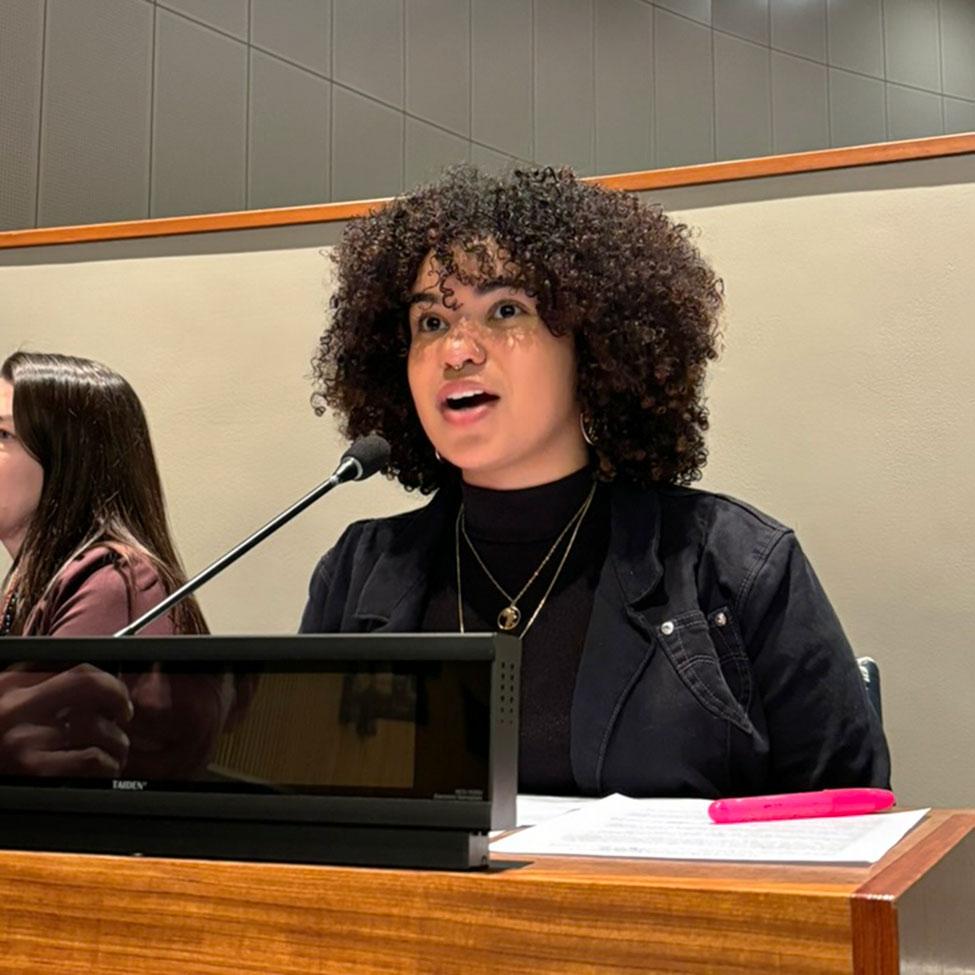
Layne Davis ’25, a Peace and Justice Studies and Political Science major, addressed the UN General Assembly’s First Committee, advocating for youth inclusion in disarmament and security policies. Her statement, supported by more than 100 global organizations, urged leaders to amplify the voices of those affected by armed conflict and intersecting challenges, including climate inaction and marginalization.
Alumnus Cooper Koch ’18 took center stage as Erik Menendez in Netflix's highly anticipated series, Monsters: The Lyle and Erik Menendez Story. This drama, based on the true-crime case that captivated the world, showcased Cooper’s powerful performance alongside Javier Bardem and Chloë Sevigny.

Pace University’s Federal Reserve Challenge Team continues its legacy of excellence, winning the 2024 New York Regional College Federal Reserve Challenge competition and ranking in the top five nationally out of 119 participating institutions— the largest in the competition’s history. The team also received an honorable mention as national finalists, competing against prestigious schools such as Harvard, Princeton, and the University of Michigan.
Wicked. Suffs. The Outsiders. Hamilton. Cabaret. How To Dance In Ohio. Pace University clearly knows how to make it to the main stage! Playbill’s Big 10 list highlights the schools with the most Broadway representation from last season, and Pace claimed the number four spot—outranking both Juilliard and Yale.
Third place in the prestigious AI Innovation Challenge went to none other than Pace’s own “Sewsen” project! This groundbreaking sewer sensor + AI solution was celebrated for its standout creativity, technical edge, and commitment to community impact. Designed to empower residents with real-time data on urban flooding, "Sewsen" redefines how we prepare for and respond to city water challenges. Yet another example of how our Pace innovators are setting new standards in tech with real-world impact!
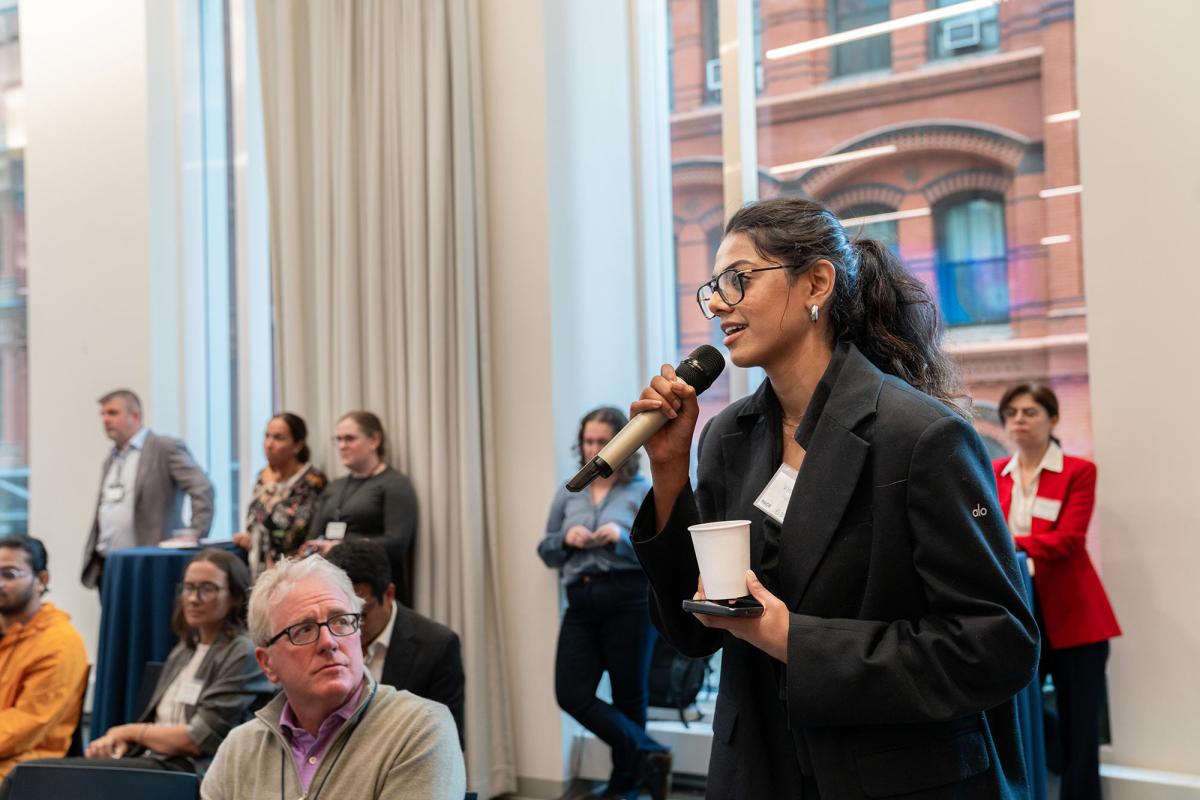
Pace University's Seidenberg School of Computer Science and Information Systems, in collaboration with global investment firms Sixth Street and Goldman Sachs, hosted the inaugural "Pace of Fintech: Accelerating Innovation" conference. The event featured discussions on cutting-edge technologies shaping the future of finance, including automating analog markets, cloud infrastructure, cybersecurity, quantitative finance, and generative AI. Esteemed speakers such as Marco Argenti, Chief Information Officer at Goldman Sachs; R. Martin Chavez, Partner and Vice Chairman at Sixth Street; and Stephanie Cohen, Chief Strategy Officer at Cloudflare, shared their insights. The conference also provided upcoming and recent graduates with career-building advice through an Early Careers Networking workshop led by Sixth Street and Pace Career Services.
Pace University has once again made the cut! We’re thrilled to be featured in The Princeton Review Guide to Green Colleges: 2025 Edition, a spotlight reserved for schools that go above and beyond in sustainability. This prestigious honor, drawn from surveys of nearly 600 institutions, recognizes Pace for our top-notch environmental programs, forward-thinking policies, and impactful practices. With more than 25 data points proving our commitment, Pace continues to set the bar for sustainability in higher education.
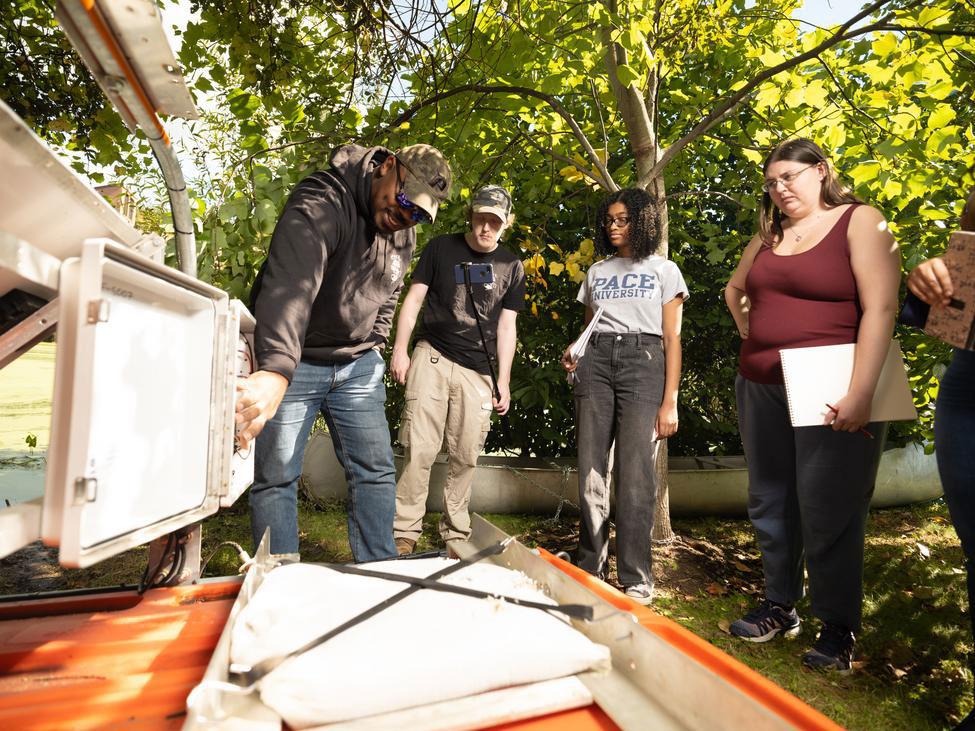
Twenty-five Pace University students were selected for the prestigious UN Academic Impact–Millennium Fellowship, placing them among the top 5% of over 52,000 applicants worldwide. This program empowers Fellows to lead projects advancing UN Sustainable Development Goals, including clean water advocacy, reproductive justice, and refugee rights.

As mental health becomes a global priority, expanding initiatives like mental health first aid can create lasting change across communities worldwide. Here's how we’re making it happen right here at Pace.
Through a grant from the New York State Department of Education, SOE's Jennifer Pankowski and Seidenberg's Tom Schmidt are employing artificial intelligence solutions to potentially revolutionize the teacher training experience.
At Pace, innovation and impact go hand in hand. This past fall, our faculty and staff secured transformative awards and impressive grants that spotlight Pace’s leadership in environmental justice, experiential learning, cybersecurity, and student well-being.
At Pace University, we're driven by renewal, growth, and the pursuit of excellence. As we step into this exciting chapter, we reflect on the incredible progress we've made as a community of leaders, changemakers, and innovators.

As a new semester begins, we are excited by the opportunities ahead and the momentum that continues to drive the Pace Community forward. This is a time of renewal and growth, underscored by our commitment to quality and excellence as we advance Pace University’s mission. Together, we are strengthening our programs, broadening opportunities, and ensuring Pace’s place as a leader in education and innovation.
This time also offers an opportunity to reflect on the progress we’ve made and the path that lies ahead. Whether it’s excelling in your careers, contributing to groundbreaking research, or fostering meaningful connections in your communities, our alumni continue to exemplify the drive and determination that define Pace. We are inspired by the extraordinary ways you bring the values of this University to life.
As we look forward to the remainder of the academic year, we are reminded of the collective achievements and resilience of our community. Our students are leaders and changemakers, our faculty bring new ideas and expertise to the forefront, and our alumni continue to excel across every industry and field. Together, we are demonstrating what it truly means to be a Pace Setter.
We are thrilled to share the Winter 2025 edition of Pace Magazine, which showcases the many ways our University is advancing and thriving. This issue highlights the groundbreaking work of our students and faculty, exciting new initiatives like the expansion of our environmental partnership with Yale, and the stories of alumni making strides in their fields. We hope you will take pride in exploring the incredible achievements featured in these pages and join us in celebrating all the great things happening within the Pace Community.
Thank you for your continued dedication, support, and pride in Pace University. Together, we are building a future to be proud of.
Warm regards,
Marvin Krislov
President
Rob Sands, JD ’84
Chair, Board of Trustees
At Pace University, learning from the best isn't just a promise—it's a reality. Meet the seven extraordinary professionals-turned-professors shaping the next generation of leaders. From theater to law, nursing to AI, these educators bring world-class experience and passion to every lecture.
For nearly 25 years, Pace University's Elisabeth Haub School of Law has partnered with Yale University to create one of the most unique and impactful joint degree programs in the world.
When generative AI burst onto the scene, Seidenberg faculty were already deep into the work. Learn how the school’s legacy of AI excellence has set the stage for groundbreaking work today and is preparing Pace students for the possibilities of tomorrow.
The days of John Gotti and The Godfather are long behind us, but organized crime has continued to evolve. A Pace student teams up with two faculty members to investigate.

“People don’t realize that it’s still happening and going on, and we should be paying more attention to it. The longer we don’t, the more it’ll go underground.”
Alexa Hradek ’25, ’26 is discussing organized crime. Through Pace’s 4+1 combined degree program, she’s currently earning a bachelor’s degree in criminal justice and a master’s in homeland security. Given her burgeoning area of expertise, she’s gravitated toward an interesting academic focus—how organized crime has evolved in the 21st century.
At Pace, the breadth and depth of academic expertise means that no matter your interest, you can almost always find a faculty mentor. This was certainly Alexa’s experience, as she gravitated toward the work of her professors—specifically Dyson Professor and Criminal Justice Chair Cathryn Lavery, PhD (who, in addition to her impressive body of academic research, hosts the podcast Crimes, Coffee, and Conversations), and Adjunct Professor David Mulcahy, who has spent three decades in field on both the state and federal levels.
Alongside co-researcher Heath Grant, PhD, at John Jay College of Criminal Justice, Lavery and Mulcahy began discussing research ideas, and homed in on the dearth of recent academic literature in organized crime. As both Lavery and Mulcahy explain, the vast majority of academics researching the field pivoted from organized crime to terrorism after September 11, leaving a wide gap of research over the past two decades. This reality, combined with the major technological and societal changes that have subsequently occurred, meant that the subject was ripe for exploration.

“The three of us got together and one of the questions we were thinking about is, with the opioid crisis and influx of fentanyl from drug cartels, there was this emerging issue of whether organized crime is still pervasive,” says Lavery. “You don’t see it a lot unless you’re looking at press releases from the Department of Justice or courthouses, and they generally seem to be very quick arrests at the local level. We decided we wanted to move forward with a publication looking specifically at what is the new face of organized crime?”
Any academic research requires an enormous amount of brain power combined with time-intensive scouring of literature. In this case, the trio wanted to start by building a very thick annotated bibliography while diving into journal articles from other criminologists in the field, which would then help the team build a timeline. They required a research assistant for this tall task and knew just where to turn.
“Alexa has taken courses with both me and Professor Mulcahy, and has always been interested in the topic,” says Lavery. “And due to our workload and research loads I thought, she’s a great student, she could really help us. It’s great to work with a research assistant who you trust enough to work independently.”
In addition to scouring academic journals for previous related research, Alexa has been spending her time sifting through local news—she cites the New York Post’s organized crime section as particularly helpful—and has done deep dives into specific metro areas such for anything from low-level gambling busts to drug trafficking, to everything in between.
“I’m actually surprised I haven’t been called by the authorities from my Google searches,” she jokes.
“I’m actually surprised I haven’t been called by the authorities from my Google searches.”
While the team is still in the research gathering phase of the operation, they’ve noted a few key findings. One point of emphasis is the way traditional organized crime has increasingly blended in with other forms of crime, as family and relative ties within organized crime continue to wane as harsher sentencing laws make it more likely for arrested members to “flip” on associates.
“Back in the day if you were the Genovese crime family, you were not working with the Russian mob, or the Bloods, or the Colombian drug cartels,” notes Mulcahy. “Now you’re seeing such a cross reference of these groups. Each of them has an expertise, and they’re working together to get drugs, guns, etc. into communities, as well as other contraband.”
“If you go back to the ’90s you had organized crime, terrorists, and gangs. There was no cross-collaboration,” adds Lavery. “Then all of a sudden, to see them working together, you realize there’s so many more hands in the pot, and you wonder why they are still profiting if there’s so many hands. But they’ve gotten very smart and are interlinking different avenues of crime and are not as specific or challenged with who they work with.”
There is still much work to be done and many more avenues to explore. For instance, their preliminary research has observed increased organized crime activity in cities such as Baltimore, Philadelphia, and Boston. The group spent a lot of time discussing the way the internet and social media have changed both the recruitment and “business” side of organized crime; while also completely changing the way law enforcement investigates illicit activities. Alexa will continue to work with Professors Lavery, Mulcahy, and Grant through the spring semester, as they begin to prepare their work for eventual publication.
All in all, Alexa is excited to continue to delve into this unique research topic while further building her skill set as she prepares for her master’s in homeland security and ultimately, an impactful career in the field.
“This experience has been surreal,” says Alexa. “I never expected something like this to come out of my college experience. I’ve had so much fun, and I’ve appreciated the trust from professors Lavery, Mulcahy, and Grant, and I feel like I’ve built a lot of confidence in my academics and knowledge in criminal justice.”
At Pace, innovation and impact go hand in hand. This past fall, our faculty and staff secured transformative awards and impressive grants that spotlight Pace’s leadership in environmental justice, experiential learning, cybersecurity, and student well-being.
Through a grant from the New York State Department of Education, SOE's Jennifer Pankowski and Seidenberg's Tom Schmidt are employing artificial intelligence solutions to potentially revolutionize the teacher training experience.
At Pace University, learning from the best isn't just a promise—it's a reality. Meet the seven extraordinary professionals-turned-professors shaping the next generation of leaders. From theater to law, nursing to AI, these educators bring world-class experience and passion to every lecture.
When generative AI burst onto the scene, Seidenberg faculty were already deep into the work. Learn how the school’s legacy of AI excellence has set the stage for groundbreaking work today and is preparing Pace students for the possibilities of tomorrow.

For decades, the Seidenberg School of Computer Science and Information Systems at Pace University has been at the forefront of innovation. As Artificial Intelligence (AI), particularly generative AI, transforms industries and redefines what is possible, Seidenberg is leveraging its history of excellence in the field to embrace the moment and prepare students to lead in an AI-powered world.
“Seidenberg professors are kind of bemused by the great boom in AI over the past couple of years,” says Katie Todd, assistant dean of strategy and engagement at Seidenberg and co-director of Pace’s AI Lab. The reason is simple: AI is in Seidenberg’s DNA. “AI is something they’ve been doing for decades, so after generative AI became this huge deal, they were kind of like, ‘yeah, and?’ That exemplifies the history of AI at Seidenberg.”
Faculty at Seidenberg have been working on AI for as long as the school existed. —Scharff
More than two-thirds of Seidenberg’s 40-year lifespan have included some form of AI education, with many faculty specializing in the field during their doctoral studies or across their research. Christelle Scharff, PhD, professor of computer science and co-director of Pace’s AI Lab, has been part of that legacy.
“Faculty at Seidenberg have been working on AI for as long as the school existed, and it was really led by research in robotics and D. Paul Benjamin, PhD,” says Scharff. She recounts finding evidence of early AI classes taught as early as 1997 covering topics from search algorithms, computer vision, and even natural language processing (the field of AI that serves as a foundation for modern generative AI). “We have now a record number of undergraduate and graduate AI courses spanning the different flavors of AI,” she continues. “And almost all Seidenberg faculty are tackling research problems in AI with applications in healthcare, art, education, cybersecurity, and gaming.”
AI is nothing new for Seidenberg, but now a new wave of innovation is reshaping the field—welcome to the era of generative AI (Gen AI).
Generative AI, popularized through large language models such as OpenAI’s ChatGPT and Microsoft’s Copilot, joined the game in 2022 and has continued to rise in popularity and public consciousness. The reason? According to Li-Chiou Chen, PhD, interim dean of Seidenberg, the reason is because of the accessibility of these tools.
“The most significant change in AI is the ease of access to Gen AI tools to regular users. That is, everyone with internet access can use AI tools to some extent,” Chen explains. “Therefore, AI is impacting every aspect of our life and is helping us make decisions in many areas, such as healthcare, communications, education, legal, marketing, and more.”
Everyone with internet access can use AI tools to some extent. —Chen
David Sachs, EdD, a professor of information technology and faculty co-chair of Pace’s University-Wide AI Committee, has also observed how AI is rapidly transforming work in countless sectors. “Since Generative AI was released to the masses, it has permeated our society and jobs throughout the world,” says Sachs. “AI is being used in every job you can think of in increasingly interesting and important ways. AI is redefining jobs and creating new ones.”
With this transformation comes a growing need for universities and colleges to equip students with essential AI knowledge and skills. According to Sachs, “All Pace University students should have a working knowledge of AI concepts and practices so that they can then choose when and where to use them.”
It’s only natural that Seidenberg is at the forefront of AI education at Pace.
Though AI has always been an integral element of Seidenberg curriculum, the school and its faculty have adapted quickly to keep up with the rapidly evolving AI landscape, from revamping existing courses to creating entirely new majors.
“Seidenberg has created new AI and machine learning courses and curriculum to address the current demand as well as new development in the area,” Chen explains. “We are also in the process of launching new master’s programs in this area, pending on New York State approvals.” The proposed MS in AI will equip students with the expertise they need to work with these large AI models, while the MS in Applied AI takes the tenets of AI and focuses on how they can be used across different disciplines to solve problems.
All Pace University students should have a working knowledge of AI concepts and practices so that they can then choose when and where to use them. —Sachs
One field in which AI has a notable impact is cybersecurity, where AI is powering both the efforts of cyber-threats and the defenses against them. The US Department of Labor not only identifies cybersecurity as a booming industry, but as one steadily becoming dependent on individuals with AI backgrounds. “Cybersecurity is one of the strongest academic disciplines in Seidenberg,” Chen says. “In addition to the MS in Cybersecurity program launched in Fall 2020, we are launching a new BS in Cybersecurity program in Fall 2025.” Pace partners with organizations like the National Security Agency and the Department of Defense to provide scholarship programs for cybersecurity students, while Seidenberg’s increased emphasis on AI ensures these students are ready to tackle the evolving challenges of cybersecurity in an AI-driven world.
But AI education isn’t just for computer science majors. Recognizing that as generative AI transforms industries, Seidenberg faculty and leadership are working to make AI education available to all Pace University students, regardless of their field of study.
AI is redefining jobs and creating new ones. —Sachs
Seidenberg first began this effort by revamping CIS 101, the introductory computing course required to be taken by nearly all first-year, non-Seidenberg students at Pace. Previously split evenly between Microsoft Excel and programming languages, the course now dedicates half of its focus to Excel and half to AI, with programming fundamentals introduced through the AI modules.
Sachs, who re-designed the curriculum to focus on AI, explains the AI modules cover a range of topics, including the basics of machine learning, an introduction to three popular chatbots (ChatGPT, Claude, and Copilot), practice with effective prompting, and explorations of the ethical issues of generative AI. “The course has been well-received by both faculty and students,” says Sachs. “Students were surveyed each week about the AI materials for that week; many of them had many positive comments about what they learned and how useful they found the AI materials to be . . . They seemed proud of what they had learned.”
—
Sachs is also finalizing the curriculum for an upcoming AI in the Workplace course aimed at graduating seniors. While CIS-101 is a great first step to ensure all first-year students have an understanding of AI, Sachs and other Seidenberg faculty recognized the need for graduating students to build AI skills, considering that employers are beginning to prioritize AI experience in candidates.
“Students will learn many of the concepts taught in CIS 101—introduction to AI, prompts, ethics, and most importantly, how AI is being used in the workplace,” Sachs says. “The course is filled with many current examples of how many companies use AI to enhance their businesses. Students will have access to a wide array of current AI resources and be provided with a listing of free online courses about AI, should they wish to continue their studies.”
For those looking to go beyond the classroom with their AI education, Seidenberg remains the hub for new resources and centers focused on AI excellence.
In December 2024, Pace launched the Gale Epstein Center for Technology, Policy, and the Environment, thanks to a generous gift from Gale Epstein, a renowned New York City philanthropist and business leader. The Center’s mission is to promote technologies and policies that uphold the public’s right to access information about environmental conditions that may pose risks to their communities.
“The Gale Epstein Center will provide our students and faculty with the tools and resources to develop real-world solutions to critical environmental challenges,” said Jonathan Hill, DPS, Pace’s interim provost. “This is a proud moment for Pace as we expand our commitment to sustainability and innovation.” And with Seidenberg’s established AI expertise, some of that innovation may focus on how AI can be applied to support the Center’s critical goals.
This is a proud moment for Pace as we expand our commitment to sustainability and innovation. —Hill
Members of the Pace Community seeking hands-on experience with AI can turn to the newly launched AI Lab, introduced in early 2024, which embraces an interdisciplinary approach to AI. “The Pace AI Lab is designed to be collaborative, and we really encourage people from other disciplines to get involved,” says co-director of the lab Todd. “Like other technology, AI is most interesting when applied to another area.” The lab has already covered AI topics related to philosophy, business, and publishing, and aims to broaden its focus in the future by embracing a diverse range of topics from the Pace Community while inviting outside businesses and community members to deepen collaboration.
Lab co-director Scharff outlines just a few of the AI Lab’s many accomplishments since it opened less than a year ago, including undergraduate research, developing AI curriculum and courses such as Ethics in AI and Generative AI, conducting faculty training on AI’s impact on teaching, hosting events, and more. “Clinical professor Andreea Cotoranu and I even developed a module on Equity Centered AI Design for the Global Innovation Practice Course of the Design Factory Global Network,” Scharff describes. “The online course was taught by faculty from Columbia, Finland, the United States, and Portugal. Around 15 students from Pace participated.”
Both the Gale Epstein Center and the AI Lab—alongside other established initiatives like the Robotics Lab and Computational Intelligence Lab—highlight how Seidenberg is going beyond the classroom to expand the impact of AI education at Pace, and the future of AI.
For many, the idea of an AI-powered future sparks existential questions about humanity, ranging from concerns over copyright and job displacement to privacy and data security. One way to tackle these concerns is through expanded AI literacy, equipping people with the knowledge to responsibly navigate an AI-driven world. And, as Todd puts it, “Seeing how people use generative AI to do creative and useful stuff really helps with the existential dread.”
AI education goes beyond mastering the technology. “For both users and developers, we need to recognize and understand the limitations and risks of AI, such as abuses of AI tools, bias in data, privacy, system transparency, and ethics,” says Chen. “Interdisciplinary discussion and collaborations can help us to clarify the limitations and adopt risk mitigation strategies that are needed when we embrace AI,” says Chen.
The research and education taking place here at Pace and Seidenberg is innovative, exciting, and applicable to the real world. —Todd
Though the AI Lab and many of these initiatives originate with Seidenberg, Todd similarly agrees that an interdisciplinary approach is ideal. Todd says, “I hope that our colleagues in other departments see it as an opportunity to get involved, explore how AI is impacting their discipline, and get in touch to talk about collaborating on research, events, or other initiatives. According to Sach, the interest is there. “AI at Pace and Seidenberg seems to be a hot topic these days,” he says. “During the summer of 2024, when an introductory course was offered, 140 faculty and staff signed up to take it in 24 hours!”
The field of AI is evolving fast. With its established history of excellence, Seidenberg is primed not only to keep up, but to set the Pace. “My hope is that we can position Pace and Seidenberg in the AI race in research and teaching,” says Scharff. “That means also going beyond generative AI and defining an agenda that will include collaboration with Pace’s other schools and colleges and looking forward to new advancements that would combine traditional AI with new trends in AI.”
Interdisciplinary discussion and collaborations can help us to clarify the limitations and adopt risk mitigation strategies that are needed when we embrace AI. —Chen
As Seidenberg continues to build on its AI legacy, Pace remains committed to equipping students with the skills and knowledge to make a meaningful impact and shape the future. “We aim to increase AI literacy at Pace and support the University’s academic reputation as a center for AI,” says Todd. “The research and education taking place here at Pace and Seidenberg is innovative, exciting, and applicable to the real world.”
Seidenberg isn’t just preparing students for an AI-powered future—it’s empowering the human ingenuity that will shape it.
Learn more about Artificial Intelligence at Pace and take advantage of AI resources exclusive for the Pace Community.
At Pace University, learning from the best isn't just a promise—it's a reality. Meet the seven extraordinary professionals-turned-professors shaping the next generation of leaders. From theater to law, nursing to AI, these educators bring world-class experience and passion to every lecture.
For nearly 25 years, Pace University's Elisabeth Haub School of Law has partnered with Yale University to create one of the most unique and impactful joint degree programs in the world.

Lisa Fastenberg, PhD—associate professor and chair of Pace University’s Mathematics Department—has been appointed to the Board of Trustees. A leader in math education and student success for over two decades, she’s now bringing her expertise to guide Pace’s future.
The Pace Community honors Morgan Jenness and Professor Vanessa Merton, two extraordinary individuals who left a lasting impact on our University. Their legacies live on in the lives they touched and the communities they inspired.


The Pace Community has experienced the loss of two remarkable individuals whose contributions to the University and their respective fields will long be remembered. Morgan Jenness, a cherished member of the Sands College of Performing Arts faculty, and Professor Vanessa Merton, a distinguished educator and advocate from the Elisabeth Haub School of Law, each left an enduring legacy of dedication, excellence, and compassion. Their influence continues to be felt through the countless lives they touched and the programs they shaped. In this issue, we reflect on their lives and honor their lasting impact on our community.
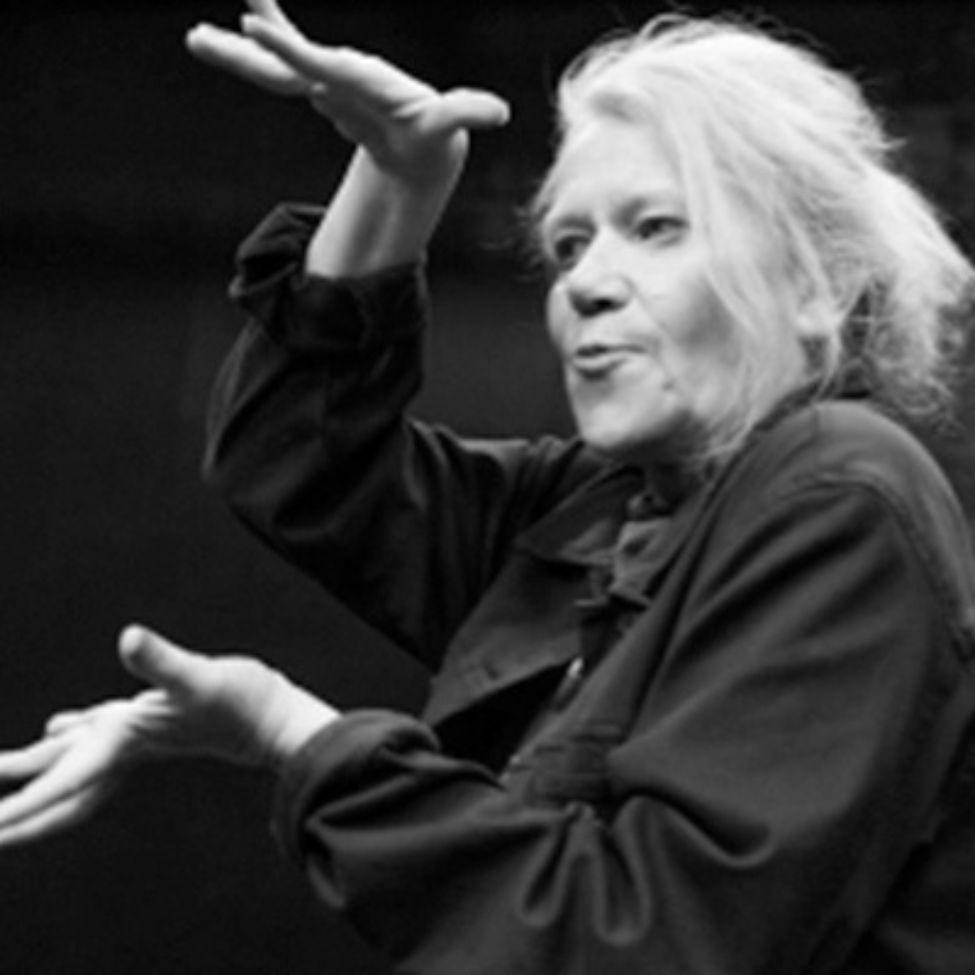
The Sands College of Performing Arts mourns the loss of Morgan Jenness, a revered adjunct faculty member whose legacy resonates across the classroom and the broader performing arts world. A visionary in theater and an inspiring educator, Morgan profoundly shaped the academic journey of many students, infusing lessons with passion, history, and professional wisdom.
Morgan’s illustrious career spanned pivotal roles at The Public Theater, where they served as literary manager, Director of Play Development, and Associate Producer under the leadership of George C. Wolfe and Joseph Papp. Their tenure left an indelible mark on American theater, nurturing voices and works that defined a generation. Beyond New York, Morgan’s influence extended through roles at the New York Theatre Workshop, Los Angeles Theater Center, and collaborations with esteemed festivals like the Bay Area Playwrights Festival and Hartford Stage.
Honored with prestigious accolades, including the Obie Award for Longtime Support of Playwrights and the Doris Duke Impact Award, Morgan’s commitment to fostering creativity was unparalleled. For over a decade at Pace, they cultivated an environment where students flourished, blending academic rigor with an unyielding love for the arts.
The Pace Community celebrates Morgan’s life of creativity, mentorship, and generosity. Their contributions will continue to inspire the next generation of artists and thinkers. Morgan’s brilliance remains etched in every life they touched.
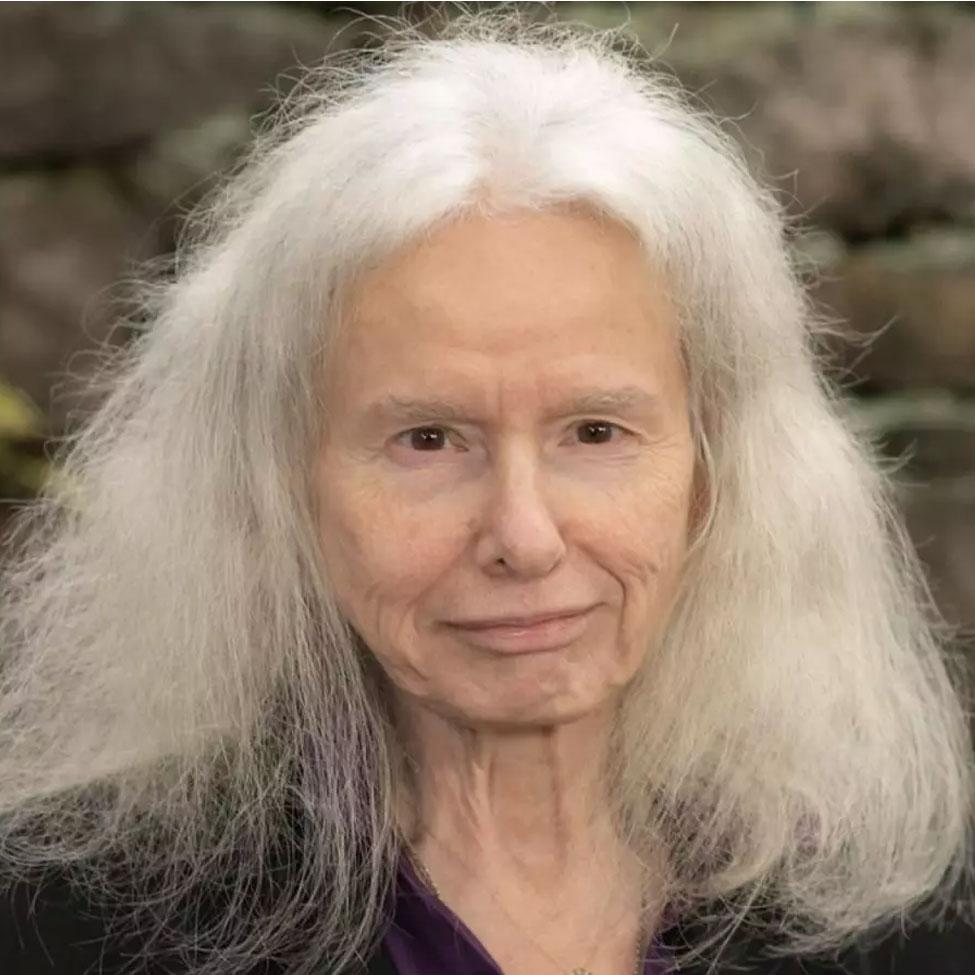
Elisabeth Haub School of Law remembers Professor Vanessa Merton, a transformative force in legal education and advocacy. Joining Haub Law in 1989, Professor Merton built a legacy of justice and education, serving as Associate Dean for Clinical Education and founding impactful programs like the Pace Immigration Justice Clinic.
Known for her relentless commitment, Vanessa led efforts to protect the underserved, advocating for asylum seekers, immigrant families, and juvenile immigrants. Her work extended from state and federal detention facilities to airports during pivotal moments like the 2017 travel bans. She also spearheaded a post-9/11 emergency operation that mobilized 200 students to assist those in need.
Vanessa’s leadership inspired generations of lawyers, many of whom credit their careers in public interest law to her mentorship. “Vanessa was a legendary legal expert and advocate,” said Haub Law Dean Horace E. Anderson. “Her altruism and dedication shaped our school and community.”
Her legacy endures through the Vanessa Merton Immigration Justice Fellowship, ensuring her advocacy continues to thrive. The Pace Community honors her remarkable contributions and lasting impact on legal education and justice.

Meet Director of Energy and Resiliency Ryan McEnany. Under his leadership, Pace has achieved a 24% reduction in greenhouse gas emissions, saved more than $7 million through energy efficiency, and implemented innovative programs that inspire our community.

After seven years of transformative leadership, alumnus Gary Laermer ’80 retires as VP of Development and Alumni Relations. His legacy of philanthropy and student impact will inspire Pace for years to come.

After answering an unexpected call to the field of mental healthcare, Daniel Crotty ’23 has earned the title of Obama Foundation Scholar and the chance to make a far-reaching impact.