Image

Pace is emerging as a leader in the undergraduate research community as evidenced by the ever-expanding opportunities spearheaded by the Center of Undergraduate Research Experiences.


At some universities, research is typically the domain of professors only—perhaps walled off from undergraduates in a lab or library and employing only graduate students as research assistants.
Pace operates differently. Our professors are constantly pushing the boundaries of scholarship, of course, but the strong research culture at Pace extends to our undergraduate student body. Through dedicated faculty mentoring, ever-expanding initiatives and inspired administrative vision, the University is positioning itself for leadership in the high-impact pedagogical practice of undergraduate research.
“Immediately, three words come to mind—visibility, access, and expansion,” says Maria Iacullo-Bird, PhD, when asked about how Pace’s undergraduate research programs have evolved over the past few years.
Iacullo-Bird, the assistant provost for research and clinical associate professor of history in Dyson College, was recently elected the 2024–2025 president of the Council on Undergraduate Research, a national organization with international reach comprised of 700 institutions and 13,000 individual members dedicated to promoting and supporting mentored undergraduate research, scholarship, and creative inquiry. As president of CUR, Iacullo-Bird will further advance Pace leadership in the global undergraduate research community.
Since taking the helm in university-wide undergraduate research, Iacullo-Bird has strengthened existing Pace initiatives such as the Provost’s Student-Faculty Undergraduate Research programs and expanded student access to research opportunities through Federal Work-Study Undergraduate Research Assistantships. She has guided the launch of both the Seidenberg School Summer Undergraduate Research Program and the Dyson College Amelia A. Gould Research Assistantships in the Creative Arts. Iacullo-Bird has increased student presentation options offering a combination of virtual, hybrid and in-person research showcases and has introduced the term “creative inquiry” at Pace to encourage students in the arts to participate in undergraduate research. She advocates for first-year research experiences, and the scaffolding of research within majors, while also raising awareness of existing programs and resources to ensure information is accessible to the Pace Community.
“Over the last several years in developing the Pace University Center for Undergraduate Research Experiences (CURE) website, we have created a central repository for undergraduate research activity. The website is designed to inform prospective and enrolled students, faculty, staff, and donors about the reach and depth of undergraduate research at the schools and colleges of Pace University,” says Iacullo-Bird
As part of its commitment to experiential learning, Pace offers the Classroom-based Research Awards program which encourages the development of new course-based undergraduate research experiences, a long-standing part of the Pace undergraduate curriculum. Classroom-based research award projects such as the practical application of Jupiter Robots, or exploring podcast creation as an occupational therapy teaching tool, have helped bring the ethos of scholarly research and creative inquiry further into everyday coursework.
Furthermore, funding for initiatives such as the Pace Student Academic Conference Travel Fund helps students gain valuable experience presenting research at prestigious discipline-based conferences not just in the New York metro area, but around the country and even abroad.
“I am especially proud of the expanding participation of Pace undergraduate students at national and international research conferences. To cite one example, in April 2023, eight students attended the Third World Congress on Undergraduate Research at the University of Warwick in Coventry, England. They were approved to present their individual research projects through a rigorous peer review process and several of them participated in international student research initiatives presented at the Congress,” notes Iacullo-Bird.
She adds, “Students have represented Pace at the National Conference on Undergraduate Research (NCUR) and continue to present at disciplinary-based conferences both within the US and abroad.”
In looking to the future, Iacullo-Bird anticipates advancing the institutionalization of undergraduate research at Pace—which includes completing a survey of course-based undergraduate research experiences to create an inventory of research courses across schools and colleges; building more student-focused structures that address the responsible conduct of research; commencing long-term funding initiatives to sustain and grow programs; and most notably, continuing to build the best possible undergraduate experience for Pace students.
“I look forward to the expansion of infrastructure to sustain and expand undergraduate research at Pace,” says Iacullo-Bird. “Undergraduate research and creative inquiry are an integral component of Pace experiential learning that will significantly contribute to the distinctive branding of Pace undergraduate education.”

With the impending opening of our new modern, sustainable, and welcoming campus building at 15 Beekman and the soon-to-start renovations of One Pace Plaza East, Pace has big plans for downtown. Simply put: Pace is building.

For 42 years, Ellen Sowchek has been sharing her infectious enthusiasm for Pace University history. Take a look at five of her favorite finds from the University archives.

National Championship? Check. A trip to the White House? Check. Read all about Pace women’s lacrosse’s dream season.
National Championship? Check. A trip to the White House? Check. Read all about Pace women’s lacrosse’s dream season.

All we kept saying all year long, was why not us? Why not Pace?”
These are the words of Pace women’s lacrosse head coach Tricia Molfetta, who, along with the entire squad, can now take their rightful place in the Pace Athletics and NCAA record books. While the season began with high expectations for this talented group of players, few expected them to finish the way they did—winners of the NCAA Division II National Championship, becoming the first NCAA collegiate team not just in Pace history, but in all of Westchester County, to win a national title.
“All season long, from the preseason in the fall, this is what we worked for," said midfielder Aleya Corretjer upon defeating top seeded West Chester University of Pennsylvania in the national championship. "We worked every day for it, and just to get to this end goal, it feels amazing. All the work paid off."
The season started off strong. The Setters made an early statement with a convincing 16-6 win against top-ranked East Stroudsburg, and a 19-8 victory over fourth-ranked University of Tampa. Led by standout players including Corretjer, Angelina Porcello, Sydney Juvelier, and Alexandra Quinn, alongside several other talented teammates, the Setters gained considerable momentum heading into NE-10 Conference play.
We worked every day for it, and just to get to this end goal, it feels amazing. All the work paid off.
Against NE-10 opponents, Pace didn’t let up. They racked up victory after victory, finishing conference play with a perfect 12-0 record, securing the NE-10 Conference regular season title over accomplished teams like Adelphi University and Le Moyne College in convincing fashion. Arguably their lone hiccup of the season came in the finals of the NE-10 Conference Championship, losing a nail-biter to Le Moyne by one goal.
Temporarily humbled, the team vowed to strike back, intent on affirming that they belonged with the nation’s best.
Due to their success during the regular season, Pace was awarded the top seed for their region in the NCAA Division II National Championship, a March Madness-style tournament featuring the 16 top teams in the nation. After first- and second-round victories against the University of New Haven and Adelphi, the Setters secured themselves in the Final Four, earning a trip to Indianapolis to compete for the top prize.

This time, the Setters made sure they were not going to go home empty-handed. After dominating Florida Southern 21-11 (other than the loss against Le Moyne, an early-season loss against Florida Southern were the lone defeats in their 21-2 season), the Setters set their sights on the national title. Their opponents, West Chester University, were the top-ranked team in the country and the favorites to take home the silverware. Pace, by proof of their performance, did not care.
In one their best games of the season, Pace defeated West Chester by a score of 19-9, essentially ending the contest after the first quarter with a truly dominant 10-0 display. The Setters’ 19 goals were the most ever scored in a national championship game, and the Pace women’s lacrosse team, a program that only began in 2015, were crowned national champions.
“What you saw today, we had been doing all season,” said Molfetta during the postgame press conference. “They’ve worked so hard for this. Even though we were beating teams by 10 goals all season, I think there were still people that doubted us.”

Although the games were over, the season had yet on more surprise in store. For their accomplishments, the team was invited by President Joe Biden and First Lady Jill Biden to the White House.
“Being invited to the White House was truly an unforgettable experience and I am so glad I was able to share it with my whole team,” said Angelina Porcello. Porcello, arguably the team’s best player all season, was named Intercollegiate Women’s Lacrosse Player of the Year, and was a finalist for the nationwide DII Honda Athlete of the year.
“It was so incredibly special to be welcomed to the White House in celebration of our national championship win,” added Emma Rafferty. “Being able to share this moment with my teammates and administrators will be a memory I will never forget.”
The Setters joined 47 teams from schools across the country including University of Texas, Penn State, University of Virginia, Stanford University, and University of North Carolina, among others. The teams represented 19 sports from all three NCAA divisions—national championship winners—that were recognized on the South Lawn of the White House as part of "College Athlete Day."
“You made tremendous sacrifices—training through injuries, birthdays, vacations, and even a pandemic,” Vice President Kamala Harris told the crowd. “You know, all of you, what it means to commit and to persevere. And we know that so often, during the course of a long season, sports teams also become a family. You develop life-long relationships. You demonstrate teamwork and character. You make the people around you better in every way. You are leaders. You are role models. And, of course, you are champions.”

Pace’s baseball team ended the season on quite a high note, amassing some silverware alongside some impressive individual awards.

Lubin student Sadie Lorence spent her senior year researching the intricacies of a notable legal dispute around the ’90s hit song, “Bittersweet Symphony”–and in doing so, has found her professional calling.

We were thrilled to celebrate our graduates on Monday, May 15, 2023, at the USTA Billie Jean King National Tennis Center with their friends and family! See who addressed the Class of 2023 and see photos from the big day.
Pace’s baseball team ended the season on quite a high note, amassing some silverware alongside some impressive individual awards.

It was a milestone season for Pace on the baseball diamond.
For the first time in program history, Pace University Baseball emerged victorious at the NE-10 Conference championship—providing head coach Hank Manning and his hardworking team of student-athletes some much deserved hardware in their trophy cabinet.
As a result of their conference championship win, the Setters earned a trip to the NCAA tournament for the first time since 2013—where they performed admirably. Their tournament got off to a great start with a win over Franklin Piece University, but the Setters ultimately fell to top-seeded Southern New Hampshire. Although their NCAA title dreams were cut short, their end-of-season surge, NE-10 title, and a 34-21 record rendered this season a considerable success.
Outside of the dugout, Senior Pitcher Pat Gleason, the NE-10 Championship Most Outstanding Player, was awarded the ABCA/Rawlings East Region Pitcher of the year and All America third team honors, finishing the season with a 1.81 ERA, with an impressive 8-2 record with four complete games pitched. His teammate, outfielder Mitchell McCabe, was named to the 2023 ABCA/Rawlings Division II All-Region team alongside Gleason.
McCabe was further honored with the NE-10 Man of the Year Award, a prestigious award bestowed upon a graduating student-athlete who has exhibited sustained excellence in competition, the classroom, and in their community service endeavors.
"Mitch was a man who did everything for us," said coach Manning. "In his absence next year, not only will we be missing a good baseball player, we are going to be missing an even better person. His legacy will hopefully continue on with the underclassmen who have watched him lead our team over the past several years."

Cables, coffee, curveballs, and now–curriculum. Read all about how George Chacko and Rich Miller, two Pace staff members, used their podcast to build out an audiovisual minor here at Pace that might just lead the charge to revolutionizing how AV professionals are trained.
For 42 years, Ellen Sowchek has been sharing her infectious enthusiasm for Pace University history. Take a look at five of her favorite finds from the University archives.
We were thrilled to celebrate our graduates on Monday, May 15, 2023, at the USTA Billie Jean King National Tennis Center with their friends and family! See who addressed the Class of 2023 and see photos from the big day.
Dive into this captivating summer issue of Pace Magazine and embark on a journey through Pace University's rich history and promising future. Peek into Pace’s historical archives, get thrilled about the exciting transformations at One Pace Plaza and the innovative 15 Beekman facilities, cheer for our women's lacrosse champions, and explore diverse perspectives on mental health in college.


When the new semester starts just after Labor Day, we’ll be opening our new campus center at 15 Beekman, and you can read all about it in the Summer 2023 digital issue of Pace Magazine.
15 Beekman will include a brand-new residence hall (with envy-inducing views over the city and region), a new home for the Seidenberg School, and new common spaces and academic spaces, a new library, and state-of-the-art dining services. It’s all part of the ongoing transformation of our downtown home that will include the comprehensive renovation of the east side of One Pace Plaza that will get underway this fall, including the new Performing Arts Center and so much more—all covered in this issue of the magazine.
You’ll read about the ongoing celebrations for our national champion women’s lacrosse team, who brought the Division II trophy home to Pleasantville this spring, becoming Pace—and Westchester County’s—first-ever national championship squad. You’ll also read about triumphs achieved by our new esports team, more rankings successes for our Haub law school, and awards won by our faculty and students.
Elsewhere in the issue, we look back—just a few months to Commencement 2023, when we celebrated all our grads on a perfect day in May, and also across the decades, in a fun feature that pulls gems from the Pace archives.
Finally, this issue of Pace Magazine also looks at one of the most important issues facing campuses today—and a priority for both of us as leaders: supporting student mental health. This is a national issue, and Pace is committed to providing our students with the resources they need. “From Awareness to Action” looks at how we’re doing that.
The construction, the activities, the supports, it’s all part of what we do at Pace—create opportunities for our students to succeed.
Marvin Krislov
President
Rob Sands, JD ’84
Chair, Board of Trustees
With the impending opening of our new modern, sustainable, and welcoming campus building at 15 Beekman and the soon-to-start renovations of One Pace Plaza East, Pace has big plans for downtown. Simply put: Pace is building.
National Championship? Check. A trip to the White House? Check. Read all about Pace women’s lacrosse’s dream season.
For 42 years, Ellen Sowchek has been sharing her infectious enthusiasm for Pace University history. Take a look at five of her favorite finds from the University archives.
Do you have what it takes? Hours in the gym, personal trainers, a meticulously planned diet. All of it leading to a single moment. Your simple task is to lift hundreds of kilos of iron and steel. To push your body harder than you ever have before. Up for the challenge? This scenario is a reality for Pace alumni Delaney Wallace ’17, who took home Gold at the International Powerlifting Federation’s World Championships in South Africa on June 8.


Do you have what it takes? Hours in the gym, personal trainers, a meticulously planned diet. All of it leading to a single moment. Your simple task is to lift hundreds of kilos of iron and steel. To push your body harder than you ever have before. Up for the challenge? This scenario is a reality for Pace alumni Delaney Wallace ’17, who took home Gold at the International Powerlifting Federation’s World Championships in South Africa on June 8.
Raised in Maryland, Delaney played a litany of sports in his youth, including baseball, soccer, and football. From a young age, he become accustomed to training his body and mind for the rigorous lifestyle of an elite athlete. This led to Delaney coming to Pace by way of a football scholarship where Coach Andrew Rondeau was transforming the football team into a program that was crucial to the development of its students. Being a Setter meant Delaney had access to mentorship, opportunities for personal growth, and an excellent education. Delaney, who works as a Financial Services Representative at Barnum Financial Group, attributes much of his success to his experience on the gridiron. The first thing professional recruiters always talk to him about is his time as a football player. According to Delaney, it signals to them his capacity for hard work and consistency under pressure. While playing ball, Delaney earned a BBA in Business Management from the Lubin School of Business. Lubin was a bigger selling point for him than the football program. On top of the connections he made, and the internships he participated in, Delaney learned from professors who were still active in finance.
A year after graduating, Delaney needed a change. He was getting settled into his career, wasn’t playing football, and didn’t want to become complacent. He missed that feeling of invincibility he had while playing college ball. Through a friend, he got in touch with a trainer to try and gain back some muscle. At first, the trainer was skeptical of Delaney’s abilities; his body didn’t seem suited to powerlifting. During the first consultation, he squatted 200 lbs. with ease, surprising his trainer. After multiple sessions, Delaney’s trainer recommended he start powerlifting competitively.
Delaney’s powerlifting career started modestly. His first competition was SMG’s Westchester Rebellion in 2018. Delaney took home first place, in a very encouraging first outing. Delaney attributes his early success to his time as an athlete at Pace. Football is a short season compared to other sports. You train all year for a season that only lasts ten games. Powerlifting is a sport that you train all year for an event that only lasts a couple of minutes. Delaney learned this need for delayed gratification from his time in football that carried over nicely to powerlifting, a skill that many of his peers lack. From Westchester, Delaney competed around the country. Nevada, Florida, Texas, Ohio. Medaling against some of the strongest people in the US. The World Classic Powerlifting Championships was his first international competition, followed by Sheffield Powerlifting Championships in the United Kingdom.
When asked how he felt getting gold in South Africa, Delaney had a mix of emotions. Despite finishing first, he knew that he was capable of so much more. Even though he was the best in the competition, he knew he was not at his personal best. But during the ceremony, when they presented him with his medal while the national anthem played in the background, he couldn’t hold back tears. He was proud to represent his country on the world stage.
Delaney says there’s no secret to what he does. He eats a banana and a protein shake for breakfast, elk for dinner, and spends 3 hours a day in the gym. Sometimes he treats himself to a salsa lesson in the Bronx on the weekend. His personal mantra is “recommit to your commitments, every day.” Every day, he wakes up and makes the conscious choice to be the best person that he can be, and to be as flexible as water in a stream. Delaney believes anything is possible given the right mindset, and he hopes to bring this message to his fellow alumni at Pace.
National Championship? Check. A trip to the White House? Check. Read all about Pace women’s lacrosse’s dream season.

The Pace Community mourns the loss of former University provost and former dean of the Lienhard School of Nursing, Marilyn Jaffe-Ruiz. Lean more about her life and legacy.

April Bartlett’s career as a theatrical designer has spanned from intimate off-Broadway productions to The Today Show. When the pandemic shut down production, she began refocusing her energies and found a new way to continue telling stories by supporting the next generation of designers, makers, and artists.
Career Services wrapped up the Spring 2023 semester with the first-person job and internship fair since the start of the COVID-19 pandemic. Best of all? There was record-breaking student turnout, making it the largest job fair in Pace’s history.


Career Services wrapped up the Spring 2023 semester with the first-person job and internship fair since the start of the COVID-19 pandemic. Best of all? There was record-breaking student turnout, making it the largest job fair in Pace’s history.
Hundreds of students turned out for the fair to meet and connect with representatives from more than 150 companies, including Barclays, Morgan Stanley, Regeneron Pharmaceuticals, US Department of State, Internal Revenue Service, Con Edison, Deloitte, US Environmental Protection Agency, Montefiore, Northwell Health, and the Federal Bureau of Investigation, among many others.
The fair was open to all majors and was sponsored by PricewaterhouseCoopers (PwC), which is among the Big Four accounting firms, offering clients various professional business services, including accounting, auditing, human resources consulting, and strategy management.
It’s important for employers to see us in-person so that you can showcase your personality, charisma, and communications skills.
“At Pace, we understand the importance of engaging students early, bringing them into our Career Communities designed to build pre-internship skills and experiences, and leveraging our relationships to help them get those internships and jobs,” said Phyllis Mooney, assistant vice president of Career Services at Pace University. “For Bachelor graduates in the Class of 2021, students were over 15% more likely to work in their field of study if they engaged with Career Services and had an internship than if they didn’t.”
Pace’s Career Services is a leader in the region for providing a range of career counseling and programming (both virtually and in-person) to ensure that the students they serve are career-ready and know how to articulate the skills employers are looking for in their entry-level candidates. In fact, Pace’s Class of 2021 exceeded national average in employment rates by 10+ percentage points, and the Class of 2022 data is trending to be just as positive.
Pace’s Career Services also offers their employer partners a tailored, successful recruiting experience that introduces recruiters to talented students that represent the very best of Westchester, the New York City region, and the world—resulting in extraordinary outcomes. Some top companies that employ Pace students include Deloitte, EY, KPMG, Montefiore, NewYork-Presbyterian, Northwell Health, NYU Langone Health, and PwC.
For Josiah Jones ‘24, the packed room provided ample opportunities to land a job or an internship.
“Having this in-person is important,” said Jones, noting that Pace’s Career Services is one of the University’s distinguishing advantages. “It’s important for employers to see us in-person so that you can showcase your personality, charisma, and communications skills.”
“As a transfer student, I’m really loving it,” Jones added. “I’m getting every opportunity out of my experience here and Pace is delivering.”
Save the date! Pace University is hosting its next Job and Internship Fair on Friday, October 13, 2023. Want to know how you can get involved as an employer, alumni, or student? Visit the Career Services website.

The launch of the new Sands College of Performing Arts, another year in the #1 slot for environmental law, a ton of awards and research, plus so much more. Here are your Summer 2023 top 10 Things to Inspire.
Do you have what it takes? Hours in the gym, personal trainers, a meticulously planned diet. All of it leading to a single moment. Your simple task is to lift hundreds of kilos of iron and steel. To push your body harder than you ever have before. Up for the challenge? This scenario is a reality for Pace alumni Delaney Wallace ’17, who took home Gold at the International Powerlifting Federation’s World Championships in South Africa on June 8.
With the impending opening of our new modern, sustainable, and welcoming campus building at 15 Beekman and the soon-to-start renovations of One Pace Plaza East, Pace has big plans for downtown. Simply put: Pace is building.
We were thrilled to celebrate our graduates on Monday, May 15, 2023, at the USTA Billie Jean King National Tennis Center with their friends and family! See who addressed the Class of 2023 and see photos from the big day.

“The problems of tomorrow will not be solved by the thinking of the past,” President Krislov said during his Commencement address on Monday, May 15. “They will be solved by new people, with new ideas, and new ways of doing things. They will be solved by a new generation that is creative and resourceful and adaptive. Your generation was knocked down, and then you stood right back up. You know how to think on your feet, how to adjust on the fly, how to make the best of any situation. You know how to get to a goal like graduation, even through a once-in-a-century disruption.”
Students celebrating this exciting achievement were a mix of undergraduate, graduate, law, and doctoral students, spanning a variety of disciplines and future careers, such as nurses and physician assistants, cybersecurity experts, lawyers, accountants, teachers, performers, and much more.
“Be courageous. That means trust yourself. Don’t sell yourself short. Don’t settle for work that you don’t believe in. Don’t assume that you can’t make a difference." —US Senator Elizabeth Warren
Speaking to roughly 15,000 people including 3,700 graduates at USTA Billie Jean King National Tennis Center in Queens, alumnus Telfar Clemens ’08 spoke of his path from a student finding his way in lower Manhattan to a celebrated fashion designer and founder of the global label Telfar.
In addition, the Elisabeth Haub School of Law, which recently earned the No. 1 ranking for Environmental Law by U.S. News & World Report, graduated 241 students, its largest class in the past five years.
US Senator Elizabeth Warren and Harvard Law Professor and legal historian Bruce H. Mann both received honorary degrees during that ceremony. Senator Warren shared stories of her early years out of law school and threaded her speech with a simple yet powerful message.
“Be courageous,” Warren said. “That means trust yourself. Don’t sell yourself short. Don’t settle for work that you don’t believe in. Don’t assume that you can’t make a difference."
Pace Trustee and alumnus Ivan G. Seidenberg ’81, retired chairman and CEO of Verizon Communications, addressed graduates of Pace’s Seidenberg School of Computer Science and Information Systems to mark the school’s 40th anniversary. Pace also awarded Aldrin Enis, president of One Hundred Black Men of New York, with its Opportunitas in Action Award.
The day was highlighted by the conferral of over 4,000 degrees including 1,735 masters’, which is the largest number in over five years, and roughly 300 students receiving dual degrees.


Meet Christelle Scharff, PhD, a computer science expert focusing on the limitations and biases of AI systems. She and her team are tackling the intersection of AI and African fashion to explore the impact of diverse datasets.

This spring, Pace University joined a winning collaboration chosen by New York City Mayor Eric Adams and The Trust for Governors Island that will create a world-leading climate solutions center on the 172-acre island in the heart of New York Harbor.
National Championship? Check. A trip to the White House? Check. Read all about Pace women’s lacrosse’s dream season.
Cables, coffee, curveballs, and now–curriculum. Read all about how George Chacko and Rich Miller, two Pace staff members, used their podcast to build out an audiovisual minor here at Pace that might just lead the charge to revolutionizing how AV professionals are trained.

Audiovisual, better known as AV, is often mischaracterized as a nostalgic scene with student volunteers rolling in a television when the teacher was absent—but this falls short of encapsulating full scope of audiovisual work carried out by professionals every day. From television broadcasts and live concerts, to Twitch streams and Zoom meetings, AV is an industry with incredible reach. An industry that, according to the nonprofit AVIXA (the golden standard for all things A/V), is estimated add 100 billion in revenue over the next 5 years, reaching 400 billion by 2028.
What’s surprising then is that most AV tech professionals are completely self-taught.
George Chacko ’04 ’15 and Rich Miller ’06 ‘09 think it’s time to change that.
The AV industry has no formal training or education but relies primarily on certifications and job experience to validate skillsets. Both Chacko and Miller say their AV experience is similar to everyone they’ve met in the industry—they had to figure it out along the way with no formalized AV education and often by trial and error. With technology advancing rapidly and the increased reliance on it by the general population, there is a growing need for professionals well-versed in AV tech.
Chacko and Miller (who, incidentally, are also long-time friends) had been kicking around the idea of AV curriculum for some time. So when the pandemic lockdown grinded the world to a halt, they decided to use their AV skills and gift for gab to start a podcast, with the hope of hammering out the details of what an AV education could look like on air. The initial concept for the podcast, hosted by “the Bald AV Guys”, was to discuss the ins and outs of such a program at Pace, but it soon grew a life of its own. Cables, Coffee, and Curveballs is the podcast, named for the variety of topics listeners can expect to hear covered. “Coffee is coffee, we’re both obsessed. Cables is technology,” Chacko explains. “And while curveballs was supposed to be about sports, it's become tangents. You know, hypothetical curveballs.”
Those curveballs have included episodes on mental health, human resources, and military information tech. But these tangents never stray far from their shared passion for AV technology and their desire to create an AV program right at home, at Pace.
Though AV might seem synonymous with computer tech, Chacko and Miller decided to create their program under the banner of Pace’s Media, Communications, and Visual Arts (MCVA) department. Part of it had to do with the nature of AV. AV powers most media communications—there is no media besides printed media that exists without somebody who knows how to turn on the lights and make the sound play. But the other determining factor was how hands-on MCVA programs are. “All they do is experiential learning,” Miller explains. “And this AV program is a hands-on, experiential program.” When they bought it up the MCVA chair Paul Ziek, PhD, his enthusiasm solidified what would become an organic partnership between them and the MCVA department.
During the spring 2023 semester, they launched their inaugural class—Introduction to the Audio Visual Industry in the Media, a lab-focused crash-course in AV. And one of the favorite labs of their students?
The AV Olympics.
And what are the AV Olympics? Chacko and Miller split their class of twenty into teams, assigned them five tasks, and dumped a mess of AV equipment in the center of the room and said, “figure it out!” Each task either drew from or was a continuation of work from a previous lab, challenging them in all aspects of the work, even requiring some AV math (yes, that’s a thing!)
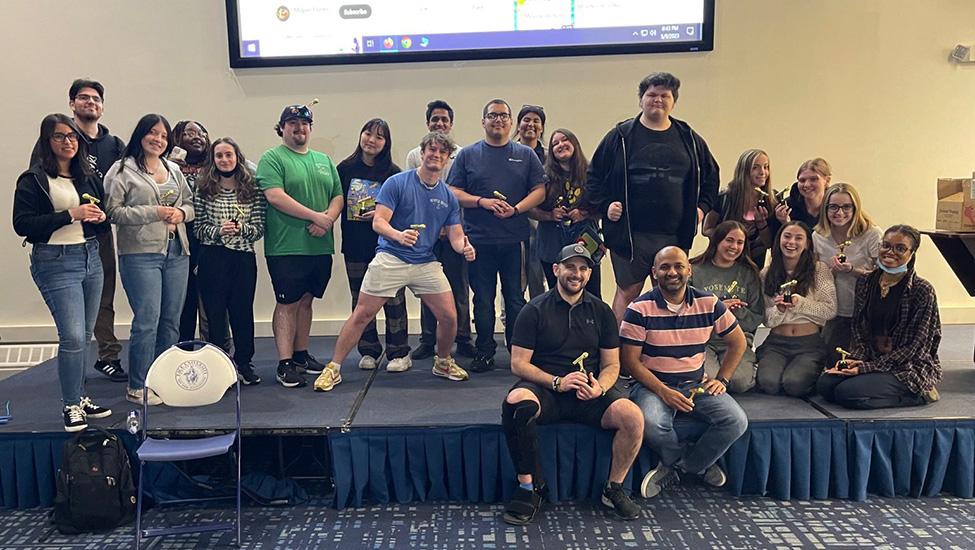
The Olympics were not only a culmination of everything they had learned, but served as their final exam, really putting the students’ knowledge and thirst to succeed to the test. “It was just amazing to see how dedicated and interested the students were,” Chacko says. “They stayed past nine o'clock to make sure their setup was completely perfect, the cables, everything. It was so great to see.”
At the end of the inaugural Intro to AV class, students received their AV Technologist Certification. By completing the AV minor that Chacko and Miller are developing, students will be fully prepared to take their Certified Technology Specialist certification and complete an internship that will help springboard them into their AV career.
Chacko and Miller’s overarching hope is to build an entire program, and hopefully a movement, towards AV education. “Obviously there's a lot more hurdles to making something a major, but that is our end goal,” Miller says. “But we're not ending it here, once the minor’s done. We're not stopping there.” They’ve even had other schools reach out asking to partner to develop their own programs. “They're actually sort of jealous,” Miller says, “that we've been able to get something off the ground.”
Chacko and Miller might have had to learn their craft along the way and on their own but, if all goes well, their program won’t be the last of its kind, even if it may be the first.
April Bartlett’s career as a theatrical designer has spanned from intimate off-Broadway productions to The Today Show. When the pandemic shut down production, she began refocusing her energies and found a new way to continue telling stories by supporting the next generation of designers, makers, and artists.
The Pace Community mourns the loss of former University provost and former dean of the Lienhard School of Nursing, Marilyn Jaffe-Ruiz. Lean more about her life and legacy.
Do you have what it takes? Hours in the gym, personal trainers, a meticulously planned diet. All of it leading to a single moment. Your simple task is to lift hundreds of kilos of iron and steel. To push your body harder than you ever have before. Up for the challenge? This scenario is a reality for Pace alumni Delaney Wallace ’17, who took home Gold at the International Powerlifting Federation’s World Championships in South Africa on June 8.
From hip hop in contemporary art and design to a class dedicated to planning and executing the most memorable events, Pace has some truly unique courses that can add some extra panache to a well-rounded college experience.


College represents a once-in-a-lifetime opportunity in myriad ways. By definition, a University is an institution designed for instruction and examination in many areas of advanced learning.
Across our seven schools, there’s quite a lot students can learn–from computer information technology to peace and justice studies, there is truly something for everyone. While the areas of study are truly endless, we decided to highlight a range of some truly unique courses students can enroll in while at Pace–types of courses that add an extra, distinctively satisfying dimension to the Pace educational experience:
For most of us, it takes more than a Pharrell song to be happy. This course, offered by the philosophy department at Dyson College, delves into one of the most profound–and difficult to answer–questions of the human condition. Namely, it tackles age old questions like: What is happiness? Is happiness sufficient for a worthwhile life? Is morality necessary for happiness? What is the relationship between happiness and a meaningful life?
Course Rotation: Westchester, Fall
As anyone who has been involved in events will know, successful event management has more layers and tiers than the most elaborate of wedding cakes. Offered by Lubin’s department of management, this course introduces students to the principles, concepts, and steps involved in planning and executing successful events. Students taking this course will learn many aspects of organizing and managing special events, including venue selection, preparing and managing the budget, scheduling and staffing, food and beverage coordinating, decor, and much more.
Course Rotation: NYC, Fall
Reality television is not a new phenomenon. In fact, it’s been with us for three quarters of a century, ever since Candid Camera first aired in 1948. Yet, of course, the advent of Reality TV has truly exploded in the 21st century–from Survivor to American Idol, from The Bachelorette to Top Chef. Offered by the department of media and communication arts, this course examines the phenomenon of reality television from programming, economic, and social viewpoints.
Course Rotation: Westchester, Spring
Hip hop shapes today’s visual culture, from magazines, clothing and design, to the art world itself. But what is it? Many of the elements of the culture can be traced back to the early 70's with graffiti on trains, and new forms of street dance, poetry and DJ'ing coming out of The Bronx. An afro-centric street culture became a new language which spoke to the world. This course combines lectures, slide shows, video and readings; engaging students in discussion and writing on the class topics.
Course Rotation: NYC, Fall
What does activism look like in the digital age? How are youth engaging with digital technologies in everyday life, and what are the political implications of these everyday practices? This course examines the myriad forms and mechanisms of digital activism that have been embraced by youth throughout the globe, and consider how digital media can be a platform for both leisure and politics, and some of the ways in which each informs the other. Digital media—both its form and content, as well as its production and consumption—will serve as a lens onto issues of social inequality and national politics as they pertain to youth.
Course Rotation: NYC, Fall
Dreaming of heading to Rome? Why not do so with course credit? This unique travel course provides students with an intense and comprehensive experience grounded in an understanding of history, art, architecture, religion, and Roman culture; the capital of the ancient Roman Empire, the Catholic Church, and the contemporary state of Italy. In other words–take an unforgettable trip to Rome, and truly get to know one of the greatest cities in the world.
Course Rotation: Travel Course
This comprehensive immersive learning course is designed to demystify the logistics of working and living in Los Angeles, the audition and booking process, as well as creating/implementing business strategies for a career in Film and Television. Taught in an immersive, hands-on approach, actors will work closely with current West Coast industry casting directors, talent agents, talent managers, studio and network executives in the areas of commercial, TV comedy, TV drama, soap opera, and feature film to gain a personal understanding of the expectation and preparation required to be a working professional actor in Los Angeles.
Course Rotation: Travel Course
In this anti-racism education (ARE) and civic engagement (CE) course, students learn about the trials and triumphs experienced by Black entrepreneurs from historical, contemporaneous, and sociological perspectives. Students learn about the various business disciplines; entrepreneurship, specifically Black entrepreneurship; historical, political, economic, and social factors affecting Black entrepreneurship; challenges facing Black entrepreneurs in New York City; and hear from Black Pace alumni entrepreneurs and entrepreneurs affiliated with New York City's Small Business Services Advancing Black Entrepreneurship (BE NYC) initiative.
Course Rotation: NYC, Fall and Spring
House. ER. Grey's Anatomy. Medical shows, sure, but representative of an important media phenomenon. This course focuses on the analysis of media portrayal of disease states. The media portrayal of disease manifestations will be assessed and contrasted to evidence based disease manifestations and clinical experience. Students also analyze the effect of accurate and inaccurate disease portrayal on health care, health policy, and the general public.
Course Rotation: NYC and Westchester, Spring and Summer
Law 320 Digital Media Law delves into the ever-evolving, complex relationship between entertainment, technology, and the law. How might this class look when its focus is Taylor Swift? Look out for Digital Media Law (Taylor's Version) coming to a Pace classroom near you—anticipated release date Spring 2024!
Have you taken a unique course you’d like the Pace Community to hear about? Let us know.
The launch of the new Sands College of Performing Arts, another year in the #1 slot for environmental law, a ton of awards and research, plus so much more. Here are your Summer 2023 top 10 Things to Inspire.
This spring, Pace University joined a winning collaboration chosen by New York City Mayor Eric Adams and The Trust for Governors Island that will create a world-leading climate solutions center on the 172-acre island in the heart of New York Harbor.
National Championship? Check. A trip to the White House? Check. Read all about Pace women’s lacrosse’s dream season.
Terryl Brown ‘86, an attorney with extensive legal, leadership, and management experience in city and state government, has been named vice president and general counsel for Pace University.

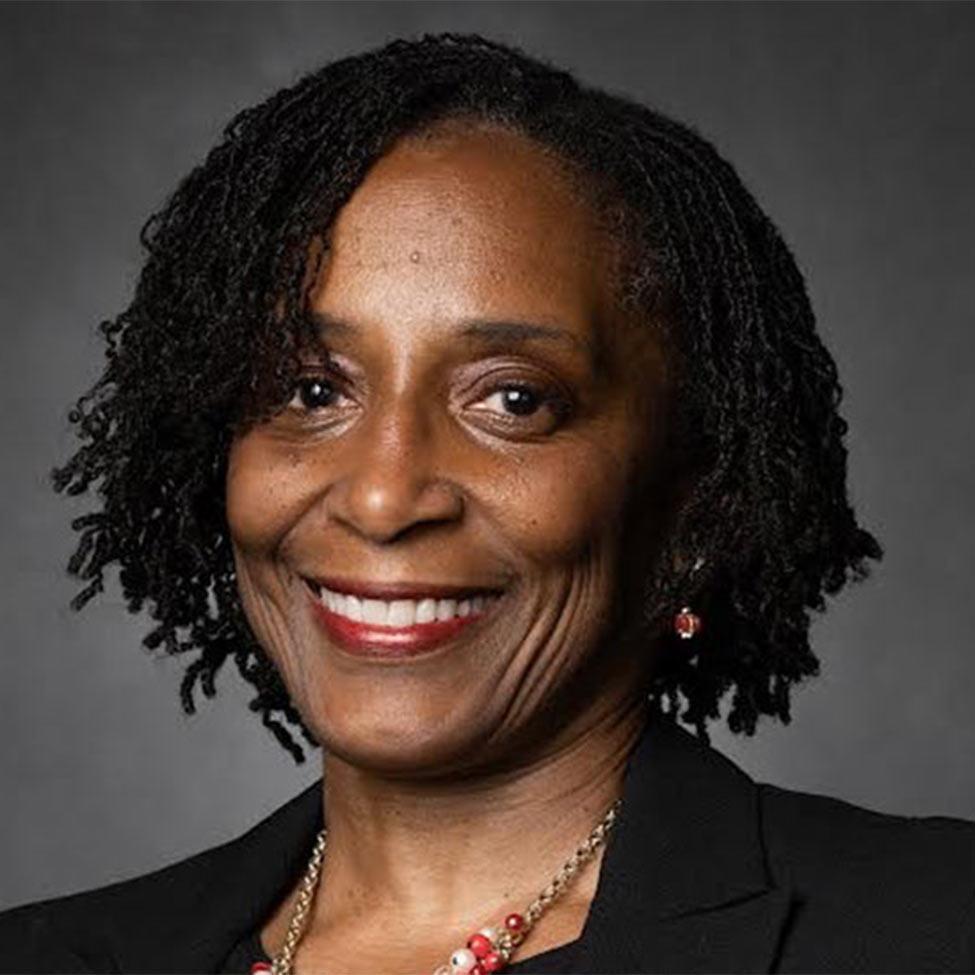
Terryl Brown ‘86, an attorney with extensive legal, leadership, and management experience in city and state government, has been named vice president and general counsel for Pace University.
“I am committed to Pace University’s mission and believe in the transformative power of education,” said Brown. “Pace's values are consistent with my own, and I'm looking forward to helping Pace continue its important and transformative work.”
Brown most recently served as deputy commissioner of legal affairs and administration for the New York City Fire Department (FDNY), where she oversaw operations and legal matters for a department comprised of 17,000 employees.
I am committed to Pace University’s mission and believe in the transformative power of education,” said Brown. “Pace's values are consistent with my own, and I'm looking forward to helping Pace continue its important and transformative work.
Over the course of her impressive legal career, Brown has also been chief ethics officer and counsel with the New York State Attorney General’s Office, acting counsel to Governor David Paterson, first assistant counsel to Governor Eliot Spitzer, a commissioner of the New York State Joint Commission on Public Ethics, executive vice president and general counsel at the New York Power Authority, and a partner Harris Beach PLLC.
“Terryl Brown’s accomplished career in law and government exemplifies what it means to make an impact on the world through her hard work and excellence,” said President Krislov. “She embodies our mission and philosophy of creating opportunities for our diverse student body, and we are pleased we’ll be able to benefit from her insight and expertise.”
The Pace Community mourns the loss of former University provost and former dean of the Lienhard School of Nursing, Marilyn Jaffe-Ruiz. Lean more about her life and legacy.
National Championship? Check. A trip to the White House? Check. Read all about Pace women’s lacrosse’s dream season.
Lubin student Sadie Lorence spent her senior year researching the intricacies of a notable legal dispute around the ’90s hit song, “Bittersweet Symphony”–and in doing so, has found her professional calling.