An ethics opinion by Bennett L. Gershman, a Pace University law professor and former Manhattan prosecutor, accompanied the letter and said “it is plausible that the Chief Justice’s spouse may have leveraged the ‘prestige of the judicial office’” to “raise their household income.” He added that those concerns, coupled with what he described as the chief justice’s lack of disclosure of potential conflicts, “threaten the public’s trust in the federal judiciary, and the Supreme Court itself.”
In an analysis filed along with the complaint, Pace University law professor Bennett Gershman writes that “it is plausible that the Chief Justice’s spouse may have leveraged the ‘prestige of judicial office’ to meaningfully raise their household income.” “That concern, together with the failure of the Chief Justice to recuse himself in cases where his spouse received compensation from law firms arguing cases before the Court, or at least advise the parties of his spouse’s financial arrangements with law firms arguing before the Court, threaten the public’s trust in the federal judiciary, and the Supreme Court itself,” Gershman wrote.
Pace University student Jonathan Becker, a skateboarder, is quoted in a New York Times story about a movement to revitalize and reopen Brooklyn Banks under the Brooklyn Bridge.
Jonathan Becker, 22, a student at Pace University who used to look over the Brooklyn Banks from his first-year student residence hall room, was not ready to give up. “We just hoped that it could lead somewhere, but we didn’t know that it would take off,” Mr. Becker said. “It’s one of those spots within the skateboarding community that really has a lot of deep-rooted history.”
Haub Law Professor Randolph McLaughlin provides insights and perspectives about police culture and the killing of Tyre Nichols.
"What's most shocking about it all is the brutality and then at the end, the complete dehumanization of this man. He's not even human to them -- he's not even a person," Randolph McLaughlin, professor at the Elisabeth Haub School of Law and co-chair of the Newman Ferrara civil rights practice, told The Guardian.
Haub Law Professor Bennett Gershman pens an op-ed in The New York Times about potential conflicts of a Supreme Court Justice’s spouse.
An ethics opinion by Bennett L. Gershman, a Pace University law professor and former Manhattan prosecutor, accompanied the letter and said “it is plausible that the Chief Justice’s spouse may have leveraged the ‘prestige of the judicial office’” to “raise their household income.” He added that those concerns, coupled with what he described as the chief justice’s lack of disclosure of potential conflicts, “threaten the public’s trust in the federal judiciary, and the Supreme Court itself.”
Launching officially on May 16, get ready to experience a new Pace Portal with upgraded sections, easy-to-navigate structures, and an overall improved user experience. Try the beta now!
Alyssa Cressotti
Earlier this semester, Pace’s ITS team launched a beta version of a brand-new Pace Portal, which means you’ll get to choose between the old version (the current one you’re used to) and the new version (which we will transition to on May 16, 2023).
Here are a few of our favorite new features and things to look forward to this spring:
It has a search bar! Looking for that link you found one time three years ago? No need to dig through every page. With the implementation of a search bar, you can easily find the information and resources you need to access.
Students can see their classes listed right there on top of their personal profile page. When students log in to the new Pace Portal, they’ll be able to see their current class roster right up front and center—you know, the important stuff.
It’s a soft launch. Hate change? We get it. Our soft launch of the new Pace Portal will happen in beta this January, meaning you can switch back and forth between the old version and the new version while you’re getting familiarized with the new system. With any luck, this will help ease you into a big change.
You’ll help shape the Pace Portal. While the Pace Community gets used to using the new Pace Portal in beta, we’re hoping to crowdsource feedback from you—our main users! By sharing your feedback with ITS during the Spring 2023 semester, we’ll make tweaks and improvements before the official launch on May 16, 2023.
You won’t ever have to hunt for your U number ever again. The new Pace Portal displays your personal information on your personalized landing page—your U number, your landline phone number, and your Pace email and username.
Across the country, nearly 40 percent of college students report going hungry, and 52 percent have utilized food pantry services at some point. At Pace, we’re working hard to help offset food insecurity on our campuses and we need your help to do it!
Pace gets internships. At the New York Botanical Garden, Thomas Costella is exploring food justice through the Edible Academy and how the power of community can support food systems in New York City and beyond.
As an International Management student, Caroline Dowers '23 is taking what she's learning in the classroom and putting it to work. Not only is she exploring different countries and cultures, but she's also getting true global business experience that will set her apart from other candidates as she searches for a post-graduation job.
From professional quality documentary production to in-the-field athletics coverage, students in the Media, Communications, and Visual Arts department on the Westchester Campus are gaining valuable experience.
Amanda Ghysel
The philosophy of “learning by doing” is undoubtedly at the heart of Pace University’s Media, Communications, and Visual Arts (MCVA) department on the Pleasantville campus. Each semester, MCVA faculty find new and creative ways to immerse students in real-life situations—in the podcasting booth, behind the camera, and in the editing studio. Here’s a snapshot of MCVA’s exciting courses and initiatives and how hands-on learning is impacting students and alumni as they embark on dynamic careers.
Booth Review
Image
About Booth Review
Image
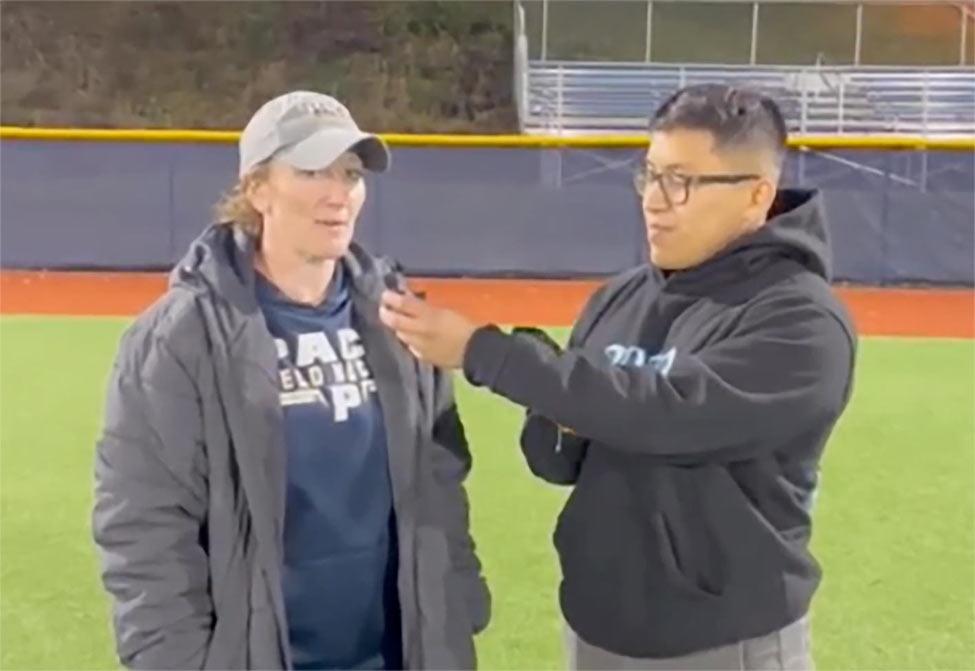
Booth Review gets students in on the action, interviewing coaches and players from Pace's athletic programs.
Launched during the 2021-22 school year by Associate Professors Michelle Pulaski Behling, PhD, and Kate Fink, PhD, Booth Review is MCVA’s own sports broadcasting initiative through which upper-class MCVA students can intern for credit. Booth Reviewputs interns in the action, producing podcasts, conducting interviews, and writing articles about Pace athletics, as well as about contemporary issues in the sports world at large. In the fall semester, interns hosted a discussion entitled “Sports, Media, and Activism” as part of Pace’s annual Social Justice Week and aided in research for a journal article on the public relations impact of the National Letter of Intent.
A student’s perspective
“Booth Review has impacted my career aspirations because it is everything that I want to do,” said Jack Cunningham ’23, Communications. “I want to be a sparkplug type of reporter. I want to be able to do on-air reporting, write articles, and interview athletes. I have only realized how much I loved it during this internship.”
BoomBox: A Short Film
Image
About BoomBox
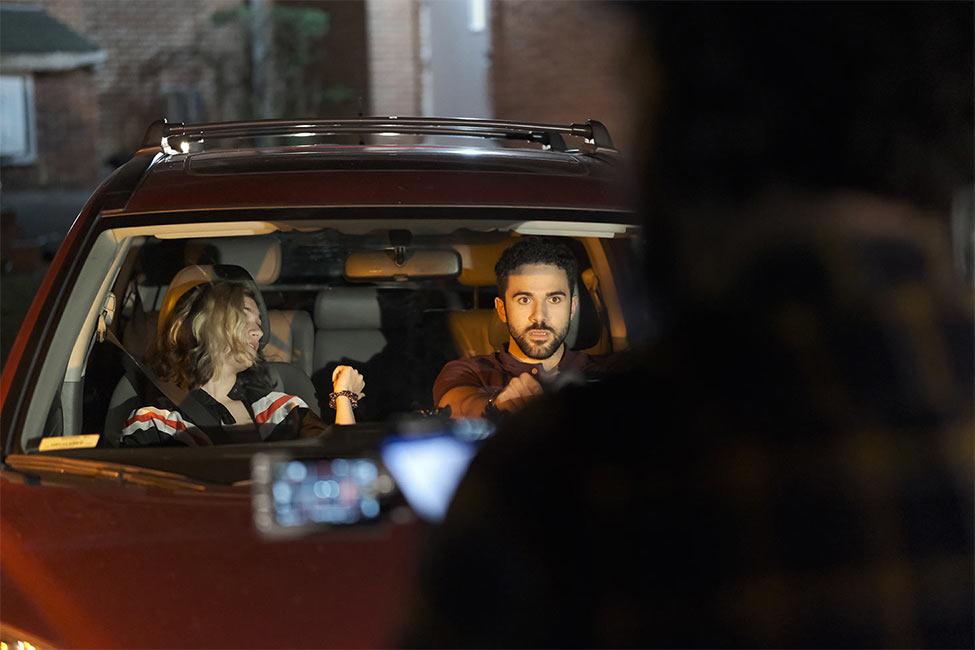
Students from the Cinematography 1 and Lighting: The Craft of Cinematic Artists courses, both taught by Professor Lou Guarneri, MA, teamed up on a superhero action/comedy short film called BoomBox, a follow-up to fall 2021’s Super Like. The production of BoomBox focused on utilizing different lighting techniques to create “dark yet vividly colorful tones.” Students in both classes hosted a premiere of the film for the Pace community on January 26 on the Pleasantville campus.
A student’s perspective
Image
Student from Professor Lou Guarneri's classes shoot a scene from the short film, Boombox.
“Boombox is a love letter to stepping past what's possible,” said Diego Mallens ’23, Digital Cinema and Filmmaking. “I hope that other filmmakers at Pace University see that with a bit of creativity and innovation that they can make any film they set their mind to. Being able to step into the genre I love, and to be a driving force in it, made me more confident than ever that the skills I've been honing in the MCVA department are going to get me where I ultimately want to go.”
New State-of-the-art Audio Equipment
About audio equipment upgrades
Image
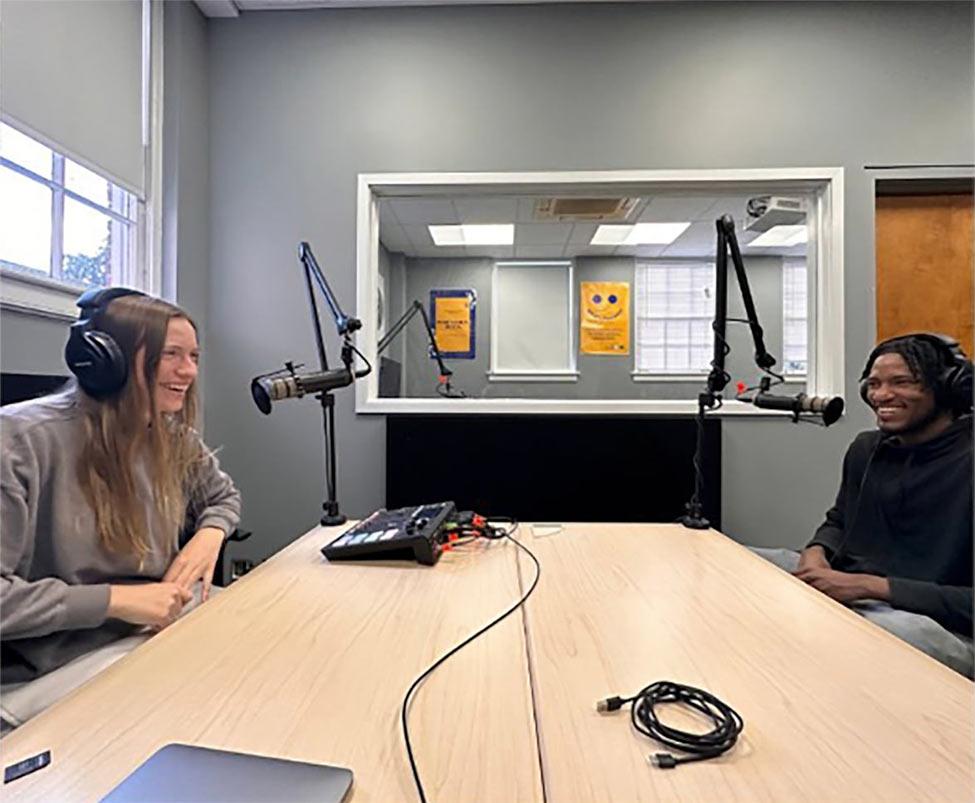
New state-of-the-art audio equipment allows students and faculty to produce high quality podcasts more efficiently.
The audio studio in the Communications Lab recently got an upgrade, with a new professional-grade mixer and microphones. Access to this state-of-the-art equipment allows audio production to be more user-friendly in courses such as Audio Storytelling and has facilitated the production of more podcasts, including Booth Review and What’s Pleasant?, a podcast developed and managed by Fink that discusses the happenings on campus.
A student’s perspective
“I chose to take Audio Storytelling to get a better understanding of audio as a whole and of its equipment,” said Mallens. “Being able to use the RodeCaster [podcast mixer] and Zoom Recorder [on-location audio recorder] (to name a few) that focused specifically on audio was a whole new beast for me to tame, especially when audio has always been a weakness of mine. I found myself quickly becoming comfortable with it once I applied myself. I ended up doing more audio design in my free time, working on podcasts or recording narrations for my films.”
Partnership with Pleasantville Community TV
About “PCTV Presents the Young Directors”
The Media, Communications, and Visual Arts department has partnered with Pleasantville Community TV (PCTV), a local television station, for “PCTV Presents the Young Directors.” Under the direction of Guarneri, the partnership provides an opportunity for current students and alumni to showcase their filmmaking to a local television audience. Beginning January 2023, PCTV will air films by Pace students and alumni once a month, including vignettes of interviews with the filmmakers.
An alumnus’s perspective
“My directing film, Sea Sick, is over a year old now and I remember the lengthy writing process, the small amount of time we had to shoot the film, and the endless hours and weeks of editing by myself,” said alumnus Cory Kinchla ’21, Digital Cinema and Filmmaking, who, after serving as a manager at Smashbox Studios, is now freelancing as a set production assistant for commercials in New York City. “It was the hardest I’ve worked on any project and I’m still happy with the way it came out. PCTV being interested in my film has taught me that working hard and putting my work out for the world to see will lead to things that I never thought I’d be a part of.”
PaceDocs
Image
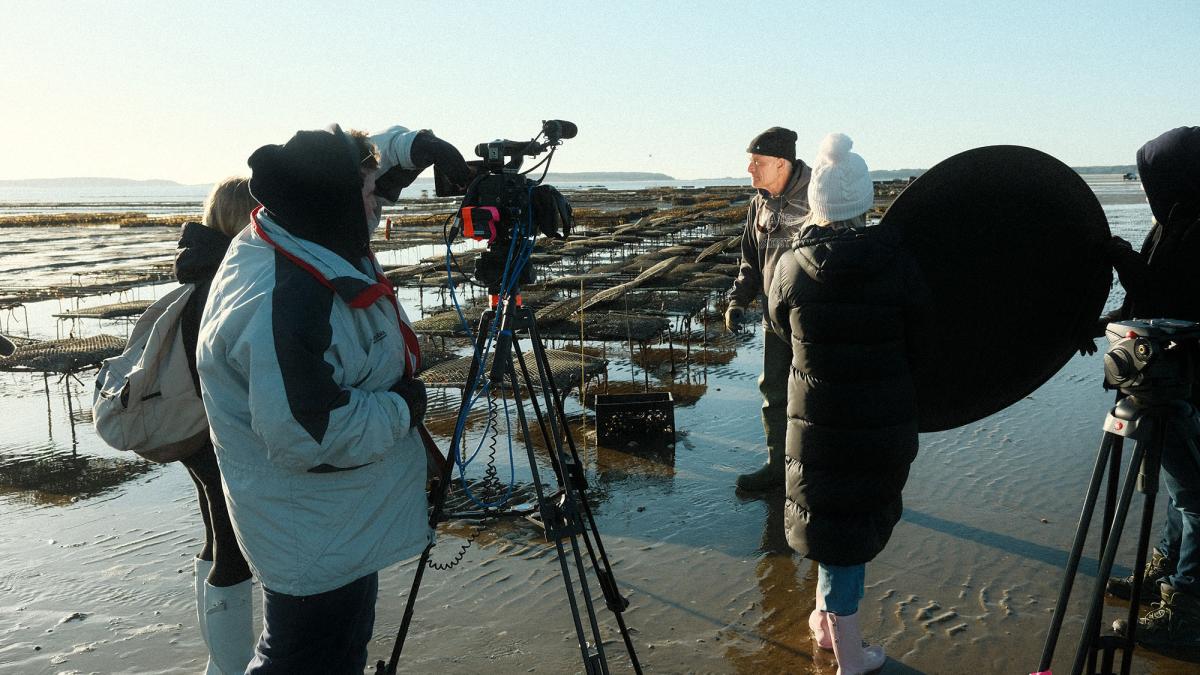
In the Producing the Documentary course, it's all hands on deck, as students are involved in research, filming, interviewing, directing, producing, and editing a professional-quality documentary.
About PaceDocs
Image
Tide to Table: The Remarkable Journey of Oysterswas screened at theaters and museums across the Northeast.
A storied example of experiential learning at Pace, the Producing the Documentary course, led by Professor Maria Luskay, EdD, and Guarneri, gives students a semester-long crash course in producing a real-life documentary on a timely and culturally significant topic. Students engage in all parts of the filmmaking process, including working with state-of-the-art video, audio, and editing equipment, researching the topic, and engaging in on-location producing, filming, and directing.
In Spring 2022, the PaceDocs team premiered Tide to Table: The Remarkable Journey of Oysters, which was filmed in Cape Cod, along the Connecticut shores of the Long Island Sound, and on waterways throughout New York City. The film won best student documentary at the Williamsburg Film Festival this fall and had showings throughout the Northeast—the most ever for a PaceDocs film—including at the Jacob Burns Film Center in Pleasantville, the Mystic Seaport Museum in Mystic, Connecticut, and theaters in Manhattan and in Chatham, Dennis, and Wellfleet, Massachusetts.
This spring, the PaceDocs team will head to France, visiting Laon and Paris over Spring Break to produce a documentary on the love of food, aimed at the slow food movement in France.
An alumna’s perspective
“Professor Luskay and Professor Lou Guarneri's Producing a Documentary class influenced me so much,” said Emmy-winning producer Rachel Skopp-Cardillo ’20,Digital Cinema and Filmmaking. “I learned all about teamwork and hard work through the making of two documentaries, Puerto Rico: Hope in the Dark (2018) and Hawaii: Living on the Edge in Paradise? (2019). Working on a PaceDocs documentary is one of the best ways to experience hands-on learning outside of the classroom at Pace. With roles as first assistant director and colorist, I was able to thrive as a filmmaker and gain confidence in knowing that this is what I am supposed to be doing with my life.”
Video Project with Berkshire Theatre Group
About Video Project with the Berkshire Theatre Group
In Luskay’s Communications and Digital Media online graduate course, students were broken into two groups to develop video content for the Berkshire Theatre Group (BTG), using footage from the group’s production of Godspell. Students worked directly with administrators at BTG to create pieces that suited the group’s needs for promoting their brand, reaching new audiences, and engaging potential donors.
A student’s perspective
“The piece we produced for BTG was ultimately the culmination of a semester’s worth of effort in all phases of pre-production, production, and post-production,” said Caroline O’Kane ’22, MA Communications and Digital Media, who managed one of the production teams, leading team meetings, scheduling editing sessions over Zoom, and liaising with BTG. “We gained hands-on experience working with a real client who had real opinions, recommendations, and requests. We wanted to deliver something that would not only serve a purpose but serve the purpose that was right for them.”
Pace University Professor of Biology Nancy Krucher, PhD, has received a three-year $400,241 grant from the National Cancer Institute (NCI) through the National Institutes of Health (NIH) to study new methods to combat cancer cell development of resistance to targeted treatments.
Associate Professor Satish Kolluri, PhD, and Professor Joseph Lee, PhD, challenge students to explore complex themes of family, love, art, culture, and politics through Hong Kong and Bollywood cinema.
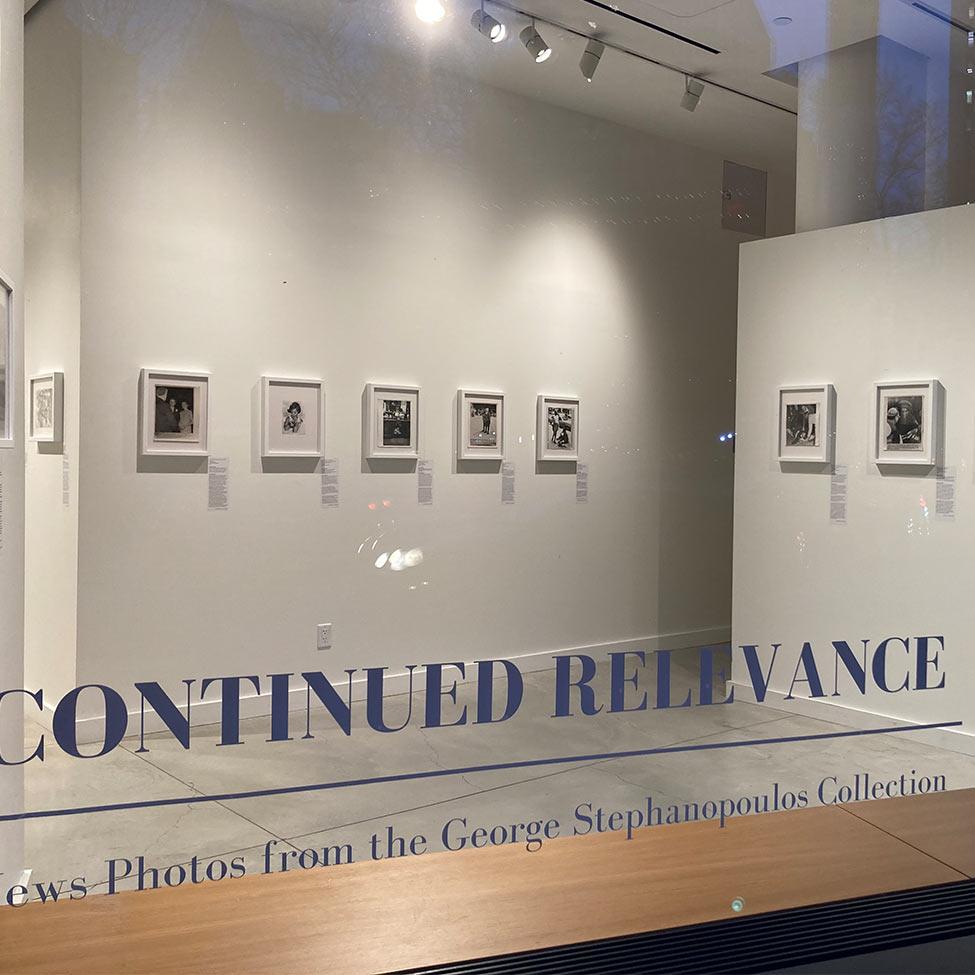
This fall, Dyson students enrolled in three separate courses had the unique opportunity to curate the exhibit, Continued Relevance: News Photos from the George Stephanopoulos Collection, in the Pace University Art Gallery. The result of this process was a select total of 54 images, each carefully chosen by a student and displayed with their personal commentary, from a gift of more than 1,400 historic news photos from the veteran news analyst and former White House Director of Communications, George Stephanopoulos.
Antonia Gentile
Image
Imagine discovering an old shoebox brimming with memorable events from your life, a treasure trove of photographic imagery that feels like an unexpected exercise in time travel. You randomly – or maybe intentionally – pick up one photo, then another, and still another. A process has been set in motion and something is stirred: a curiosity to know more, perhaps even a revelation or breakthrough.
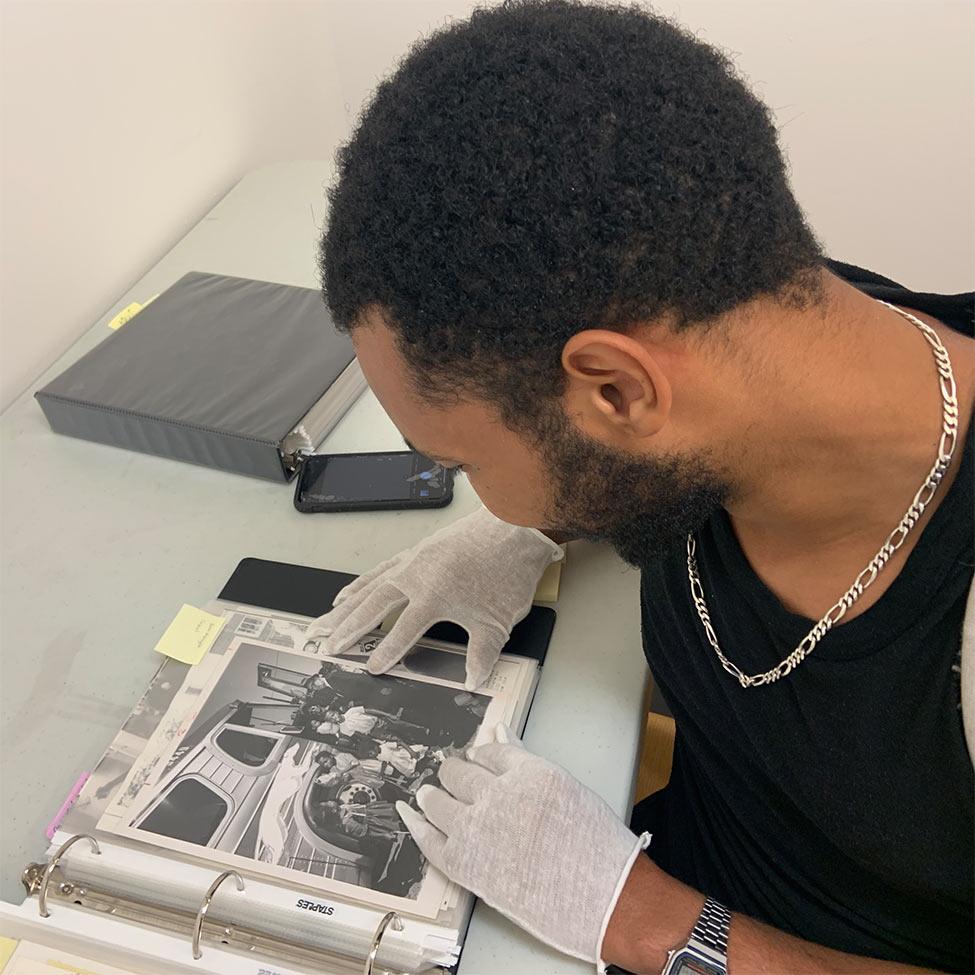
Now, consider being presented with thousands of photos that span two decades of key moments in the life of an entire nation, with the mission to curate a small, representative sampling for an exhibit. That exhibit is Continued Relevance: News Photos from the George Stephanopoulos Collection, which was on view at the Pace University Art Gallery on the New York City campus from November–January. And the challenge went to Dyson students enrolled in three separate courses this past fall 2022 semester.
The result of this process was a select total of 54 images, each carefully chosen by a student and displayed with their personal commentary, from a gift of more than 1,400 historic news photos from the veteran news analyst and former White House Director of Communications, George Stephanopoulos. The images were primarily taken by legendary photojournalists of the 1960s and 1970s working for major news agencies such as the Associated Press, and cover themes including the Civil Rights movement, John F. Kennedy’s presidency, the Vietnam war, and related civil rights and war activism.
The curation process
Image
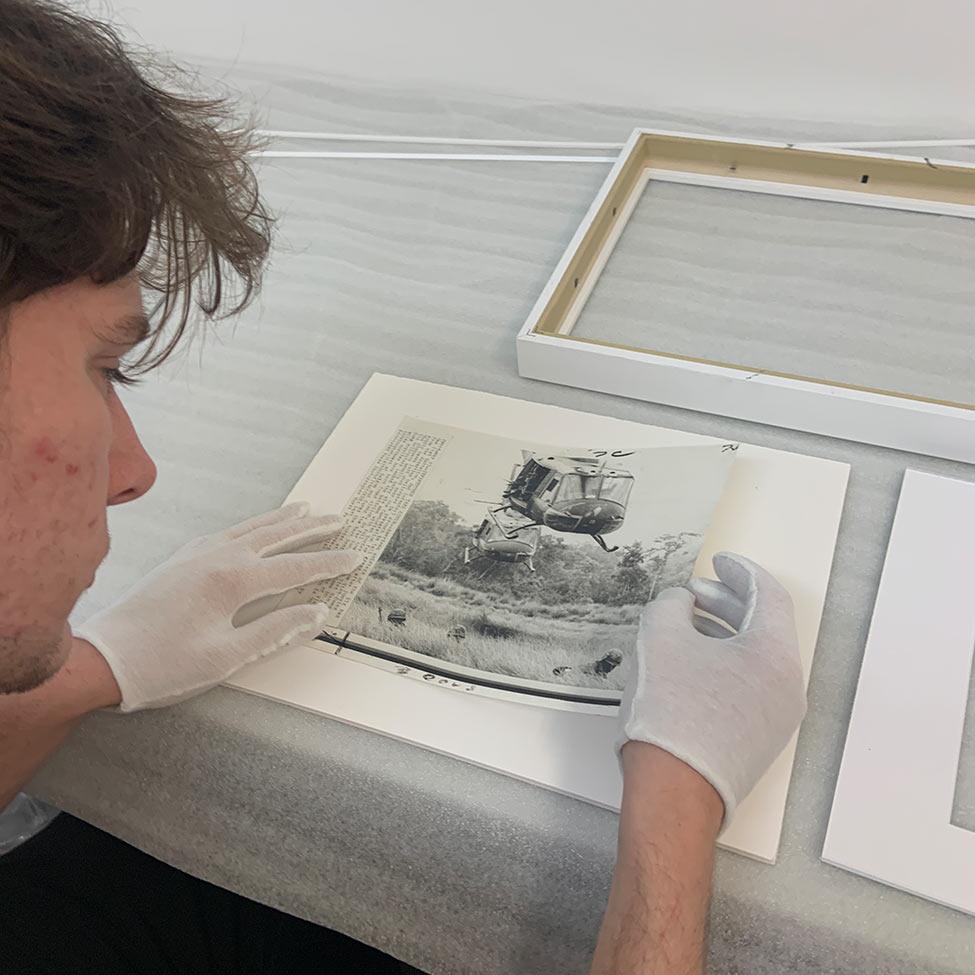
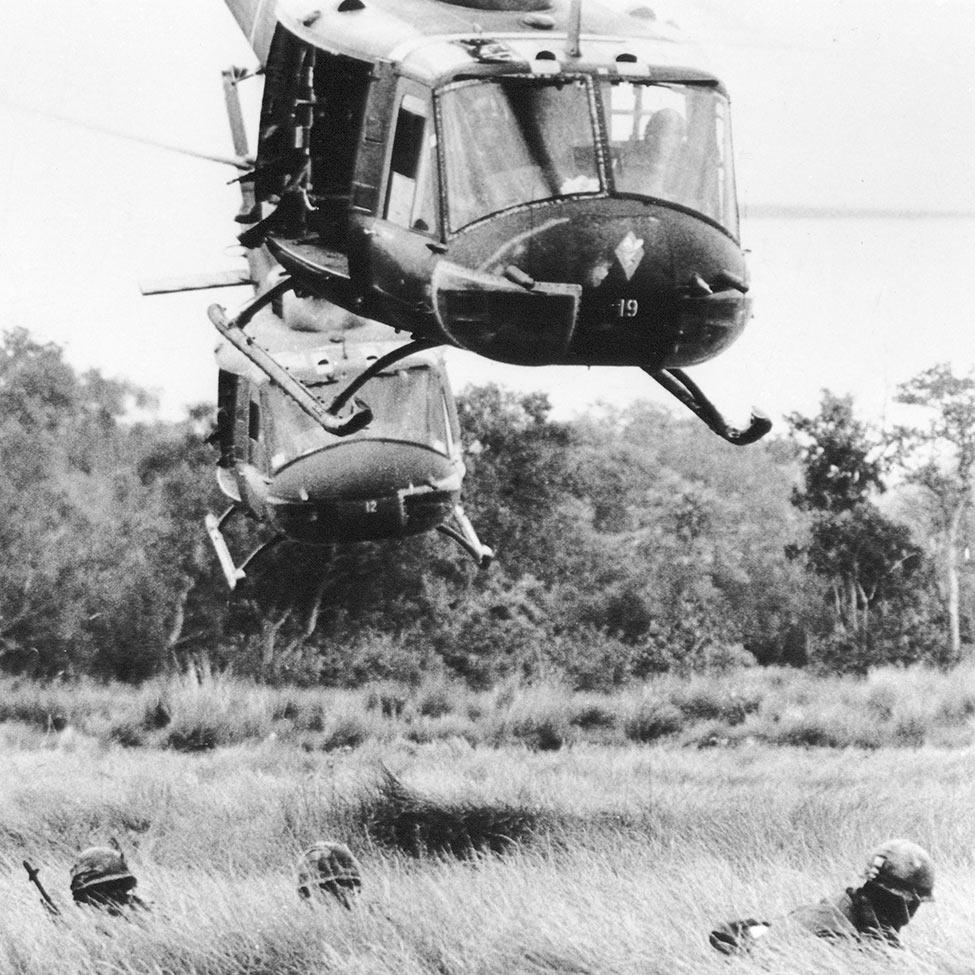
Aidan Bell, ‘23 framing a photo by Horst Faas.
What does it mean to curate an exhibit? And through what lens or lenses does the curator’s eye behold?
Curation is not simply an editorial process; in fact, the word “curate” comes from the Latin “curar,” which means “to take care.” It is one that is not accidental, but rather, intentional, with the role of a curator carrying weight and a sense of fidelity—to the artist, the audience, and the subject matter. It was in this vein that students, under the guidance of their respective professors Sarah Cunningham, MFA, Inbal Abergil, MFA, and Emilie Zaslow, PhD, engaged in their own unique processes and explored the myriad possibilities of these images for future educational use, historical analysis, and artistic appreciation.
Caitlin Pingree ‘23, English and Communication and Media Studies, BA, who was enrolled in the Current Media in New York course, first felt overwhelmed by the number of photos to choose from, but as time went on, realized she was waiting to find something that spoke to her on not just an artistic but a sociocultural level. Ultimately, her selection was the iconic photo by Stanley Tretick of President John F. Kennedy sitting at his desk in the Oval Office with his son peeking out from under the table.
She said, “I chose this photo because I loved the dichotomy of having the older and younger Kennedy generations in the same photo. I wanted people to remember a time when there was such vitality in the White House and how different that youthful, hopeful energy is from today’s climate.”
In general, Pingree saw the collection with a very contemporary context, being drawn to images relating to youth protests, a common occurrence during those decades. According to her, it felt as though those photos could have been taken today, both due to her own generation’s activism and the issues being protested, such as racism and race-related violence.
Image
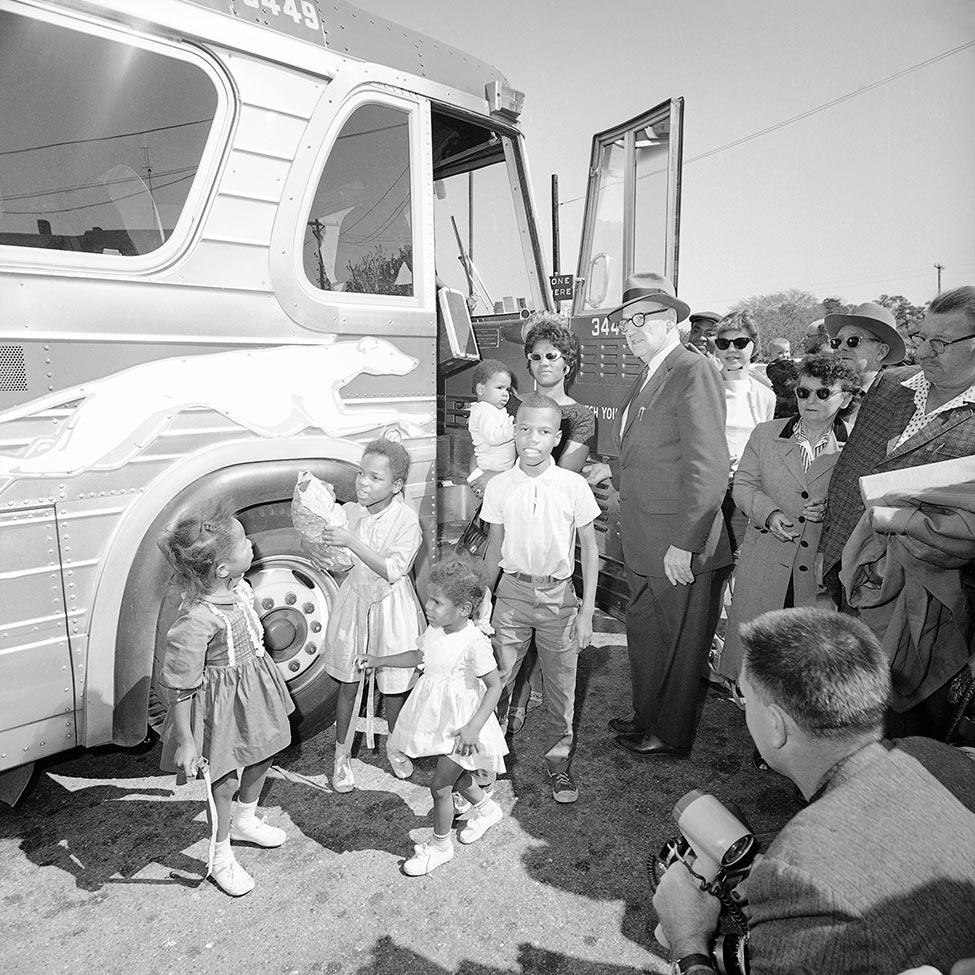
Frank C. Curtin, Reverse Freedom Riders, Associated Press, 1962
Hasan Akinyele ’23, Art, who was enrolled in a Documentary Photography course, had a slightly different approach. Gravitating mostly toward Black identities and fashion trends, he selected a photo by Frank C. Curtin entitled “Reverse Freedom Riders,” after a phrase to describe Black Southerners given bus rides by segregationist groups to northern and other states, where they were promised jobs and housing, but were often displaced in the process (a theme echoed today with migrants at the US southern border).
Noticing the details of her outfit, Akinyele was particularly drawn to Victoria Bell, the mother depicted in the photo holding her baby and surrounded by her children. When asked what he wanted viewers of the photo to come away with, he responded, “I want them to feel her humanity.”
Francisco Maldonado ‘23, Art, who was enrolled in the Introduction to Museum and Curatorial Studies course, tackled the volume of the collection by first making mental markers of photos that stood out to him aesthetically, and then, choosing in pairs, ultimately selecting through historical and aesthetic lenses. He chose the picture of the balcony of the Lorraine Motel because of its significance in the Civil Rights movement and the visual weight the flowers, an homage to Dr. Martin Luther King Jr., held in the photo.
Reflecting on life today, he feels that the photographs in Continued Relevance are less a celebration of beauty, and more a grounded example of our ever-evolving society, with justice as a common theme.
“It is distributive, procedural, retributive, and restorative. The plethora of events that happened around these photographs sparks conversations between the photos and the viewer. We only transmute our society by understanding how justice can still be found in the past,” he said.
An interdisciplinary approach
Image
Hasan Akinyele, ’23 selecting a photo by Frank C. Curtin.
The process of curation is both an art and a science; it is also interdisciplinary in nature, and therefore reflective of Dyson’s offerings as a college of liberal arts and sciences. It is not surprising, then, that student inspiration was derived from both within and outside of their majors.
Akinyele’s process, for example, was informed by his reading of the novel, At the Dark End of the Street, by Danielle L. McGuire, in his Literature class, a reinterpretation of the story about Rosa Parks and Recy Taylor during the Civil Rights movement. As a result, with so many extraordinary stories in the world worth hearing, he has been moved in his life to talk less and listen more.
Pingree relied on her critical thinking skills, zooming in and out of images to find a deeper meaning and perspective in selecting a photo to write about. She said, “I asked myself questions such as, what is the picture communicating as a whole, or what could a specific aspect represent?”
Even mathematics and the skilled use of equations played a role in the curation process. “Based on the total selection of photos and the size of the frames, we had to calculate how many photos belong on each wall and how to evenly space them for a unified presentation,” Maldonado said.
A perfect match
Image
Horst Faas, Infantrymen Take Cover, Associated Press, 1966
The curation of an art exhibit, and especially one of great prominence, has historically been assigned to artists, art dealers, and museum directors, another reason why Continued Relevance, which joins the Pace University Art Gallery’s impressive permanent collection, is so unique. The gallery, however, which was first established to encourage personal investigation and critical dialogue via thought-provoking art exhibits, is no stranger to both featuring student works and involving students in its exhibitions.
Its first director, Sarah Cunningham, MFA, Art Department, who is responsible for the rotation of exhibitions, managed the student image selection process, along with fellow professors Emilie Zaslow, PhD, Communication and Media Studies, and Inbal Abergil, MFA, Art Department.
As a first-hand witness to students coming to the print study room in the student exhibition lab next to the gallery and pouring carefully over the images, she was very much moved. “I really appreciated their thoroughness and curiosity. I got to know the collection more fully through their eyes,” she said.
As the university curator who manages the collection of art objects at Pace University, Kim de Beaumont, PhD, contends that Pace was an obvious choice to receive a donation of this nature and scope. She said, “It is a major university in New York City, with outstanding programs in a number of related disciplines, including media and communications, journalism, political science, art, and art history.”
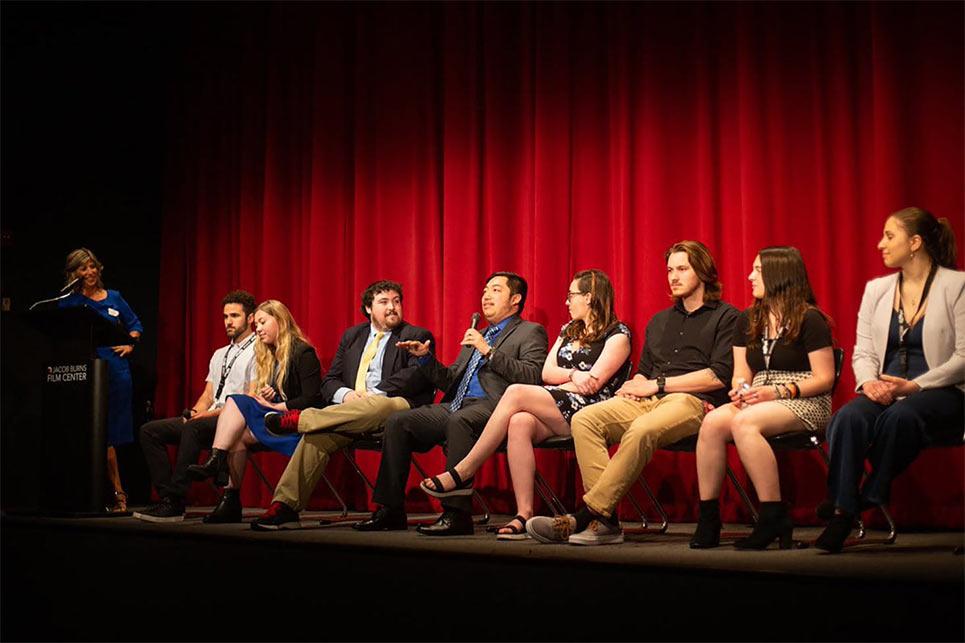
A special connection between Pace President Marvin Krislov and George Stephanopoulos, however, was the icing on the cake. At a reception for Continued Relevance on December 7, 2022, Krislov revealed that he and the veteran news reporter are, in fact, old friends, having met at Oxford University in 1984, and maintaining a friendship since.
Future possibilities
Since this first showing provides only a glimpse of the total collection that has been gifted to Pace, limitless future possibilities exist.
Cunningham imagines an exhibit that focuses exclusively on an important historical moment in US history, such as the Civil Rights movement, or, alternatively, one on news-making itself, that highlights crop marks (tick marks positioned on the corners to indicate final trim) drawn with white-out and red crayon and accompanied by written notes on the back of the images.
Aptly named, Continued Relevance and other iterations from the full collection will serve as a living time capsule, offering powerful perspective on how we can learn from the past to create a better future.
The Elisabeth Haub School of Law at Pace University has opened Westchester County’s first Legal Hand Call-in Center, in partnership with Legal Hand, Inc., an innovative community-based service.
The Elisabeth Haub School of Law at Pace University has opened Westchester County’s first Legal Hand Call-in Center, in partnership with Legal Hand, Inc., an innovative community-based service.
Legal Hand is based on the powerful idea of Neighbors helping Neighbors. Legal Hand’s highly trained non-lawyer volunteers are available to community members to help assist them, always at no cost, with issues in the areas of housing, immigration, family issues, public benefits, domestic violence, elderly assistance, estate issues and other challenging life issues.
Originally established in 2015 in New York City, Legal Hand has virtual Call-In Centers in Suffolk, Nassau, Schenectady, Albany Counties, in addition to its newest location at Haub Law in Westchester County. The new virtual Legal Hand Call-In Center serving Westchester County will be operated by the Elisabeth Haub School of Law at Pace University, with the support of Haub Law students and community Volunteers. It will provide free legal information, assistance and referrals to community members six days a week via phone, text message, email and chat.
“Our Legal Hand Volunteers are highly trained law students and community members who care deeply about understanding the issues facing Westchester individuals and families and empowering them by connecting them to resources and information that can help.” said Elyse Diamond, Director of the Public Interest Law Center and Access to Justice Project, at the Elisabeth Haub School of Law. Center Attorney Stephanie Costa added, “we are excited to provide this free service to the Westchester community and empower folks to take control of the issues that impact their everyday lives. Center Manager Diego Gomez emphasized, “our Legal Hand Call-In Center is open Monday through Saturday and offers convenient evening hours. People can call, text, email or chat with us. You never need an appointment and there are no eligibility requirements.”
As an indication of the excitement around the opening of the new Legal Hand Call-In Center, over 70 representatives from Westchester government, local legal and social services offices, community groups, libraries and others attended a Virtual Open House on January 24 where details about the Centers services were outlined. It was clear from the response that Legal Hand’s services will be an important new resource in Westchester County and relevant to the constituencies of those in attendance.
About Elisabeth Haub School of Law at Pace University
Pace University’s Elisabeth Haub School of Law offers JD and Masters of Law degrees in both Environmental and International Law, as well as a Doctor of Juridical Science (SJD) in Environmental Law. The school, housed on the University’s campus in White Plains, NY, opened its doors in 1976 and has over 9,000 alumni around the world. The school maintains a unique philosophy and approach to legal education that strikes an important balance between practice and theory. Haub Law launched its Environmental Law Program in 1978, and it has long been ranked among the world’s leading university programs, with a current #1 ranking by U.S. World and News Report.
About Legal Hand
Legal Hand is a nonprofit organization and has provided support for communities since 2015. Originating in New York City, Legal Hand’s proven community-based model has helped thousands of people in need. Legal Hand helps people navigate some of life’s most difficult challenges in the areas of housing, public benefits, employment, family issues, domestic violence, elderly rights and many more. Legal Hand works to help resolve issues before they become legal matters.
Derek Segars ’23 comes from a family of Detroit public servants and has always placed a strong value on it as a result. “My great-grandfather was a bus driver for the City of Detroit, my grandfather was a police officer, my father was a fire safety inspector and arson investigator, and my mother was a social worker for 25 years,” said Derek. “I grew up surrounded by public servants and understanding the importance of dedicating your career to helping others.”
Derek Segars ’23 comes from a family of Detroit public servants and has always placed a strong value on it as a result. “My great-grandfather was a bus driver for the City of Detroit, my grandfather was a police officer, my father was a fire safety inspector and arson investigator, and my mother was a social worker for 25 years,” said Derek. “I grew up surrounded by public servants and understanding the importance of dedicating your career to helping others.”
Derek spent much of his childhood in Detroit, only having moved to the suburbs once he reached 9th grade. “Detroit is over 70% African American and the suburb my family moved to was predominantly white. This was a culture shock for me and adapting to my new environment was challenging. Until 9th grade, I had spent my entire life being surrounded by black people. For the first time, I experienced outward racism and discrimination. That stark juxtaposition from Detroit to the suburbs motivated me and continues to motivate me as I pursue my law degree.”
Derek chose Pace because he is confident it is the right school to get him one step closer to his goal of helping others as an attorney one day. “Pace is a very special place. Both the professors and student body make the law school experience positive and unforgettable. Professor Betty Lawrence Lewis has been instrumental in developing my advocacy skills and continues to support me and mentor me as I apply to jobs and internships. Professor Josh Galperin and Professor Elyse Diamond have also been extremely supportive and continue to provide me with advice and mentorship as I finish my last year of law school. And, I have felt such a sense of camaraderie from my classmates – we are all here to uplift each other and celebrate each other.”
"Pace is a very special place. Both the professors and student body make the law school experience positive and unforgettable."
During his time at Haub Law, Derek has had many opportunities to be an active participant in his law school experience. “I was able to participate in the DC externship. It was an amazing experience and the professors were very supportive and continue to serve as mentors to the participants.” Derek also serves as President of the 2022–2023 Black Law Students Association (BLSA), as a board member and Director of Gender Diversity and LBGTQIA+ Services for the North East Chapter of BLSA, as a student member of the Faculty Hiring Committee, and he is also a member of the BLSA mock trial team at Haub Law.
As for the future, Derek’s biggest goal is to be a decision-maker one day and serve the public. He notes that this could mean “running for office, working in a government agency, starting my own advocacy organization, or becoming a professor.” As far as an immediate goal, Derek hopes to practice environmental law after graduation and pursue a fellowship or clerkship with the federal government.
Derek has an important piece of advice for future law students. “Relationship building is essential to your future career. Start now. And, advocate for yourself. Be confident in your intellect. Be confident in your capabilities. Be confident in your moral compass that led you to law school and always be vocal about your goals and what you need from others to get there.”
Outside of law school, Derek is an avid swimmer. He loves the outdoors and frequently spends days at local parks with a blanket and picnic basket in the summer. He is skilled in ceramics and wheel-throwing. Derek also enjoys spending time with his sister, Taylor, who is a quadriplegic and as he describes her, “the happiest person I know.” He also enjoys being with his big and close-knit family in Detroit, who he credits with motivating him on his law school journey and celebrating his accomplishments.