Image

Sara Falcone, PhD, assistant professor of computer science at Pace University’s Seidenberg School, has been awarded a grant from the Alfred P. Sloan Foundation, one of the most competitive and respected research funding organizations in the world.


Sara Falcone, PhD, assistant professor of computer science at Pace University’s Seidenberg School of Computer Science and Information Systems, has been awarded a grant from the Alfred P. Sloan Foundation, one of the most competitive and respected research funding organizations in the world.
The award recognizes Falcone’s innovative work at the intersection of human-centered AI, robotics, and immersive technologies—fields that examine not just how systems function, but how people experience and interact with them. Her Sloan-funded project will focus on making hybrid and remote environments more accessible, collaborative, and human.
The goal is to support things like attention management, timing and turn-taking, navigation and awareness in physical spaces, and to smooth social coordination in busy hybrid settings.
Drawing on her multidisciplinary background in computer science, robotics, and cognitive science with a focus on human–computer and human–robot interactions, Falcone is developing new ways for remote participants to engage more naturally in academic settings such as conferences, lab visits, and invited talks. At the core of the project is the idea of co-embodied hybrid attendance—a model where remote attendees and on-site hosts work together in real time, allowing the remote attendee to participate more naturally rather than merely observing through a screen.
“We’re building lightweight wearable haptic prototypes worn on the forearms and shoulders that deliver haptic cues as a low-disruption, private communication channel alongside audio/video,” Falcone said. “The goal is to support things like attention management, timing and turn-taking, navigation and awareness in physical spaces, and to smooth social coordination in busy hybrid settings.”
By integrating multisensory wearable technology with virtual and physical interaction, her research aims to close the gap between being there and truly participating, particularly for those unable to travel.
Falcone is collaborating with leading researchers to advance the project. “This work is being carried out in collaboration with research partners at Cornell University and Cornell Tech, combining expertise in human-computer interaction, accessibility, and embodied telepresence,” she added. “Through iterative prototyping and user studies/pilot deployments, we’ll evaluate how these cues affect engagement, social presence and connection, workload, and overall quality of the hybrid experience, and we’ll translate the findings into practical design guidance for more inclusive hybrid participation.”
This is a massive achievement for any faculty member, and we are incredibly proud to have Professor Falcone in the department.
Miguel Mostero, PhD, professor of computer science and chair of the computer science department at Seidenberg, noted that the “Sloan Foundation is known for backing only the most high-impact, innovative researchers, and receiving this grant is a major stamp of approval on the caliber of Professor Falcone’s work.”
He emphasized that “this is a massive achievement for any faculty member, and we are incredibly proud to have Professor Falcone in the department. I look forward to seeing the project unfold!”
Through the continuation of her groundbreaking work, Falcone demonstrates Pace University’s commitment to advancing technology that centers human connection, accessibility, and real-world impact.
A feature in Sigma Nursing highlights the importance of early leadership in nursing, spotlighting a Pace University graduate and faculty perspective. Alumna Michelle Novominski, now a registered nurse, reflects on stepping into leadership roles early in her career, while Cindy Paradiso, assistant professor in the College of Health Professions at Pace University, emphasizes that new nurses bring valuable, real-time insights and should be encouraged to lead from the start.

For 42 years, Ellen Sowchek has been sharing her infectious enthusiasm for Pace University history. Take a look at five of her favorite finds from the University archives.


Did you know Fred Kelley, brother to Gene, taught dance at Pace? Or that the public speaking requirement was a passionate value of founder Homer Pace? Or that Pace used to have a championship fencing team?
If there’s a niche fact about Pace history, chances are Ellen Sowchek knows it.
For 42 years, Ellen Sowchek has been keeper of Pace University’s archives. “I have a number of responsibilities, but to give a very glib answer, it’s my job to care about Pace history and make other people care about Pace history,” she explains.
It’s my job to care about Pace history and make other people care about Pace history.
When she started in April 1981, Pace did not have an archive. Boxes of items related to Pace history were awaiting an enthusiastic custodian to rescue them from basement storage in 41 Park Row, and Sowchek was thrilled for the challenge. “I knew nothing about Pace before I started here,” she said. “It was the ideal situation for me because everything I learned came from reading through documents and processing the collections.”
On a day-to-day basis, Sowchek is managing curiosity—from the curiosities within the archives, to the curious inquiries of those reaching out to solve a mystery. She gets requests from everything to alumni looking to confirm a course they took decades earlier, to tourists who want to know the history behind a statue on campus.
After 42 years of being the person charged with being curious about Pace’s history, she’s naturally discovered some favorites over the years. Here are five interesting points in Pace’s history:
Capturing an oral history of Pace has been an ongoing project, so you can find recordings in just about every format in the Pace archives, from reel-to-reel tape to digital files. The first phase of the oral history project resulted in 26 lengthy interviews recorded between 1982-1986, capturing the recollections of figures such as Robert Pace, Charles Dyson, Joseph Lubin, Gustav Lienhard and more. The current phase of the project, Pace Voices Past and Present: An Oral History of Pace University, expands the number of interviewees and seeks to document life at Pace from a wide range of perspectives, representing members from the entire Pace Community.
One of Sowchek’s favorite recordings is of Edward J. Mortola, PhD, on his first day of work as a new Assistant Dean at Pace College. Sowchek has a soft spot for Mortola. Not only does she believe that “after Homer Pace, he was probably the second most important person to Pace history,” but he was the one who hired her to set up an archive for Pace’s 75th Anniversary.
In the tapes, Mortola describes his first day on the job. “It's kind of a cute story. I reported at Pace in the building at 225 Broadway, where Pace existed at that time, on the morning of August 15, 1947 and sat outside Dean Alice Ottun's office for a while. I was joining Pace then as Assistant Dean. When she finished interviewing a student who was at her desk, she looked up and said, ‘Oh, you're here.’ She said, ‘I forgot all about the fact that you were coming and I don't have an office or a desk for you.’ I said, ‘Well, in that case, I'll be happy to go home and come back tomorrow.’ She said, ‘A great idea.’ So, my first day on the payroll of Pace I went swimming at Jones Beach.” The fact that Mortola gave this interview on the anniversary of his first official working day at Pace brings the story full circle.
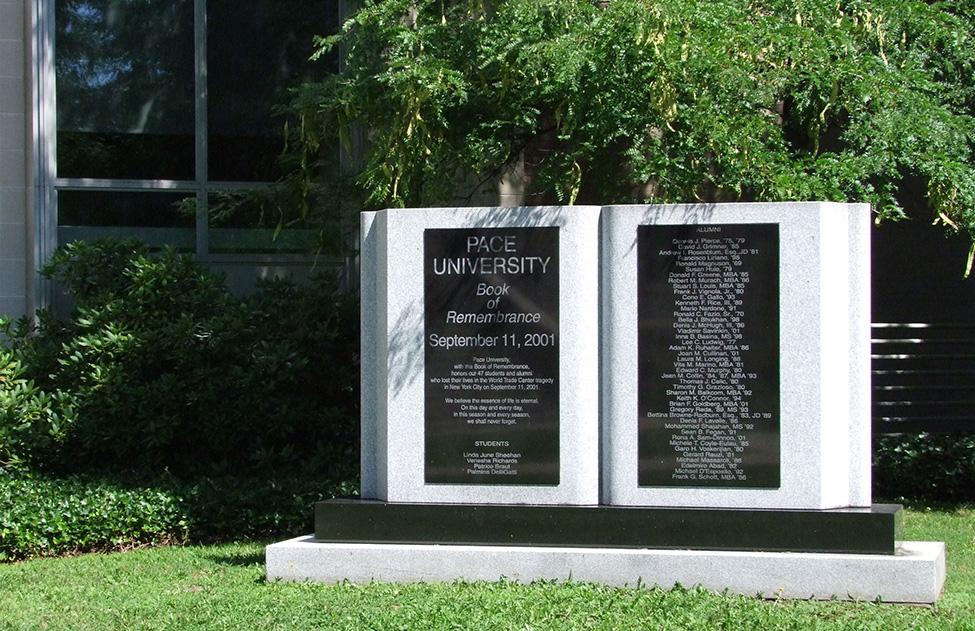
After the events of September 11, Pace University closed for two weeks. In the wake of that day, several memorials were erected honoring those lost and memorializing the feelings of a shaken community. Sowchek explains how soon after the return to campus, The Center for Community Outreach distributed quilt squares and fabric pens to the community. The squares were then sewn together into a nearly ten-by-ten-foot quilt immortalizing the feelings of the Pace community in the wake of the attacks.
Another memorial came in the form of the blue and yellow “Setting the Pace” dog statue located on the Frankfurt Street side of One Pace Plaza. The “Setting the Pace” statue of a German Shepard dog by artist Mike Neville was commissioned by the American Kennel Club’s DOGNY public art project developed in collaboration with the City of New York. The project honors the canine heroes of September 11 who served as search-and-rescue dogs. All statues were auctioned off and the proceeds were donated to a fund supporting the training of first responder dogs.
Finally, each Pace Campus has The Open Book memorial, dedicated to those from the Pace community who lost their lives on September 11. A university-wide competition was held and the book design was chosen. The open pages bear the names of members of the Pace community lost on that day. By listing the names in random, rather than alphabetical order, we are encouraged to read through and remember all of them.

While the Pace archives are dedicated to Pace history, there are some items that fit outside the scope of the institution’s history, such as Pace’s Virginia Woolf special collection.
The collection arrived at Pace in 2015, with the help of Mark Hussey, PhD, a retired professor from Pace’s English department and a Virginia Woolf expert. He knew the collector Linda Langham, a Woolf fanatic, who wanted to ensure that her collection went to an institution who would not sell off the books individually, but rather keep the collection intact. The Pace University Library agreed to her request and happily accepted the items. Together with a Birnbaum Library colleague, Sowchek cataloged and documented the collection, which has been of special interest in the niche world of Virginia Woolf collectors. “Smith College has a Virginia Woolf collection as well. Ours is just as good, if not better,” according to Sowchek (with a just a touch of Pace pride).
Sometimes, Sowchek finds herself becoming a player in Pace history.
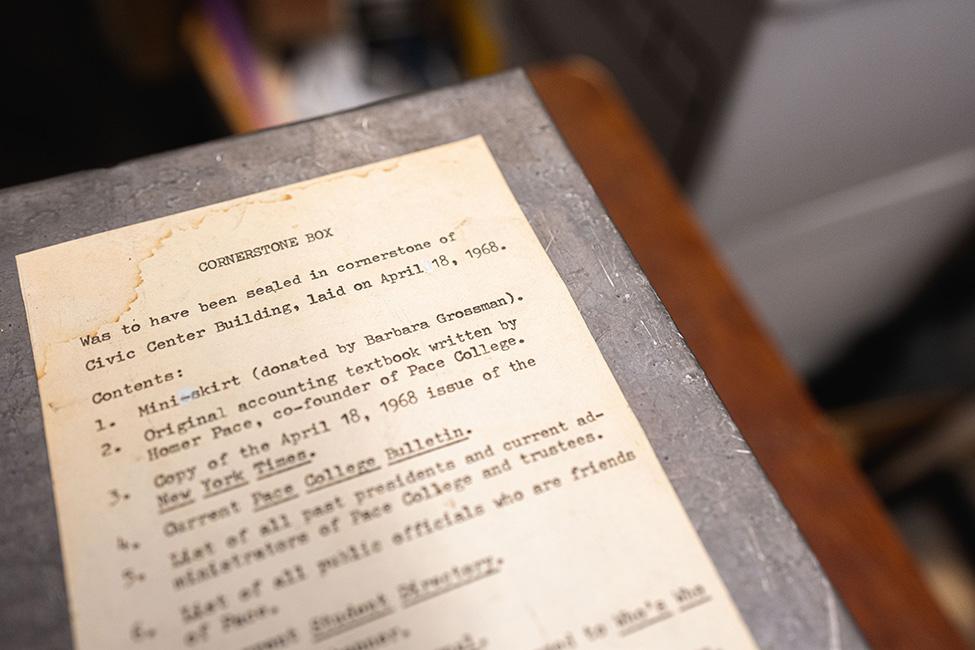
One day, in 1981, Mr. Gordon Dodge, Director of Buildings and Grounds at the time, reached out to her with a strange request. When the building of One Pace Plaza was underway, a cornerstone ceremony took place in 1967, commemorating an important milestone in the building’s construction. Part of the ceremony entails cutting part of the cornerstone out, placing a time capsule in the opening, and then sealing it inside with cement before the stone is put in place in the building’s foundation. Dodge said he had a special addition to the archives–the time capsule itself, which failed to make it into the cornerstone! He begged for her discretion as he explained that the box had somehow been set aside, to be cemented in at the end of the ceremony, and never made it back in. For 14 years, he had kept the capsule in his office, hoping to find a home for this sealed box.
The archives became its new home. Though it is sealed with lead and so far, unopened, Sowchek’s deep dive into the archives revealed documents that explained the mysterious contents: a mini-skirt donated by Barbara Grossman ’71; original accounting textbook written by Homer Pace; April 18, 1968 issue of the New York Times; current issue of a Pace College Bulletin; list of past and current Pace presidents, administrators, and trustees; list of public officials considered friendly to Pace; a student directory; a Pace banner; The cornerstone Journal; list of students recently named to Who’s Who in American Universities; The Pace Report; $1.91; and the latest edition of The Pace College Press.

The archives over the years have inadvertently become not just a collection that tells the story of a university, but one that tells the story of a family. The story of the Paces.
Sowchek’s absolute favorite item is a letter from founder Homer Pace asking for permission to get married, “because at the time he was under 20 years of age, and in the state of Michigan, where he lived, he was not old enough to get married without parental consent.” It’s a personal touch that brings the University’s first president into living color.
Sowchek is especially interested in helping promote the impact women have had on Pace history, and Homer’s wife, Mabel, is a particular favorite figure for her to study. There are several items belonging to Mabel, such as images of her and her own report cards.
Lastly, Homer and Mabel’s son Robert Pace, became the second president in 1942, upon the death of his father. That same year he enlisted in the U.S. Army. An accomplished photographer, Robert captured his perspective on the Second World War. Many of those photos, donated by Robert Pace himself, have found their permanent home in the archives.
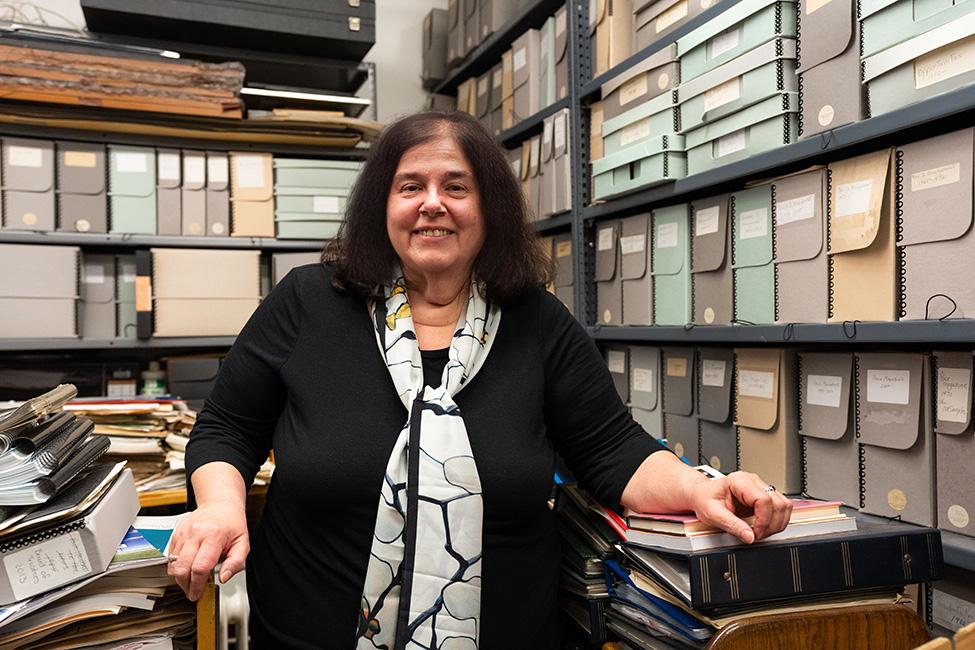
Ellen Sowchek is more than an archivist—she's the ultimate caretaker of Pace University's history. In addition to diligently preserving remnants of the past, Sowchek actively participates in Pace's ongoing story, often going beyond her role with Pace artifacts to bear witness to history as it unfolds. Thanks to her unwavering commitment and tireless effort, Pace's rich history remains vivid and alive. As the Pace Community continues to shape its future, Sowchek's work in the University archives ensures that its past is not just preserved, but also celebrated.


In 1906, with a $600 loan and a single rented classroom on Park Row, Homer Pace launched an entrepreneurial idea that would become a model for the future of higher education.

Pace has changed over the years, but some things never leave you. From long-gone campuses to unforgettable traditions, these are just some of the moments that define what it means to be Pace.

Some institutions wait for the future to arrive. Pace has spent 120 years going after it—preparing lawyers, nurses, technologists, and artists not for the world that was, but for the one taking shape now. This isn’t ambition or luck. It’s 120 years of deliberate evolution.
For 120 years, Pace University graduates have shaped industries, influenced public life, and pushed innovation forward. From a U.S. Secretary of the Navy to Olympic medalists, global health leaders, and cultural trailblazers, explore the alumni whose impact tells the story of Pace—past, present, and future.


For 120 years, Pace University has prepared students not only for careers, but for lives of influence, leadership, and impact. From the earliest graduates of Pace Institute in lower Manhattan to today’s innovators shaping industries across the globe, Pace alumni have helped transform business, public service, health, technology, and the arts. Their stories reflect the same principles that guide the University today: rigorous academics, experiential learning, and a commitment to real-world impact.
As Pace enters its next chapter, these alumni represent a powerful throughline demonstrating how generations of Pace graduates have helped shape the very areas of excellence that will define the University’s future.
William B. Franke ’17
William B. Franke, a 1917 graduate of Pace Institute, went on to serve as the 55th United States Secretary of the Navy under President Dwight D. Eisenhower. At a defining moment in Cold War history, Franke oversaw efforts to modernize the Navy, including the expansion of nuclear-powered warships and other advanced technologies that reshaped U.S. defense strategy. His career stands as an early example of Pace graduates stepping into roles where public service, technological advancement, and national leadership intersect.

Joseph Lubin ’21
Joseph Lubin, who earned his certificate in accountancy from Pace Institute in 1921, became a pioneering force in the accounting profession and co-founded the influential firm Eisner & Lubin. He later chaired the New York State Board of Certified Public Accountant Examiners and helped shape professional standards for the field. Lubin remained closely connected to Pace throughout his life, serving as a trustee and benefactor. Today, the Lubin School of Business carries forward his belief that rigorous business education, grounded in real-world practice, opens doors to leadership in New York and beyond.
Gustav O. Lienhard ’26
After graduating from Pace in 1926, Gustav O. Lienhard built a career that led him to the presidency of Johnson & Johnson, helping guide one of the world’s most influential healthcare companies. Alongside his corporate achievements, he devoted decades of service to Pace as a trustee and supporter of the University’s growth. His legacy lives on through the Lienhard School of Nursing, which prepares future nurses and healthcare professionals to meet the rising demand for compassionate, highly skilled care.
Charles H. Dyson ’30
Financier, entrepreneur, and philanthropist Charles H. Dyson launched his career after graduating from Pace Institute in 1930, eventually becoming a prominent figure in both business and public economic policy. His commitment to Pace shaped the University for generations: Dyson served as chairman of the Board of Trustees and helped guide its academic expansion. The Dyson College of Arts and Sciences stands as a tribute to his belief that strong liberal arts foundations cultivate thoughtful leaders capable of navigating an increasingly complex world.
Walter Scherr ’49
Walter Scherr, who graduated from Pace in 1949, helped bring emerging communications technologies into everyday business practice. As Chief Financial Officer of Veeco Instruments and founder of Visual Sciences/Panafax, he played a pivotal role in introducing fax technology to the broader market—changing how companies exchanged information across cities, countries, and continents. Scherr’s work foreshadowed the rapid evolution of digital communication and the growing importance of technology within modern business.
Ian McDougall ’54
Born in Scotland and raised in a coal-mining community, Ian McDougall arrived in the United States as a teenager and graduated from Pace in 1954. He spent his career at Inco Limited, eventually becoming the company’s vice chairman and chief financial officer after starting as a messenger. Outside the boardroom, McDougall dedicated decades to youth soccer, co-founding Oceanside United and mentoring generations of young players. His life tells a story of perseverance, leadership, and the lasting value of community engagement.
James E. Healey ’64
James E. Healey built a distinguished career in corporate finance, ultimately serving as Executive Vice President and Chief Financial Officer of Nabisco Holdings Corp. during a period of significant change in the global food industry. Over more than two decades in senior financial leadership roles, he helped steer strategy for major consumer brands. Healey later brought that experience back to Pace through service on the Board of Trustees, contributing to the University’s continued growth and evolution.
Donald L. Boudreau ’70
Donald Boudreau rose to become Vice Chairman of JPMorgan Chase and Chase Manhattan Corporation, where he served on both the Executive Committee and Management Committee. Over the course of his career, he helped guide one of the world’s most influential financial institutions through decades of change in global banking. His trajectory—from Pace graduate to Wall Street leadership—underscores the University’s deep ties to the financial and business communities of New York City.

Maria Fiorini Ramirez ’72
Maria Fiorini Ramirez is a trailblazer in finance and a longtime leader in advancing women in the industry. As Founder, President, and CEO of Maria Fiorini Ramirez, Inc., she built a respected economic consulting firm while serving on the boards of major financial institutions including Metropolitan Commercial Bank and Security Mutual Life. A former Pace trustee and founder of the Maria Fiorini Ramirez Endowed Scholarship Fund, she has remained deeply committed to expanding opportunity for future students. Her career and philanthropy reflect the impact of Pace graduates in innovative business and financial leadership, as well as the power of mentorship and access in shaping the next generation.
James N. Fernandez ’78
James Fernandez spent more than three decades at Tiffany & Co., ultimately serving as Executive Vice President and Chief Operating Officer of the iconic global luxury brand. During his tenure, he helped oversee financial strategy, operational growth, and international expansion as Tiffany strengthened its presence around the world. Fernandez’s career highlights how a foundation in business and finance can open doors to leadership roles within some of the most recognizable brands in the global marketplace.
Ivan Seidenberg ’81
Ivan Seidenberg’s career began with a pair of climbing spikes and a job as a cable splicer at New York Telephone. Decades later, he became Chairman and CEO of Verizon Communications, leading the company through the rise of wireless networks and broadband connectivity. Under his leadership, Verizon helped build the infrastructure that powers today’s digital world. The Seidenberg School of Computer Science and Information Systems now carries forward that legacy, preparing students for careers in fields ranging from cybersecurity to artificial intelligence.
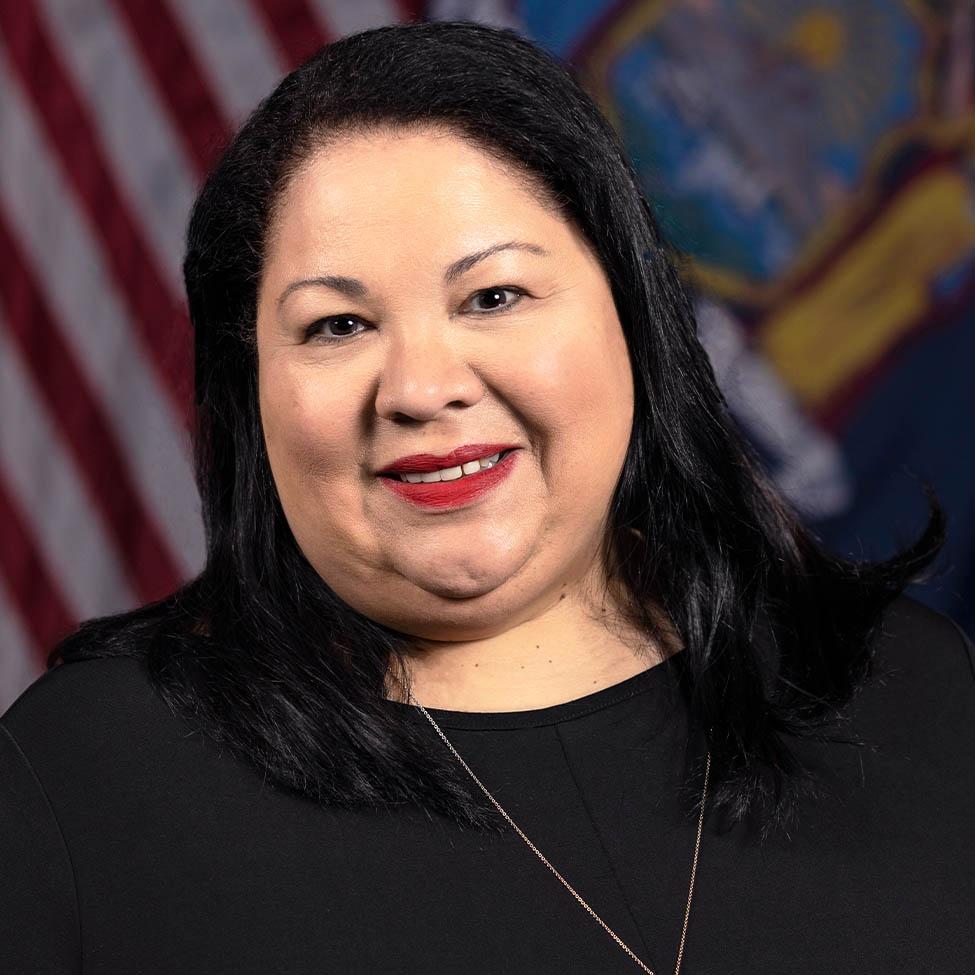
Rossana Rosado ’83
Bronx-born journalist and public servant Rossana Rosado ’83 has spent her career elevating voices and shaping public life in New York. She broke barriers as the first woman to serve as editor-in-chief, CEO, and publisher of El Diario, the nation’s largest Spanish-language newspaper, helping inform and empower Latino communities. Rosado later brought that perspective to public service, serving as New York’s Secretary of State and now Commissioner of the New York State Division of Criminal Justice Services, advancing policies that strengthen fairness, safety, and trust across the justice system—work that reflects Pace’s enduring commitment to civic leadership, law, and public service.
Rob Sands ’84
Rob Sands ’84, a graduate of the Elisabeth Haub School of Law at Pace, built a global business career as Chairman and Chief Executive Officer of Constellation Brands, the Fortune 500 company behind brands such as Modelo, Corona, and Robert Mondavi. Through strategic acquisitions and expansion, he helped transform the company into one of the most influential players in the global beverage industry. At Pace, Sands continues to help shape the University’s future as Chair of the Board of Trustees and a champion of the Sands College of Performing Arts.
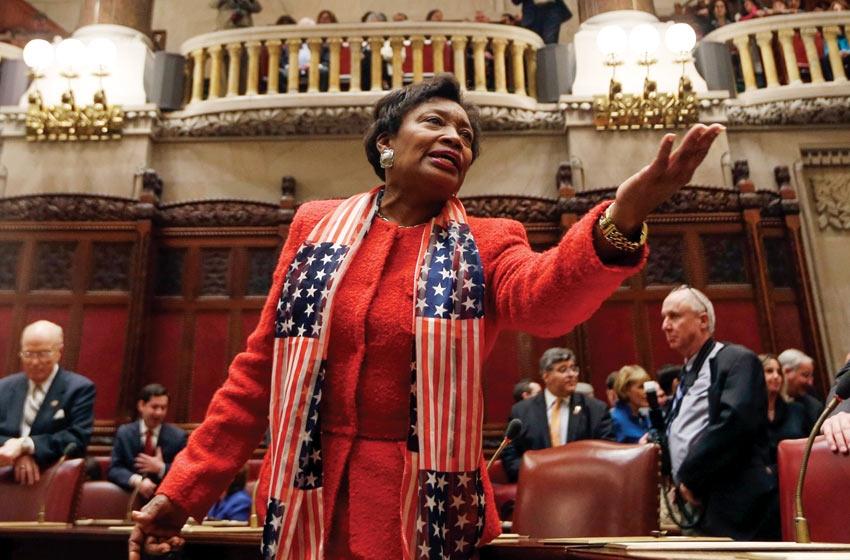
Andrea Stewart-Cousins ’86, ’08
Andrea Stewart-Cousins made history as the first woman to serve as Majority Leader of the New York State Senate, representing the 35th District since 2007. A Pace alumna twice over, she has also served as acting lieutenant governor and has become a leading voice for economic opportunity, equity, and community development across New York State. Her career reflects the powerful role Pace graduates play in shaping policy and advancing public leadership.
José Luis Castro ’88
José Luis Castro ’88 is a global leader in public health who currently serves as the World Health Organization’s Special Envoy for Chronic Respiratory Diseases. As the founding CEO of Vital Strategies, he helped build a global public health organization dedicated to addressing some of the world’s most urgent health challenges. Castro’s work reflects the global reach of Pace graduates and underscores the university’s commitment to health, behavioral health, and community well-being on an international scale. Learn more about the Pace Center for Global Health that he leads alongside Professor Sonia Suchday, PhD.

William “Bill” Janetschek ’93
Bill Janetschek built an influential career in global finance, serving as Chief Financial Officer and Partner at Kohlberg Kravis Roberts & Co. (KKR), one of the world’s leading investment firms. During more than two decades with the firm, he played a central role in guiding its financial strategy and supporting its expansion into international markets. Today, Janetschek continues to shape the future of higher education as Chairman of the Board of Trustees at St. John’s University—a reminder that Pace graduates often carry their leadership from the boardroom into the institutions that prepare the next generation.
Tim Morehouse ’03
Tim Morehouse earned an Olympic silver medal in fencing at the 2008 Beijing Games and is a two-time U.S. National Champion. Rather than stepping away from the sport after his competitive success, he turned his attention to access and education. Through Fencing in the Schools, the nonprofit he founded, Morehouse has introduced thousands of students across the United States to the discipline, strategy, and confidence the sport encourages—bringing athletic opportunity and mentorship into classrooms that might not otherwise have access.
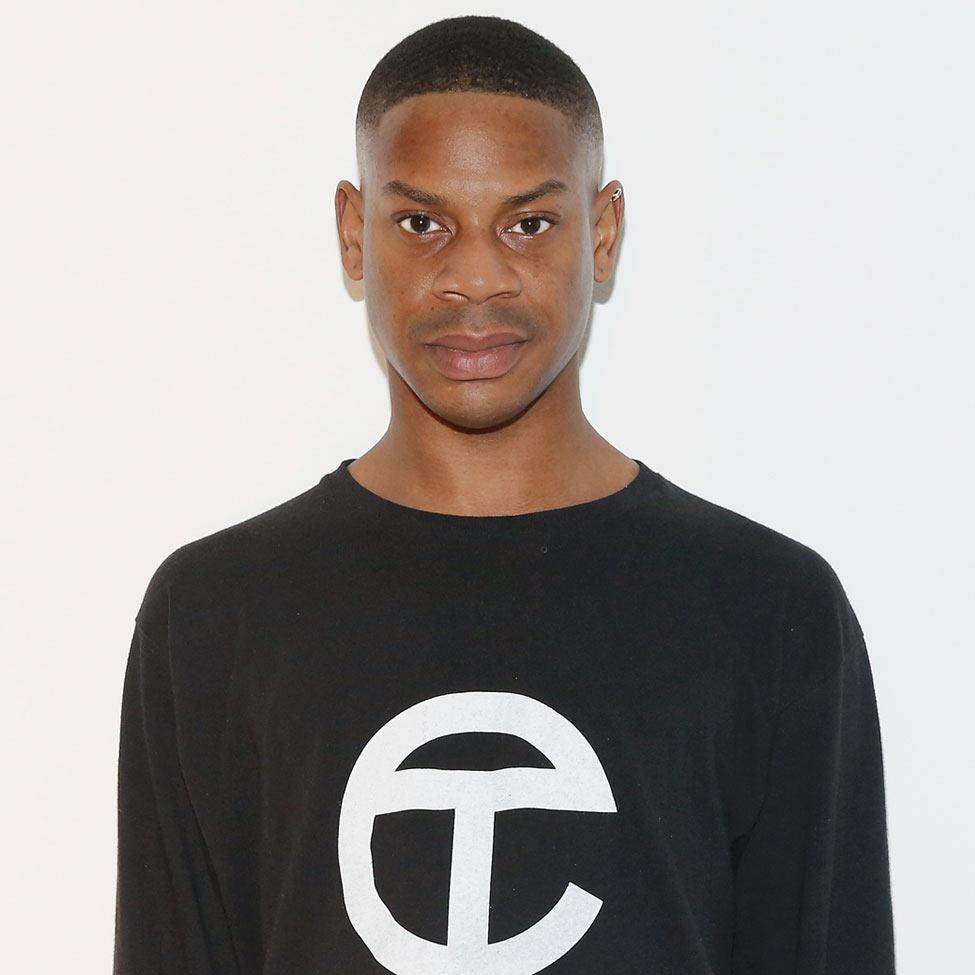
Telfar Clemens ’08
Telfar Clemens reshaped the fashion landscape with his boundary-breaking label Telfar, built around the now-iconic principle: “Not for you—for everyone.” His designs challenge traditional ideas about luxury, gender, and accessibility, earning him two CFDA Accessories Designer of the Year awards and the prestigious CFDA/Vogue Fashion Fund prize. The Telfar Shopping Bag—sometimes called the “Bushwick Birkin”—has become a cultural symbol of inclusive fashion, demonstrating how creativity and entrepreneurship can redefine an entire industry.
Pedro Rivera ’12
Emmy-winning journalist Pedro Rivera ’12 brings the stories of New York to millions of viewers as co-anchor of ABC7’s Eyewitness News This Morning and Eyewitness News at 10. A Bronx native, Rivera has reported on major national events including the Sandy Hook tragedy, the Boston Marathon bombing, and devastating California wildfires. His work blends urgency with empathy—qualities essential to modern journalism and to the role media plays in helping communities understand the world around them.
Opal Vadhan ’15
Opal Vadhan has built a career at the highest levels of American government, working behind the scenes in some of the country’s most consequential political offices. A first-generation Indian American raised in Queens, she began with a White House internship before serving as Personal Aide to Vice President Kamala Harris and previously as Executive Assistant and Trip Director to Secretary Hillary Rodham Clinton. Her path from Pace student to trusted advisor inside the halls of power speaks to the next generation of graduates shaping public life and national leadership.

Cooper Koch ’18
Actor Cooper Koch ’18 has quickly emerged as a rising presence in film and television. His breakout performance as Erik Menendez in Monsters: The Lyle and Erik Menendez Story (2024) earned both Primetime Emmy and Golden Globe nominations, marking an extraordinary early milestone in his career. A graduate of Pace’s performing arts programs, Koch represents a new generation of artists launching their careers from New York City onto national and international stages.
From the earliest graduates of Pace Institute to today’s rising leaders, these alumni show what can grow from a Pace education: curiosity, ambition, and a commitment to shaping the world beyond campus. One hundred and twenty years in, the story is still unfolding and the next generation of Pace graduates is already writing what comes next.
Some institutions wait for the future to arrive. Pace has spent 120 years going after it—preparing lawyers, nurses, technologists, and artists not for the world that was, but for the one taking shape now. This isn’t ambition or luck. It’s 120 years of deliberate evolution.

What began as quiet farmland in Pleasantville has grown into a vibrant hub of learning, partnership, and possibility. As Pace celebrates 120 years, the institution’s presence in Westchester tells a remarkable story—of community impact, student opportunity, and the power of place. Discover how Pace’s roots in Westchester continue to shape its future.
Pace has changed over the years, but some things never leave you. From long-gone campuses to unforgettable traditions, these are just some of the moments that define what it means to be Pace.
Not just dates and milestones, but momentum. This timeline traces the defining moments that shaped Pace University, from its founding in 1906 to the institution it is today.


Homer St. Clair Pace and his brother Charles Ashford Pace founded Pace University in 1906 with a mission to provide high-quality accounting education and prepare students for the rigorous New York CPA examination. Starting with just a $600 loan, a rented classroom in lower Manhattan, and a class of 13 students, the Pace brothers built an institution grounded in practical business education. Over time, their vision expanded beyond accounting to include a broader academic structure, ultimately evolving into a degree-granting college and, later, a full-fledged university recognized for its professional and experiential learning focus.
1906 — Pace School of Accountancy founded
Thirteen students. One rented room. A belief that opportunity could be taught. From those first lessons, generations of Pace alumni stepped forward ready to make their mark.

1933 — Institute reorganized into three professional schools
As the world of business grew more complex, so did Pace. The curriculum evolved, and so did its graduates—adaptable, ambitious, and always a step ahead.

1948 — Pace gains degree-granting status (BBA)
A defining moment. Pace becomes a college, and its students become graduates with credentials that opened doors—and kept opening them for decades to come.

1950 — Launch of liberal arts programs (future Dyson College)
Not just careers, but perspectives. Pace expands into the liberal arts, shaping thinkers, creators, and alumni whose impact reaches far beyond any single field.

1963 — Pace expands to Westchester
Following a gift from Helen and Wayne Marks, Pace expands to Westchester with the addition of the Pleasantville Campus.

1966 — Nursing School founded (Later named Lienhard School)
A different kind of calling takes root. Compassion meets expertise, and Pace alumni begin changing lives not just through work, but through care.

1966 — Pace breaks ground downtown
Pace makes a permanent mark in New York City's financial district as it breaks ground on the site that would later be called One Pace Plaza.

1973 — Pace becomes a university
The name changes. The momentum does not. Pace University emerges, carrying forward a legacy its alumni continue to define every day.

1976 — Law School established (now the Elisabeth Haub School of Law)
New voices enter the conversation. Pace graduates rise as advocates, negotiators, and defenders, shaping law, policy, and the future.

1983 — Computer science programs consolidated (foundation of Seidenberg)
Before the digital age had a name, Pace was already there. Alumni stepped into a world being built in real time—and helped build it.

2003 — Pforzheimer Honors College established
A community for those who ask more, push further, and expect better. A place where Pace’s most driven students become alumni who lead with purpose.

2014 — Pace School of Performing Arts established
The spotlight finds Pace. On stage and on screen, alumni bring stories to life, carrying their training into moments seen and felt around the world.

2023 — PPA becomes Sands
A gift from Pamela and Rob Sands, JD ’84, establishes the Sands College of Performing Arts as Pace's newest college.

For 120 years, Pace University graduates have shaped industries, influenced public life, and pushed innovation forward. From a U.S. Secretary of the Navy to Olympic medalists, global health leaders, and cultural trailblazers, explore the alumni whose impact tells the story of Pace—past, present, and future.
Pace has changed over the years, but some things never leave you. From long-gone campuses to unforgettable traditions, these are just some of the moments that define what it means to be Pace.
In 1906, with a $600 loan and a single rented classroom on Park Row, Homer Pace launched an entrepreneurial idea that would become a model for the future of higher education.
Pace has changed over the years, but some things never leave you. From long-gone campuses to unforgettable traditions, these are just some of the moments that define what it means to be Pace.

Pace has never stood still. Campuses evolve, buildings get new names, and each generation leaves its mark. But for all the change, some things stick—moments, traditions, and little quirks that somehow carry through the years. The kind of things that make you smile and think, yep…that was Pace.
Here are some of the traditions, places, and moments that have stayed with us across generations. Some are still here. Some are long gone. All of them are unmistakably Pace.


Pace looks different depending on when you were here and which campus you called home. But in that difference is a shared thread—the places that felt like yours, the people who made it matter, the moments that stick.
Not just dates and milestones, but momentum. This timeline traces the defining moments that shaped Pace University, from its founding in 1906 to the institution it is today.
In 1906, with a $600 loan and a single rented classroom on Park Row, Homer Pace launched an entrepreneurial idea that would become a model for the future of higher education.
For 120 years, Pace University graduates have shaped industries, influenced public life, and pushed innovation forward. From a U.S. Secretary of the Navy to Olympic medalists, global health leaders, and cultural trailblazers, explore the alumni whose impact tells the story of Pace—past, present, and future.
What began as quiet farmland in Pleasantville has grown into a vibrant hub of learning, partnership, and possibility. As Pace celebrates 120 years, the institution’s presence in Westchester tells a remarkable story—of community impact, student opportunity, and the power of place. Discover how Pace’s roots in Westchester continue to shape its future.

Today the sound of student chatter fills Pace University’s Westchester Campus, but just over sixty years ago, the campus sounded different. Surrounded by fields and the freshly constructed Taconic State Parkway, the property was filled with the sounds of farm animals and the soft drone of passing cars. In the following years, Pace’s presence in Westchester went through metamorphosis, growing from a small campus surrounded by pastures to an anchor institution with regional impact. At the 120th anniversary of Pace University, the Westchester Campus is integrated into the growth and success of the local community through numerous initiatives and providing students with opportunities to meet the challenges of the moment.
Long before Pace arrived, the land that would become its Pleasantville Campus had already witnessed a century of remarkable stories. In 1867, a shoemaker named Samuel Baker built a house on the property. It would later come into the possession of Dr. George C.S. Choate, a prominent physician who expanded it into a private sanitarium for wealthy patients suffering from what the era called "nervous disorders." In November 1872, one of those patients was Horace Greeley, the celebrated newspaper editor and presidential candidate who had just lost to Ulysses S. Grant in a brutal campaign. Greeley, who owned a farm a few miles away in Chappaqua, checked into the Choate sanitarium and never checked out. He died there weeks later, one of the most famous Americans of his age, on a campus that today hosts study groups and late-night runs to the Pace Perk.

Dr. Choate himself passed away in 1896, and the sanitarium continued for another decade before closing. In 1909, his widow Anne Hyde Choate did something remarkable: she had a section of the original Choate House moved—inch by inch, via teams of horses—to its current location on campus, where she lived until her death in 1926. The house changed hands several times before landing with Wayne C. Marks, a Pace College alumnus from the class of 1928. In an act of generosity that would shape the region's educational landscape for generations, Marks and his wife Helen donated the property to Pace, including the iconic pink Choate House and a pond that still bears the family name. Pace honored the gift by naming the then-main academic building Marks Hall.
Today, painted turtles bask along the banks of Choate Pond, largely unbothered by the campus life swirling around them. They are, in their unhurried way, the longest-tenured residents on campus.
"The property was farmland forever," explains University Librarian Steve Feyl. "New York City was expanding north, and the area became suburban, creating the possibility of a suburban campus."
"New York City was expanding north, and the area became suburban, creating the possibility of a suburban campus."—Feyl

Growth came steadily. Dyson Hall followed. Then Wilcox Hall in 1965, which marked a turning point. "When Wilcox was built, students at the time saw it as an investment in them," says Feyl. "Pace was starting to become a college campus with a cafeteria, library, gymnasium, and more academic spaces." Four-year degrees followed. The 1970s brought Miller Hall and Lienhard Hall, as well as a significant institutional expansion: Pace consolidated with the College of White Plains (formerly Good Counsel College) which became the home of what is now the Elisabeth Haub School of Law. The Law School opened in 1976, enrolling 250 students. And even today, it remains the only law school between New York City and Albany.

Residence halls in Pleasantville followed and then a library building, a key facility for a burgeoning university campus. Mortola Library opened in 1985 and faculty paintings from the era show cattle grazing just outside its newly constructed walls. As late as the early 2000s, Feyl recalls horses and sheep still calling the campus home. "The environmental center, a historic building, used to be the center of campus, the farmhouses used to be the center of campus, and animals used to be the center of campus," he says.
During Pleasantville’s 50th anniversary, Pace announced a $100 million investment in the 200-acre property. Between 2013 and 2016, the campus added Alumni Hall and Elm Hall to meet surging residential demand; an overhaul of the Kessel Student Center for dining, student organizations, and the student government association; an additional14,000-square-foot athletic complex supporting more than a dozen NCAA Division II programs; and a new Environmental Center powered by solar and geothermal energy. Gone were the grazing animals. In their place: a vibrant, modern campus that still carries the memory of what came before.
Feyl shares that the evolution of the spaces on campus have reflected the changing needs of degrees and workforce, for example adding a nursing program in the mid-1960s or discontinuing an equestrian associate degree. This responsiveness to community needs is an element of what sets Pace’s presence in Westchester apart. As the campus grew, so did Pace's deep commitment to the community surrounding it.
“Our legacy represents generations of serving as the anchor university in Westchester,” explains Interim Associate Provost, Professor, and Executive Director of the Wilson Center for Social Entrepreneurship Rebecca Tekula, PhD. While there are other institutions of higher education in the region, Tekula says Pace is unique in that “our partnerships are naturally in service of the community, because of our commitment to community engagement, civic education, and experiential learning. We have a longstanding institutional focus on supporting our students and alumni in their career paths, which means that our work with students, and the academic programs that we stand up on this campus, are intrinsically and proactively responsive to the needs of the local and regional economy.”
Students and faculty members in the MS in Mental Health Counseling program are an ongoing example of this process, she says. “Westchester County Commissioner of Community Mental Health Michael Orth recognizes the need for co-occurring disorders prevention, early detection, and treatment.” She explains that if someone has mental health needs, they’re tracked through one system of behavioral health support, yet if they concurrently develop a substance use disorder, they would be tracked into a separate system of substance use treatment and support. “There are very few integrated approaches to supporting the care of someone who is presenting with both mental health and substance use concerns.”
She recognizes the work being done by faculty who are participating in training on treating co-occurring disorders so they can go on to train doctoral and master’s students at Pace. “In this way, as we train-the-trainers, all of our students in mental health counseling would have the opportunity to graduate and enter the workforce as clinicians with the tools to recognize and treat clients with co-occurring disorders, using the best tested methods. It’s a beautiful case where, as our partners in government raise concern on an emerging program and policy issue, our faculty have developed a response in roughly 24 months. It is incredible, and we’re proud to continue to bust the myth of a higher education sector that moves too slowly.”
"Our legacy represents generations of serving as the anchor university in Westchester."—Tekula
That same instinct to meet community need with institutional action runs through nearly every corner of Haub Law. Professor Tekula also references the ongoing work of the Pace Women’s Justice Center (PWJC). Founded in 1991, the center now serves around 3,500 clients annually across Putnam and Westchester counties. The PWJC provides free legal services to victims and survivors of domestic violence, sexual assault, and elder abuse by helping individuals navigate the legal system. The work takes place at the Walk-In Legal Clinic, hosted at the Elisabeth Haub School of Law, and Tekula says, “at some of the local police stations and courthouses through the Court Accompaniment, Respect and Empowerment (CARE) program where volunteers act as legal representatives and advocates who are there to receive and support” people in the moment.
PWJC integrates law students as a core element of all of its programs. Students receive ongoing supervision and guidance from attorneys and paralegals while earning academic credit for their assigned work through specialized learn-work experiences called externships at the Center. This includes preparing cases for family court, gaining expertise in relevant areas of law to represent domestic violence victims in court, practicing client interviews, and developing drafting and case presentation skills. Undergraduates also work with PWJC assisting with maintaining the case management system, case files, and legal resources databases. Students’ integration into PWJC helps them develop necessary professional skills while having a real-time impact in the Westchester community.
The Haub School of Law is also home to the Land Use Law Center (LULC). The Center was one of the first law school-based initiatives in the country to respond to the 1992 Rio de Janeiro pledge by countries around the world to foster sustainable development, meet economic needs, and preserve resources for future generations. The Center “is a key partner for regulatory work that communities are doing, and it’s very much a part of the fabric of those policy and issue areas,” explains Tekula.
"Haub Law school’s continuous community and government connection and stewardship of those relationships is one of the strongest cases of how Pace University shows up for Westchester and the greater region."—Tekula
Stemming from a commission to study land use patterns in the Hudson Valley to see whether the region would be sustainable in 50 years, the Center developed a training program supported by over 100 local communities and governments to provide land use leaders, advocates, planners, and others with opportunities to learn techniques to build grassroots civic engagement that fosters sustainable communities. More than 3,000 participants have graduated from the four-day program so far.

Locally, LULC operates the US Department of Energy’s New York-New Jersey Combined Heat and Power Technical Assistance Partnership (CHP-TAP). Funded by federal tax dollars, the program provides technical assistance to help industry transition to clean energy, reduce emissions, and contribute to a clean energy economy. The Center also supports regional cities, towns, and villages in working towards sustainable development by providing strategic recommendations and technical assistance. Both initiatives have direct and indirect impacts on the Westchester community by creating advocates and opportunities for sustainable land use and methods for creating clean energy. Students work and volunteer at LULC conducting research on land use, with their work often receiving publication in academic journals, scholarly publications, and contributing to the Center’s archives and books.
“Haub Law school’s continuous community and government connection and stewardship of those relationships is one of the strongest cases of how Pace University shows up for Westchester and the greater region,” says Tekula, “Haub is a model and a lens through which we can envision this potential for all of our programs in Westchester, and is an internal organizational case study of how these true partnerships add value to both Pace and its counterparts.”
Pace has a role in Westchester that extends beyond direct partnerships. The Westchester Campus enrolls more than 3,400 students, employs more than 2,000 people, and places hundreds of students in local internship and clinical practice each year. According to a 2019 report, the impact on the regional economy “amounts to $278.5 million in increased output, $92.8 million in earnings, and 2,409 [non-campus] jobs.”
Because of Pace's deep ties to the economic wellbeing of Westchester County, as well as Haub Law’s nearby location to critical municipal buildings, Pace often collaborates with the Westchester County government. Professor Tekula explains, “Westchester County government is highly effective, innovative, and serves as a powerful connector throughout the Hudson Valley, New York State, tri-state area, and directly to Washington, DC. Our county partners are critical to our university and the greater community, and we are so incredibly fortunate to have not one but two of our campuses here.”
"To understand where we've come from helps us understand where we're going."—Feyl
Tekula has worked with members of the Pace Community in collaboration with Dyson College’s Department of Public Administration and the Helene and Grant Wilson Center for Social Entrepreneurship on a growing number of community-engaged research projects, evaluations and assessments which have guided and informed funding and policy. The Wilson Center supports faculty and students across all disciplines working with social enterprises and non-profits to educate, research, and advise. Students participating in programs at The Wilson Center receive hands-on experience in class and during extracurricular opportunities to work with a variety of organizations on pressing needs.
“On a hyper local level, we have worked on community needs assessments for three towns and their community fund, and another county-wide project to produce the Westchester County Nonprofit Compensation and Benefits Report,” she explains. The report provides insights into equitable pay and benefits for non-profit employees in the region. This information galvanizes organizations to make informed decisions about compensation, retention, and future planning, as well as understanding structural barriers in providing livable wages and opportunities for change.
Another high-impact community-engaged research project she’s worked on is the Westchester County: Hispanic Community Needs Assessment (PDF), published in 2025. “This project marks the first comprehensive needs assessment of the Hispanic community in Westchester County in over 20 years,” says Tekula. “We’ve worked with the county’s Hispanic Advisory Board to understand the needs of the Hispanic population, which has now grown to 27% of the county.”
"Pace has that public purpose as a partner. Higher education can stand up to service these needs."—Tekula
The report resulted from 18 months of community-engaged research, including co-designing the research instruments with community representatives, online and paper surveys, and in-depth, semi-structured interviews. “We covered key areas such as education, healthcare, employment, housing, and social services as the initiative aimed to collect high-quality data to enhance county programs and services,” says Tekula. The report shows that respondents ranked “Families, Children, and Seniors, Mental and Physical Health, and Basic Human Needs” as their highest priorities, specifying needs like “parent training, elder care, emergency access, suicide counseling and intervention, quality and affordable housing, and quality groceries.” The Hispanic Advisory Board has already applied these findings to make policy recommendations to the County Executive Ken Jenkins, and the rigorous, detailed report has formed the foundation of a better understanding of “needs and barriers affecting access to services and opportunities and […] creating goals to close high priority gaps.”
Ultimately this partnered, community-engaged research helps to shape county policies and programs by providing actionable insights into what’s happening in local organizations and in the community. “Pace has that public purpose as a partner. Higher education can stand up to service these needs,” says Tekula.
Pace’s commitment to meeting regional needs and connecting students with hands-on experiences ensures that students have strong post-college outcomes. Working with cutting-edge mental health treatments, practicing environmental and family law, and participating in research, among other real-world issues during their time in school gives students an advantage when applying for internships, first-time roles, and graduate programs. “Experiential learning opportunities help students translate academic skills into workplace-ready skills,” says Kim Porter, director of Operations, Assessment, and Strategy for Pace’s Career Services and Employer Relations team. “This preparation positions Pace students as confident, motivated candidates.” Because of opportunities like these, within six months of graduation, 95% Pace graduates from Westchester hold a job or continue their education or military service, with 83% of undergraduates and 97% of graduate students working in a field related to their studies.
Pace’s Career Services is a leader in the region, providing a range of career advising, career fairs, and in-person and online programming to ensure students are prepared with the skills employers seek. “Career readiness is integrated throughout the student experience beginning the first year,” explains Porter. “A key example is Resume Write Now, a Career Services initiative embedded in University 101 courses that helps first-year students create their first professional resume early, removing barriers to applying and preparing them to engage with employers and internship opportunities from the start of their college experience.” After The Resume Write Now experience, students have the opportunity to engage with the “Employer in Residence” program where employers visit Career Service’s offices in Westchester to host one-on-one meetings with students.
"Experiential learning opportunities help students translate academic skills into workplace-ready skills."—Porter
“Pace works closely with area companies, nonprofit organizations, government agencies, and business associations across Westchester to connect students with internships and full-time opportunities,” says Porter. One unique opportunity to work regionally is Pace’s Community Impact Funded Internship Program, which places students in paid internships with mission-driven partner organizations. Porter shares, “students have been placed with a variety of local Westchester organizations, including Make-A-Wish, the Ronald McDonald House, Arts Westchester, and more.”
Those smaller, mission-driven placements exist alongside connections to some of the county's largest employers. The Career Services team also engages with regional employer networks like the Westchester County Association to stay connected to workforce trends and employer needs in the county. These connections help students hold more than 9,000 internships, co-ops, field experiences, and clinicals with over a thousand different employers across the Hudson Valley and New York City. In Westchester, students have connected with organizations like PepsiCo, IBM, Fujifilm, Regeneron Pharmaceuticals, Northwell Health, Montefiore Medical Center, Cerebral Palsy of Westchester, Westchester Magazine, and White Plains City School District, among others. Whether students work in the non-profit, healthcare, or education sectors and have direct impacts on members of their own community, or gain technical experience with larger corporate partners, they all shape Westchester County, its economic outcomes, and their own successful career journey.
Stand at the edge of Choate Pond on a quiet morning and look out. The turtles are there if you know where to look. The building that was moved by horses still stands. The house on the hill is still pink. That continuity is not incidental. It is the argument.

"To understand where we've come from helps us understand where we're going," says Feyl. Six decades of earned relationships, adapted programs, and community-centered purpose have created something that cannot be built overnight: genuine belonging. Pace is uniquely positioned to lead innovation in physical and mental health, economic development, technology, and the law. Not despite its history, but because of it.
That positioning is both geographic and relational. "I think Pace's Westchester Campus is very fortunate to be in an environment where we can have all of the benefits of a residential, suburban college where we can be true partners to one of the most innovative governments in one of the most diverse counties in our state and in our country," says Tekula. The investments into building and maintaining those partnerships, along with a rich history of adaptation and exploration, mean that Pace can respond to meet the moment as needs change. "In this environment of higher education, we're all needing to transform in order to survive and thrive."
In another 120 years, the campus will sound different and look different. But if history is any guide, it will still be responsive, still be present, and still be doing the work. That is what it means to be Pace in Westchester. That is what it means to belong somewhere.
Not just dates and milestones, but momentum. This timeline traces the defining moments that shaped Pace University, from its founding in 1906 to the institution it is today.
In 1906, with a $600 loan and a single rented classroom on Park Row, Homer Pace launched an entrepreneurial idea that would become a model for the future of higher education.
Some institutions wait for the future to arrive. Pace has spent 120 years going after it—preparing lawyers, nurses, technologists, and artists not for the world that was, but for the one taking shape now. This isn’t ambition or luck. It’s 120 years of deliberate evolution.
In 1906, with a $600 loan and a single rented classroom on Park Row, Homer Pace launched an entrepreneurial idea that would become a model for the future of higher education.

In Fall 2026, the doors of One Pace Plaza East will reopen after an extended renovation. Students will once again fill its classrooms, rehearsal spaces, and studios—studying, performing, and creating in the heart of Lower Manhattan. The renovated building will house new facilities for the Sands College of Performing Arts along with humanities instructional spaces designed to serve students from across the University. For the many students, faculty, and staff eagerly awaiting its return, the reopening will mark the beginning of a new chapter in Pace’s story.
Fittingly, as Pace celebrates its 120th anniversary, the reopening of One Pace Plaza East also marks a return to where that story began.
In 1906, educator and entrepreneur Homer St. Clair Pace rented a space in the New York Tribune Building on this same site, just steps from the financial institutions shaping the modern economy. With a $600 loan, Pace launched his first class as an experiment in higher education: an institution designed to prepare students for the emerging accounting profession while also equipping them with the broader intellectual tools needed to succeed in a rapidly changing world.
From that first course in a rented classroom, Pace has grown into a comprehensive university serving students across campuses in Lower Manhattan, Pleasantville, and White Plains. Yet the institution continues to pursue the simple but powerful idea on which it was founded: education should unite intellectual inquiry with real-world experience, drawing on the opportunities of the city and empowering students to shape the professions, communities, and institutions of their time. In other words, Pace has long practiced what might be called education as agency—an approach to learning that prepares students not only to understand the world but to participate in shaping it.

At the beginning of the twentieth century, American universities had not yet fully adapted to the changing demands of the modern economy. Traditional curricula remained largely centered on classical study, preparing students for established professions such as law, medicine, and the ministry. Meanwhile, rapidly growing cities like New York were generating new professions, including accounting. As financial markets expanded and businesses grew more complex, accounting required formal training and professional standards. Yet few universities offered programs designed to prepare students for this work. Homer Pace recognized both a need and an opportunity: to create an institution that would connect higher education more directly with the realities of modern professional life.
Pace also experimented with new ways to expand access to professional education. In addition to classes offered in Lower Manhattan, accounting courses were soon taught through YMCA programs across the country, as well as through correspondence courses for students unable to attend in person. These initiatives extended professional education to working students who might not otherwise have had access to professional training.
Pace did not view professional education as purely technical training. He believed that success in business and public life required broader intellectual preparation. From the beginning, students studied not only accounting and business law but also English, public speaking, and psychology—fields that helped cultivate the judgment, communication skills, and intellectual curiosity needed for leadership in a complex world. Decades later, a Pace course catalog would describe this philosophy clearly, noting that “the effectiveness of any undergraduate program in business administration is greatly dependent on the students’ understanding of the humanities, behavioral sciences, social sciences, and natural sciences.”
Supporting this educational philosophy was the belief that students should also learn from those actively working in the professions they hoped to enter. From its earliest years, Pace emphasized practitioners as teachers—accountants, lawyers, and business leaders who brought real-world experience into the classroom. Many faculty members also served as mentors to students, a tradition that remains central to the University today.
In this way, Pace advanced an educational model that was unusual for its time: bringing together rigorous professional preparation, mentorship from faculty and experienced practitioners, and the broader habits of inquiry associated with the liberal arts.
From its earliest years, Pace expanded access to emerging professions at a time when many institutions restricted educational opportunity. It is notable that, from its earliest classes, women studied accounting and business alongside men. Students from diverse backgrounds came to Lower Manhattan seeking preparation for careers in finance, law, advertising, and other growing fields.
Civic engagement also formed part of the University’s culture from its earliest years. During World War I, Homer Pace was asked to serve as Commissioner of Internal Revenue following the introduction of the federal income tax in 1913. Viewing the role as a civic responsibility during wartime, he agreed to serve. At the same time, his wife, Mabel Pace, worked with the National League for Women’s Service to organize classes in business and accountancy so that women could fill positions left vacant as men went to war. A similar effort took place during World War II, when Pace established expanded business education courses for women in coordination with the federal government.

As New York City evolved into one of the world’s leading economic and cultural centers, Pace grew alongside it. The institution transitioned from a for-profit school to a nonprofit educational institution in 1935, expanded its academic offerings after World War II, and began awarding bachelor’s degrees in the 1950s. Over time, what began as the Pace Institute developed into a comprehensive university with programs spanning the arts and sciences, business, computer science and information systems, law, education, health professions, and the performing arts.
Throughout these changes, the relationship between Pace and the city has remained central to its identity. Located in the heart of Lower Manhattan and later expanding into Westchester County, the University continued to draw on the intellectual, professional, and civic life of the region as part of the educational experience.
Opportunity at Pace was never simply an abstract promise. It was created through education that connected students with the institutions, industries, and communities of the city around them.
Over time, this philosophy evolved into what Pace today describes as experiential learning—an approach that connects classroom study with research, internships, and community engagement. At Pace, experiential learning has always meant more than practical experience alone. It reflects a broader goal: helping students develop the intellectual independence to investigate new problems and apply their knowledge to the world around them.
This idea has deep roots in the University’s educational philosophy. As a Pace course catalog from the 1980s explained, “the university experience must not merely include the subject matter of specific courses but must also train students to attack previously unexplored subjects and to apply their resources in examining and assessing these subjects effectively.”
In other words, the purpose of a Pace education has never been simply to prepare students for existing careers. It is to equip them with the curiosity, judgment, and creativity needed to confront problems that do not yet have clear answers.
Today this tradition continues through faculty-mentored research, internships across the New York metropolitan region, community-engaged learning, and partnerships with industry and civic organizations—extending the classroom into the city itself. Pace has also been recognized for its leadership in civic engagement, including its role as a founding member of Project Pericles, its inclusion on the President’s Higher Education Community Service Honor Roll, and its Carnegie Classification for Community Engagement.
Taken together, these efforts reflect a philosophy that might be described as inquiry in action—learning that connects intellectual curiosity with the real challenges of the world students are preparing to shape.
As Pace marks 120 years since its founding at a transformative moment in early twentieth-century education, higher education once again finds itself at a turning point. Rapid advances in technology, shifting expectations about the value of a degree, and the growing complexity of social and economic challenges are reshaping what universities are asked to provide.
In response, Pace is advancing an academic plan focused on areas where its distinctive approach to education can make the greatest impact: health and behavioral health; civic leadership, law, and public service; innovative technology and business; and the humanities and performing arts.

Across these fields, Pace’s longstanding commitment to inquiry in action takes many forms. Students in health and behavioral health programs engage in clinical training and community-based care while studying the social and ethical dimensions of health. Those preparing for careers in law and public service work alongside community organizations, advocacy groups, and public agencies through internships, research, and policy initiatives. In technology and business programs, students explore emerging fields such as cybersecurity, artificial intelligence (AI), and data science while examining their economic and societal implications. And across the humanities and performing arts—including the programs that will soon occupy the renovated spaces at One Pace Plaza East—students combine creative practice with critical inquiry, developing the skills needed to interpret and produce culture, communicate ideas, lead media innovation, and imagine new possibilities for the future.
In an era when AI can increasingly generate information, the deeper purpose of education becomes clearer than ever. Universities must help students develop the intellectual agency to ask new questions, interpret complex problems, and apply knowledge creatively and responsibly. These are precisely the capacities Pace has sought to cultivate for more than a century.
The University has faced moments like our current one before. During the economic turmoil of the 1930s, Pace made a defining choice: transforming itself from a for-profit school into a nonprofit university and placing its future squarely in the hands of education rather than profit. In a time of uncertainty, Pace reaffirmed a simple conviction that the purpose of the university is not merely to respond to economic change, but to prepare students to be innovative thinkers and active problem solvers.
For 120 years, that conviction has guided Pace as it has grown from a rented classroom on Park Row to a university serving students across the globe. The idea remains the same: education should empower students not only to understand the world as it exists, but to imagine—and shape—the world that comes next.
Some institutions wait for the future to arrive. Pace has spent 120 years going after it—preparing lawyers, nurses, technologists, and artists not for the world that was, but for the one taking shape now. This isn’t ambition or luck. It’s 120 years of deliberate evolution.
What began as quiet farmland in Pleasantville has grown into a vibrant hub of learning, partnership, and possibility. As Pace celebrates 120 years, the institution’s presence in Westchester tells a remarkable story—of community impact, student opportunity, and the power of place. Discover how Pace’s roots in Westchester continue to shape its future.
Not just dates and milestones, but momentum. This timeline traces the defining moments that shaped Pace University, from its founding in 1906 to the institution it is today.
Some institutions wait for the future to arrive. Pace has spent 120 years going after it—preparing lawyers, nurses, technologists, and artists not for the world that was, but for the one taking shape now. This isn’t ambition or luck. It’s 120 years of deliberate evolution.

Nestled on a bookshelf in the Pace Study at 41 Park Row, 16 floors above New York City, are clues to the evolution of language.
Yellowed pages from John Higgins’s 1572 edition of Huleot’s Dictionarie—a trilingual guide for Elizabethan learners—peek from the pile. A 1708 second edition of John Harris’s Lexicon Technicum, the world’s first technical dictionary, is perched nearby.
Together, the volumes—personally collected by the University’s co-founder, Homer Pace—form more than a rare archive. They reflect the idea that knowledge is always evolving and never finished, a concept that Pace educators have spent more than a century putting into practice.

For 120 years, adaptability has been Pace’s guiding star. From humble origins as a one-room school of accountancy, to a three-campus powerhouse with thousands of students, Pace has constantly evolved to meet the moment in higher education and to train the workforce of today.
“Our success is a result of the fact that we have a great deal of flexibility,” Edward J. Mortola, Pace's third president, told The New York Times in 1978. “We are able to act quickly when opportunity presents itself and have an ability to innovate.”
That flexibility is again being called upon, as economic pressures and demographic shifts push many universities to retrench. In the face of these challenges, Pace is refocusing on strengths, and in the process, redefining education for the 21st century and beyond.
At the center of these innovations is experiential learning; not just the belief that careers begin long before graduation, but the practice of it. Across the University, Pace students—lawyers, actors, writers, health care workers, technologists, and business leaders in training—go beyond the classroom to gain real-world experience through fieldwork, internships, and immersive learning and working experiences.
“At Pace, we empower students to learn by doing,” said Kelley Kreitz, PhD, director of Experiential Learning and associate professor of English at the Dyson College of Arts and Sciences. “This is a shift away from the historical model of universities of a one-way flow of information.”
To solidify Pace’s leadership in experiential learning and ensure its programs keep pace with a changing world, the University recently completed a comprehensive review of its academic portfolio. Four areas of focus emerged.
First, Pace will remain committed to the liberal arts through programs like Communications and Media Studies, and to the creative disciplines that shape culture, inspire innovation and develop well-rounded, forward-thinking graduates. The Sands College of Performing Arts and the soon-to-open One Pace Plaza East give Pace a national platform from which to lead.
Just as importantly, with nationally recognized programs in nursing, clinical psychology, and mental health counseling, Pace will lead in training the professionals who will meet society’s most urgent health needs.
"At Pace, we empower students to learn by doing."—Kreitz
Beyond health, civic leadership, law and public service will be prioritized. From the Elisabeth Haub School of Law’s top-ranked environmental law program to Dyson’s public administration and criminal justice degrees, Pace will prepare students to lead.
And in a rapidly digitizing economy, Pace will leverage strengths in data science, cybersecurity, AI, finance, and accounting, fields where demand is growing and where Pace has a strong track record of success.
By focusing on these four areas, Pace will become more than another university in a crowded field—it will emerge as New York’s dream school for a new generation of learners. These priorities are grounded in 120 years of proven impact, reflected in the programs, partnerships, and graduates that show Pace can compete, lead, and endure through disruption. The portfolio review didn’t create these strengths, it simply brought them into focus.
That commitment is visible in Pace’s humanities and performing arts curriculum. For Dean of the Sands College of Performing Arts Jennifer Holmes, PhD, artistic expression is an inseparable part of the liberal arts experience. One can’t exist without the other.
“Great artists draw constantly on history, philosophy, literature, politics, economics, science and the study of human behavior,” said Holmes. “The liberal arts cultivate the habits of mind—curiosity, critical thinking, cultural awareness—that allow artists to interpret the world and contribute to it thoughtfully.”
“In that sense,” she added, “the performing arts are not separate from the academic mission of the University, they are one of its most powerful expressions.”
"Great artists draw constantly on history, philosophy, literature, politics, economics, science and the study of human behavior."—Holmes
Established in 2014 within Dyson, the Pace Performing Arts—later earning college status and the Sands name in recognition of a $25 million gift from Pamela and Rob Sands, JD ’84—has quickly become a top contender in the performing arts education world, with current students and alumni regularly working in film, television, and theater.
Sands College is future-focused, preparing students to lead in a rapidly evolving industry. Students train with new technologies, build props and choreograph dance for stage and screen, develop voice work across audiobooks and podcasts, and gain fluency in film production and editing.
They study bi-coastally in Los Angeles and globally in Sitges, Spain, with the Institute of the Arts Barcelona. They devise new work and collaborate with leading artists, producers, and creative entrepreneurs, while building industry-facing skills such as script supervision and pitching.
Students are expected to engage professionally throughout their training, developing the relationships and experience that translate directly to careers.
"...the performing arts are not separate from the academic mission of the University, they are one of its most powerful expressions.”—Holmes
Beyond the stage, Pace’s humanities ecosystem, particularly within Dyson, includes programs in writing, publishing, communications, and digital media. These fields of study demonstrate the University’s continued commitment to the Core Curriculum and applied liberal arts, ensuring that graduates not only master technical and professional skills but also understand culture, communicate effectively, and contribute meaningfully to society.
Together with Pace’s strengths in other areas, the humanities and performing arts help form a university that is interdisciplinary, applied and deeply aligned with modern challenges.
If the humanities shape how we understand the world, Pace’s commitment to health and well-being is focused on improving it.
For Tyler McShane ’26, a Psychology BA/Mental Health Counseling MS student in Pleasantville, a healthy world starts with strong human connection. Pace's investment in health and behavioral health isn't new, but the scale and urgency of that commitment has never been greater. As part of his work as vice president of the campus’s psychology club, McShane recently created a social event designed to help young couples—romantic and platonic alike—bond with each other in meaningful ways.
During a recent iteration, more than 50 students and their partners attended, including many off-campus guests. The result was a novel on-campus event that mixed psychology, honest conversation, and for some a little romance.
“I think that level of intimacy and bonding our event explored was something new and exciting that people wanted to try out. It’s an opportunity for openness that is not typically presented at other events,” McShane said.
“...our purpose [has remained] constant: to prepare students, undergraduate and graduate alike, with the knowledge, real-world experience, and habits of mind to realize their full potential.”—Krislov
At Pace, student wellbeing isn’t an afterthought. It’s built into the experience. Pace is among the top 30 colleges in the country for its exceptional commitment to supporting mental health, and programs like RADical Health, a nationally recognized, peer-led wellness initiative, help to ensure that Pace graduates are resilient, confident and grounded.
Pace is also contributing to a stronger regional healthcare workforce.
One step in this direction is the recent launch of the College of Health Professions’ Pathways to Practice Initiative, supported by more than $3 million from the New York State Department of Health. The program will expand opportunities for underrepresented students and enhance preparation for careers in high-demand clinical fields.
Pace is also broadening access to healthcare careers through financial support. In 2025, more than $4 million in full-tuition scholarships were awarded to more than 200 College of Health Professions students through the New York State Department of Health Career Pathways Training program. Student recipients commit to working for three years with a New York State employer where at least 30% of the patient population is Medicaid supported or uninsured.
At Pace, student wellbeing isn’t an afterthought. It’s built into the experience.
As Pace looks ahead, University leadership is focused on aligning its expanding health programs with its recognized commitment to student wellbeing—strengthening advanced clinical training in fields such as nursing, clinical psychology, school psychology, and mental health counseling.
The goal, said College of Health Professions Dean Brian Goldstein, PhD, is to “align with workforce demands, to expand interprofessional education, and to develop strong teaching, scholarship, and clinical and practice partnerships that benefit students, faculty, and the communities we serve.”
A similar commitment guides Pace’s approach to legal education, civic engagement, and community partnerships.
At the heart of this work is the Elisabeth Haub School of Law, which houses the nation’s top environmental law program. For more than four decades, Pace’s school of law has built a distinctive model of legal education that emphasizes learning beyond the classroom through experiential opportunities, policy advocacy, and public service.
Evidence of this hybrid approach is everywhere.
One example: a new partnership between Pace’s Animal Policy Project and the New York State Wildlife Rehabilitation Council brings together environmental scholars and wildlife experts to collect data, educate communities, and inform policies that protect wildlife across the state.
In these efforts, legal students don’t only craft briefs; they play a central role in the wildlife rehabilitation and release efforts at Pace’s Suburban Biodiversity Conservation Center.
For more than four decades, Pace’s school of law has built a distinctive model of legal education that emphasizes learning beyond the classroom through experiential opportunities, policy advocacy, and public service.
Civic engagement at Pace extends well beyond the law school. The Center for Community Action and Research (CCAR) connects students with opportunities for service, advocacy, and democratic participation. In 2025 alone, Pace students contributed more than 62,000 service hours through civic engagement courses and programs, representing more than $2 million in value for community partners.
Faculty leadership further strengthens Pace’s commitment to public service. Professors Emily Welty, PhD, and Matthew Bolton, PhD, were members of the ICAN—the International Campaign to Abolish Nuclear Weapons—a global coalition that was awarded the 2017 Nobel Peace Prize for its work advancing international disarmament efforts.
Together, these programs reflect Pace’s broader vision: to prepare graduates who combine professional expertise with a deep commitment to civic responsibility, public leadership, and meaningful social impact.
This philosophy, that the world needs civic-minded graduates, has roots in Pace’s founding. When Pace was established as a for-profit training center in 1906, its first focus was accounting. But Homer Pace quickly realized that success in business requires more than being good with numbers.
The best business leaders, he reasoned, needed to be trained in English, public speaking, and even psychology to manage employees and sell services. It was a whole-person approach to accounting that set Pace apart.
It’s a similar system of training that drives Li-Chiou Chen, PhD, interim Dean of the Seidenberg School of Computer Science and Information Systems. As a school for computer science embedded in a liberal arts college, Seidenberg trains technologists who are also humanists.
"Our students are the technologists who connect to the human side of society.”—Chen
“We’re not a traditional coding school,” said Chen. “We train computer scientists who are critical thinkers, creators, problem solvers, collaborators, and technology entrepreneurs. Our students are the technologists who connect to the human side of society.”
Chen said this idea is integrated into Pace’s approach to technology education, in part because the future demands it. As innovations like artificial intelligence (AI), machine learning, and quantum computing accelerate discoveries and power change, critical thinkers will be needed across disciplines to ask the right questions and interrogate the answers.
The approach has helped build a diverse student body. Lauren DeMaio ’24 was a dancer before coming to Pace, where she found herself drawn to computing. Stephanie Sicilian ‘26, a graduate student in information systems, was an athlete on Pace’s volleyball team; she stayed at Pace to pursue her interest in AI. Brennan Moores ’26, a game developer before applying to college, wanted a school where creative experimentation thrives. He found it in spades at Seidenberg.
"We train computer scientists who are critical thinkers, creators, problem solvers, collaborators, and technology entrepreneurs."—Chen
Emboldened by students like these, and committed to staying ahead of workforce needs, Pace is expanding programs in cybersecurity, AI, data science, and high-demand business disciplines.
Cybersecurity stands as one of the University’s flagship strengths. Pace’s MS in Cybersecurity is housed within a National Security Agency and Department of Homeland Security-designated Center of Academic Excellence in Cyber Defense Education, reflecting the rigor and national recognition of its programs. Students develop practical expertise through hands-on training environments such as the Cyber Range and the Cybersecurity Education and Research Lab.
Pace is also expanding its leadership in AI. It has launched new degrees programs—including the first undergraduate AI degree in Westchester County. In 2024, the University launched the Pace Artificial Intelligence Lab, an interdisciplinary hub for research, experimentation, and collaboration. The lab brings together faculty and students from across the University to explore emerging technologies and their applications in fields ranging from business analytics to healthcare and public policy.
Data science and advanced analytics further strengthen Pace’s technology ecosystem. The MS in Data Science emphasizes applied learning through work with real-world datasets and cutting-edge analytical tools.
Industry and government partnerships reinforce these academic strengths. Pace has signed an Education Partnership Agreement with the National Security Agency to expand opportunities for collaboration in cybersecurity education and research, helping create a pipeline of highly trained professionals.
This philosophy is reflected across the University, shaping programs within the Lubin School of Business as well.
“These initiatives reflect Pace’s commitment to adaptive innovation,” said Dean of the Lubin School of Business Ajay Khorana, PhD.“By linking technology with business education, Pace will develop adaptive, resilient leaders who thrive in disruption and change; are fluent in innovation, AI, and emerging technologies; and are empowered through experiential learning.”
"By linking technology with business education, Pace will develop adaptive, resilient leaders who thrive in disruption and change.”—Khorana
Like language itself, Pace has always evolved, building on the past to strengthen the future for its students and the communities it serves.
In 1917, as World War I raged, Pace—just over a decade old—offered its students a promise reflective of the times. “Pace training prepares for war-time service now and peace-time opportunities later,” vowed an ad in the Pace Student, the school’s first newsletter. It was, said Pace archivist and historian Ellen Sowchek, an appeal to women to enter a field vacated by men headed to the frontlines.

During these early years, the Pace brand expanded through affiliate schools and franchises across the country, and with a training program offered by mail. But in 1922, Pace retrenched to renew its focus on New York City. By 1929, as the stock market crashed and the Great Depression loomed, Pace’s decision to trim was vindicated.
As economic conditions improved, Pace sensed its moment. In 1935, Pace, which began as a proprietary for-profit business, was incorporated as a non-profit institution of higher education and officially became a college in 1948. Between 1960 and 1984, Pace’s third president, Edward J. Mortola, led a transformation that saw Pace mushroom from a tiny footprint and an enrollment of 400 into an educational powerhouse with eight schools, three campuses, and more than 26,000 students.
Pace is smaller today, but no less rigorous in its pursuit of academic relevance, said Marvin Krislov, Pace’s eighth, and current, president.
“Over the decades, we’ve grown across disciplines, campuses, and generations,” he said in its 2026 State of the University address. “But our purpose [has remained] constant: to prepare students, undergraduate and graduate alike, with the knowledge, real-world experience, and habits of mind to realize their full potential.”
The pattern is consistent enough to be called a strategy. In 1922, Pace pulled back from national expansion to recommit to New York—and thrived. In the 1960s, it expanded boldly when conditions allowed and built something lasting. Today's refocusing on core strengths isn't a retreat. It's the same institutional instinct, applied to a new moment. Pace has done this before. The record suggests it will work again.
Flip to page 4,130 in The Century Dictionary and Cyclopedia—a Pace Study showpiece and one of America’s greatest contributions to the field of dictionaries—and the entry for “opportunist” helps illuminate Pace University’s approach to keeping education relevant.
“In general,” the definition reads, an opportunist is “one who makes the best of circumstances as they arise.” The entry continues by invoking Anthony John Mundella, a famed British Liberal politician and major figure in 19th-century educational reform.
“Mr. Mundella,” the entry reads, “made a happy address before the conference, in which he styled himself an opportunist in education…a man who has to do the best he can under the circumstance.”
One hundred and twenty years after Pace’s founding, it’s forefathers would no doubt approve of the University’s continued commitment to that ideal.
Not just dates and milestones, but momentum. This timeline traces the defining moments that shaped Pace University, from its founding in 1906 to the institution it is today.
What began as quiet farmland in Pleasantville has grown into a vibrant hub of learning, partnership, and possibility. As Pace celebrates 120 years, the institution’s presence in Westchester tells a remarkable story—of community impact, student opportunity, and the power of place. Discover how Pace’s roots in Westchester continue to shape its future.
Pace has changed over the years, but some things never leave you. From long-gone campuses to unforgettable traditions, these are just some of the moments that define what it means to be Pace.
The Women’s Association of Law Students (WALS) at the Elisabeth Haub School of Law at Pace University hosted its annual Pioneer of Justice and Equality Award ceremony on March 18, 2026, recognizing Cindy Kanusher, Esq., Executive Director of the Pace Women’s Justice Center, as this year’s honoree.


The Women’s Association of Law Students (WALS) at the Elisabeth Haub School of Law at Pace University hosted its annual Pioneer of Justice and Equality Award ceremony on March 18, 2026, recognizing Cindy Kanusher, Esq., Executive Director of the Pace Women’s Justice Center, as this year’s honoree.
The annual ceremony highlights WALS’ mission to promote gender equity and empower future attorneys to pursue justice for marginalized communities. The event brought together students, faculty, alumni, and members of the broader legal community to celebrate and recognize Cindy Kanusher’s leadership and enduring commitment to advancing justice for survivors of domestic violence, sexual assault, and elder abuse. Through her leadership and service, Kanusher embodies the spirit of the award and serves as a positive example for the next generation of legal advocates.
As Executive Director of the Pace Women’s Justice Center (PWJC), Kanusher has dedicated 27 years to expanding legal services and support for vulnerable populations. Under her leadership, the Center has grown into a highly respected legal services and training organization, serving more than 3,500 individuals annually across Westchester and Putnam Counties. She has played a critical role in broadening access to justice through initiatives that provide bilingual legal assistance, safety planning, legal representation, and community education. Her work has helped thousands of survivors navigate the legal system and secure protection, resources, and stability.
“I am deeply honored to receive the Pioneer of Justice and Equality Award from WALS,” said Kanusher. “This recognition is especially meaningful coming from students who are preparing to enter the profession and carry forward the work of advocating for those in need. It reinforces the importance of building systems that ensure access to justice for all.”
Each year, WALS presents the Pioneer of Justice and Equality Award to recognize women who are breaking barriers and advancing equity within the legal profession and beyond. Since its founding in 1996, the award has honored influential leaders whose work has shaped the legal landscape, including Dr. Sarah Weddington, attorney for the petitioner in Roe v. Wade, and Catharine A. MacKinnon, internationally recognized scholar and advocate.

“This event is an opportunity to recognize leaders who are making a real difference and to inspire students to pursue meaningful careers in advocacy and public service,” said Morgan Wertlieb ’26, President of WALS. “Cindy Kanusher’s work exemplifies the values of justice, compassion, and leadership that WALS seeks to promote, and we were honored to celebrate her.”
The annual award continues to highlight the impact of women leaders in the legal profession while inspiring students to pursue careers rooted in advocacy, equity, and service.